

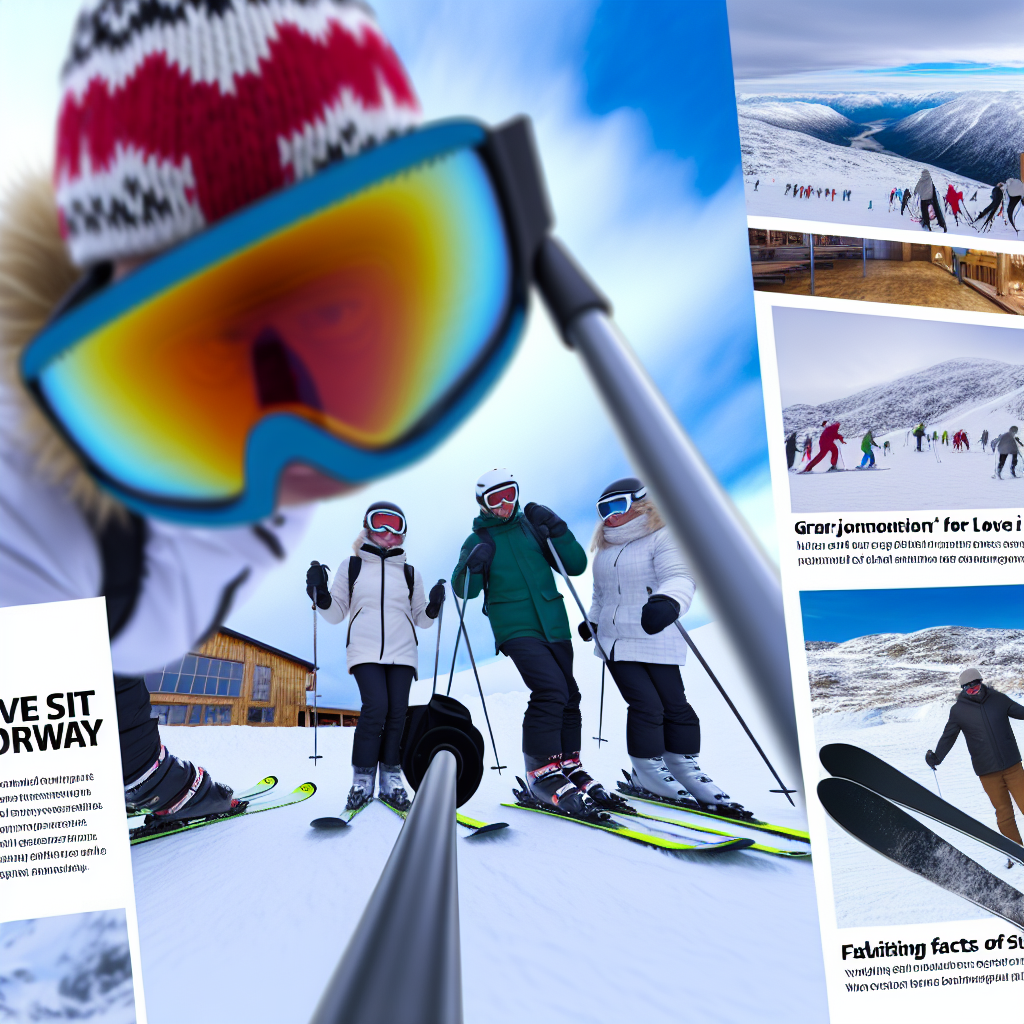
From ancient hunting tool to modern Olympic spectacle, skiing has shaped Norway’s history, language and everyday life for thousands of years.
From early childhood through to old age, Norwegians grow up with skis as a normal part of life, whether gliding through forest trails, tackling mountain terrain or simply heading out for a short evening trip under floodlights.
Yet skiing in Norway is about far more than recreation. Long before it became a sport, skiing was a vital means of transport, hunting and survival in a harsh northern climate.
Over thousands of years, those practical beginnings evolved into military training, organized competition and eventually international dominance on the world stage.
Along the way, skiing shaped language, folklore and national identity in ways few other activities can claim.
Today, Norway remains one of the world’s great skiing nations, producing legendary athletes while also preserving a deep-rooted culture of everyday skiing tied to outdoor life and outdoor life.
1. The word “ski” comes from Old Norse
The English word ski comes directly from the Old Norse word skiingmeaning split wood or wooden board. It is one of the few Old Norse words to pass almost unchanged into modern English.
That linguistic survival mirrors skiing’s uninterrupted role in Scandinavian life for thousands of years, from survival tool to cultural symbol.
2. Skiing is older than written history
The physical act of skiing dates back around 8,000 years. Archaeological evidence suggests early skis were used by hunter-gatherers to travel across snow-covered landscapes in both Europe and Asia following the last Ice Age.
Long before skiing was associated with sport or leisure, it was simply the most efficient way to move through winter terrain. If you’re interested, read more about the history of skiing here.
3. Norway’s ski history is centuries old
Rock carvings in Rødøy in Nordland county depict a human figure on skis holding a pole and are thought to date back to around 5000 BC.
These carvings provide some of the clearest early evidence of skiing as a practical form of movement rather than play. They also suggest that skiing was already well established in everyday life at a surprisingly early stage.
4. The world’s oldest preserved skis were found in Russia
While Norway has early carvings, the oldest surviving physical skis were discovered near Lake Sindor in northwestern Russia.
Dated to between 6300 and 5000 BC, they demonstrate that ski technology developed across a broad northern region. Skiing was not invented in one place, but emerged wherever snow, necessity and ingenuity met.
5. Early skis were not always a matching pair
Some ancient skis were deliberately asymmetrical. One ski was long and smooth for gliding, while the other was shorter and treated with animal fat to provide grip when pushing forward. This uneven design helped early skiers move efficiently long before modern bindings, skins or waxes existed.
6. Skis are older than the wheel
The earliest known wheels date back to around 3500 BC, meaning skis were already in use thousands of years earlier. In snowy regions, sliding proved far more practical than rolling. This simple fact highlights how deeply skiing is rooted in human adaptation to northern environments.
7. In Norwegian, you don’t “ski”, you “go on skis”
In Norwegian and Swedish, ski is a noun rather than a verb. Two skis, you goes skiingwhich literally means “to walk or go on skis.”
A skier is known as a skieror “ski runner”, reflecting how skiing is understood less as a distinct sport and more as a natural extension of walking in winter.
This way of speaking mirrors how skiing fits into everyday life in Scandinavia. Rather than something you dieoccasionally, skiing is something you simply do move with when the landscape demands it, reinforcing the idea that skis are tools first.
8. Skiing helped shape Norway’s military history
For centuries, skiing was an essential military skill in Norway. Soldiers trained extensively on skis, learning to move quickly and silently across snow-covered terrain.
Military exercises played a major role in standardizing ski length, bindings and technique, and many early ski competitions evolved directly from these training traditions.
9. Ski jumping was born in Norway
Modern ski jumping originated in Norway in the early 19th century, evolving from informal displays of bravado into an organized sport. In 1808, Norwegian soldier Ole Rye reportedly jumped 9.5 metres, a remarkable distance at a time when skis and landing techniques were still rudimentary.
As interest grew, jumping hills became gathering places for spectators, and ski jumping shifted from military exercise to public entertainment.
The first recorded ski jumping competition took place in Høydalsmo in 1866, marking the moment when jumping became a formal sport rather than a personal challenge.
10. Norway hosted many ski jumping world records
While Slovenia’s Domen Prevc became the latest ski jumping world record holder in 2025, Norway has long been the sport’s most important record-setting stage. The world’s largest ski flying hill, Vikersundbakken, hosted six consecutive world records prior to Prevc’s jump.
These record-breaking leaps pushed the limits of speed, distance and human confidence, often redefining what was thought physically possible.
Even when records fall elsewhere, Norway’s ski flying hills remain central to the sport’s history, regularly serving as the proving ground for its most extreme achievements.
11. Sondre Norheim is known as the father of modern skiing
Norwegian skier Sondre Norheim revolutionized skiing in the mid-1800s at a time when skis were still largely straight, unstable tools designed mainly for travel. By experimenting with ski shape and bindings, he helped transform skiing into something far more controlled and dynamic.
Norheim developed improved bindings that secured the heel more firmly while still allowing movement, along with skis that were narrower at the waist. This made it possible to turn, jump and descend slopes with far greater confidence.
His techniques and equipment laid the foundations for Telemark skiing and directly influenced the later development of alpine skiing, marking a turning point from transport to sport.
12. Norway helped shape global ski governance
The International Ski Federation (FIS) was founded in 1924 and remains the global governing body for competitive skiing and snowboarding. Nordic skiing disciplines have always played a central role within the organisation. Norway’s long competitive tradition helped shape the rules, formats and international structure of the sport.
13. Skiing even appears in Norse mythology
In Norse mythology, the goddess Skaði is closely associated with winter, mountains and skiing. A skilled hunter and archer, she is often depicted moving effortlessly across snowy landscapes, perfectly adapted to the harsh environment she inhabits.
Skaði represents independence, strength and a deep connection to nature, traits long admired in Nordic culture.
Her presence in myth reflects how skiing was already embedded in the worldview of early Nordic societies, not merely as a practical skill but as something worthy of legend.
14. Oslo is one of the world’s most ski-friendly capitals
Few capital cities offer skiing as easily as Oslo. Forests like Nordmarka and Østmarka are directly connected to the metro and train network, allowing residents to reach prepared ski trails within minutes.
This seamless access blurs the line between city life and wilderness in a way that feels uniquely Norwegian.
15. Floodlit trails make skiing part of everyday life
Across Norway, hundreds of kilometers of floodlit ski trails allow people to ski before or after work during the dark winter months. Evening skiing is a normal weekday activity rather than a special occasion. This infrastructure helps keep skiing accessible to all ages and fitness levels.
16. Norway dominates cross-country skiing on the world stage
Despite its relatively small population, Norway consistently ranks among the most successful nations in Olympic and World Championship cross-country skiing.
Generations of athletes have benefited from strong grassroots participation and cultural support. Cross-country skiing remains one of Norway’s most reliable sources of international sporting success.
17. Marit Bjørgen is the most decorated Winter Olympian in history
Norwegian cross-country skier Marit Bjørgen retired as the most successful Winter Olympic athlete of all time, a distinction unmatched across any winter sport.
Over the course of her career, she amassed an extraordinary medal haul across multiple Olympic Games and World Championships, excelling in sprint, distance and relay events alike.
What makes Bjørgen’s career particularly remarkable is its longevity and resilience. She stepped away from elite competition to have a child, then returned to the very top of the sport, continuing to dominate against a new generation of athletes.
18. Ole Einar Bjørndalen became the king of biathlon
Nicknamed “the King of Biathlon,” Ole Einar Bjørndalen is widely regarded as the greatest biathlete in history.
Across six Winter Olympic Games, he won 13 medals, including eight golds, while also collecting an astonishing number of World Championship and World Cup titles over a career spanning more than two decades.
Bjørndalen was known not just for his physical strength but for his relentless work ethic and mental toughness. His ability to remain competitive well into his forties set new standards for longevity in elite sport.
19. Johannes Høsflot Klæbo redefined modern cross-country skiing
Johannes Høsflot Klæbo has reshaped modern cross-country skiing with a blend of explosive sprinting, technical precision and tactical intelligence rarely seen before.
Dominant across sprint, distance and stage racing, he quickly moved beyond the label of prodigy to become one of the defining athletes of his era. Klæbo’s success reflects a shift towards more athletic, power-driven skiing, particularly in sprint formats, while still excelling in traditional endurance events.
Beyond results, he has helped modernize the sport’s image, appealing to younger audiences and bringing new visibility to cross-country skiing in an increasingly competitive sporting landscape.
20. Skiing in Norway isn’t always about competition
For many Norwegians, skiing is about outdoor life rather than finish lines. Quiet movement through forests, shared thermos breaks and long weekend trips to the mountains matter just as much as speed or performance. This mindset explains why recreational skiing remains so deeply embedded in everyday life.
21. Skiing is still used as transport in the Arctic
While skiing in Norway today is largely recreational, it remains a practical mode of transport in parts of the Arctic and sub-Arctic. Hunters, reindeer herders and rural communities still rely on skis to travel efficiently across snow-covered landscapes.
In these regions, skiing continues to serve the same purpose it did thousands of years ago.
From ancient necessity to modern pleasure, skiing remains one of the clearest expressions of how Norwegians live with nature rather than against it.