

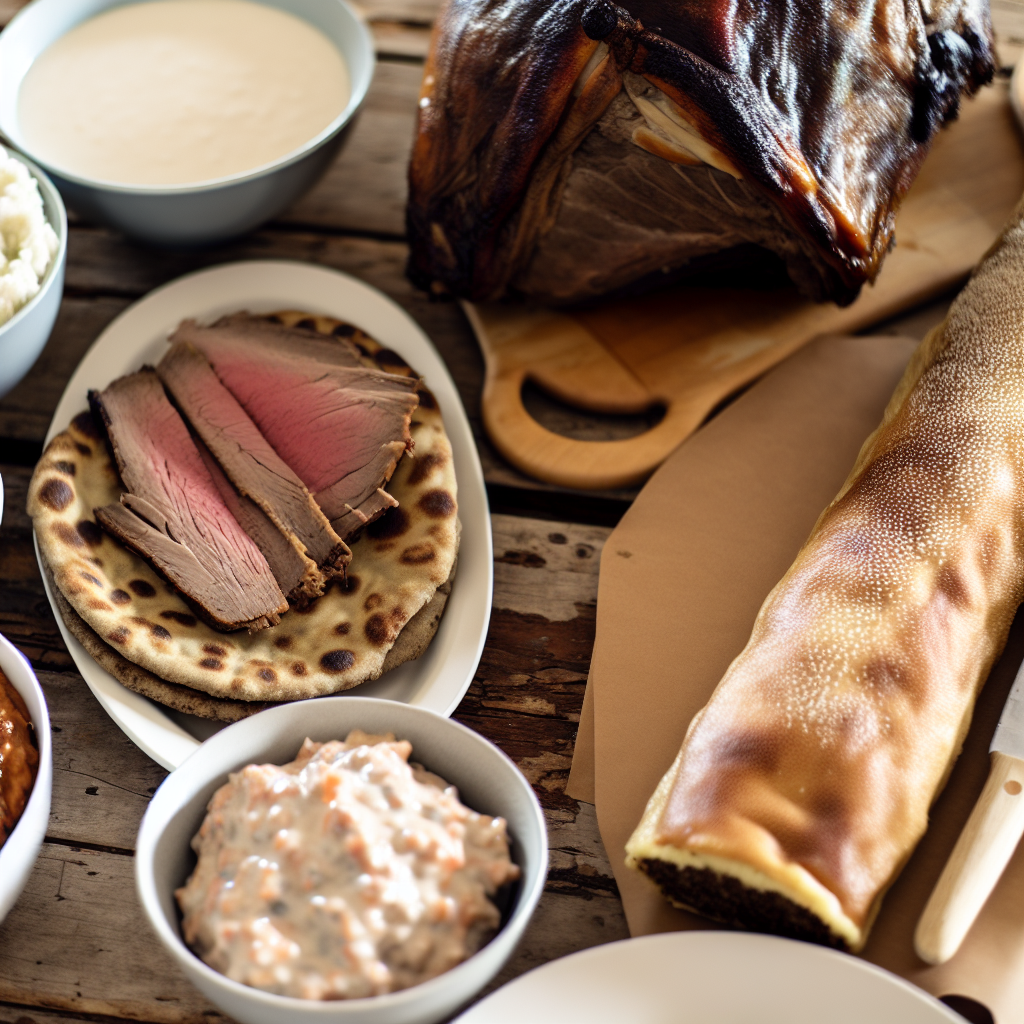
Planning a Norwegian-inspired Christmas this year? These are the dishes that fill homes across the country throughout the festive season.
Moving to Norway taught me that food is never just food. It is memory, ritual and a way of anchoring yourself in the darkest weeks of winter.
Nowhere is that more obvious than at Christmas, a season when traditions run deep and the whole month fills with the smell of roasting meats, warming spices and sweet baked treats.
Norwegian Christmas traditions are different from what I was used to in England. First and foremost, Norway celebrates on the evening of 24 December. Families gather around the table, gifts appear under the tree and the main Christmas meal takes center stage.
Christmas Day tends to be quieter and more relaxed. Yet December is full of festive meals long before Christmas Eve, from office Christmas parties to family gatherings and community events. It all contributes to one long celebration that blends old customs with modern tastes.
What follows is a closer look at the dishes you are most likely to encounter during a Norwegian Christmas. Some are hearty and rustic. Others are delicate and full of nostalgia. All of them help explain why food plays such a central part in the Norwegian winter.
Rib
Ribbe remains the most popular choice for Christmas Eve in Norway and it is easy to understand why. The dish uses pork belly seasoned with salt and pepper, often days in advance so the flavor has time to settle.
When the meat goes into the oven it cooks slowly until perfectly tender. The real star of the show is the crispy rind.
Norwegians take this seriously and supermarkets fill with guides on how to achieve that perfect texture. When it works, the crackling shatters under a fork and contrasts beautifully with the soft rich meat underneath.
Ribbe is served with a set of accompaniments that create a balance of sweet, sour and savory.
Sauerkraut and red cabbage bring gentle acidity. Small Christmas sausages add richness. Many families serve caramelised apples or prune compote for an extra note of sweetness. A glossy brown gravy ties everything together and varies from home to home. Some cooks keep it simple while others add wine, cranberries or juniper.
Stick meat
Pinnekjøtt is a dish that feels deeply rooted in the Norwegian landscape. It consists of lamb ribs that have been salted, dried and sometimes smoked before the cooking begins.
The preparation concentrates the flavor and gives the meat an unmistakeable aroma that fills a kitchen as it steams.
The name is thought to refer to the birch sticks that line the bottom of the pot in the traditional method. These allow the ribs to steam rather than boil and they give a slight woody note to the final dish.
The ribs are cooked until the fat softens and the meat pulls cleanly from the bone. The result is salty, tender and incredibly satisfying on a cold December night.
Most families serve pinnekjøtt with mashed swede or potatoes. In some regions people add sausages or enjoy a small bowl of broth from the pot on the side.
Although pinnekjøtt originated in western Norway it is now found nationwide and many Norwegians enjoy it at least once during the season, sometimes at a Christmas party long before Christmas Eve arrives.
Cod
Fresh cod is a classic in many coastal communities and provides a lighter alternative to ribs or skewers. The fish must be genuinely fresh to taste its best. When cooked gently it flakes apart into large pearly pieces that almost melt in the mouth.
The flavor is clean and delicate. Most families keep the accompaniments simple so the cod can shine. Boiled potatoes, carrots and a modest white sauce are the usual choices.
Some people add crispy bacon or a spoonful of melted butter for extra richness.
Cod on Christmas Eve feels especially appropriate in fishing villages and island communities where the sea has shaped life for centuries. It is a reminder that Norway’s holiday traditions are tied not only to history but also to place.
Lutefish
Few dishes spark stronger opinions. Lutefisk begins life as dried stockfish which is soaked in water, then lye, then water again until it reaches its familiar translucent form.
The texture divides people. Some adore it and insist it should be cooked barely long enough to hold its shape. Others prefer it firmer. The flavor is mild and relies almost entirely on what you serve alongside it.
Most Norwegians choose peas, bacon, mustard and a generous amount of melted butter. The combination turns a gentle fish into something far more characterful.
Lutefisk is most often eaten during November and December rather than on Christmas Eve itself. Even so, a few families still bring it to the main table.
According to forskning.no, lutefisk has been a common Christmas dish for a lot longer than people realize. It was eaten on Catholic holidays as long ago as the mid-16th century.
Christmas Porridge and Rice Pudding
Rice porridge is a comforting dish at any time of the year, but it takes on a special role during December.
Many families serve a creamy pan of Christmas porridge on the afternoon of 23 December. The porridge is topped with cinnamon, sugar and a knob of butter that melts slowly into the centre. It is thick, warming and remarkably filling.
Tradition says that one almond should be hidden in the pot. Whoever finds it wins a small prize, often a marzipan pig.
Leftover porridge often becomes rice cream. The cold rice is folded with whipped cream and served with a vibrant red sauce made from berries. This is a common dessert on Christmas Eve or Christmas Day.
It is light enough to follow heavy main courses and full of simple familiar flavors that appeal to all ages.
Christmas Cakes and Biscuits
Baking is an essential part of the Norwegian Christmas season. Families fill tins with an assortment of biscuits known as the seven kinds.
There is no universal agreement on which biscuits count as the official seven. Every region has its own ideas and every generation seems to add something new. What matters is the variety and the sense of abundance.
‘Gingerbread’ are impossible to avoid. Supermarkets fill their shelves with them in October and the spicy scent appears at every gathering.
‘Krumkaker’ bring a softer sweetness. They are made from thin wafers that are wrapped into cones while still warm. Fill them with whipped cream and they become an elegant festive treat.
‘Sirupsnipper’ have a darker deeper sweetness that comes from syrup in the dough. The almond pressed into the top adds a gentle crunch. Some families add poor man, shortbread, goro or doughnuts.
All have long histories and all help create that unmistakable December atmosphere.
Drinks of the Season
Breweries across Norway release their special ‘Christmas beer’ during November and December, a tradition that feels almost as important as the food itself.
These seasonal brews are usually darker and richer than the everyday varieties, although the exact flavor profile changes from region to region. Some brewers lean into spices and caramel notes. Others focus on smooth malty beers that pair beautifully with ribs or pork chops.
The rise of non alcoholic ‘Christmas beer’ has been striking in the last few years. Many breweries now offer at least one alcohol-free option and these have become a familiar sight at Christmas tables.
‘Julebrus’ brings an entirely different kind of nostalgia. This Christmas soda appears once a year and vanishes again in January which seems to make Norwegians love it even more.
The most common version is bright red with a sweet berry flavour. In some regions a golden variety dominates instead. Children adore it and plenty of adults quietly do as well.
‘Gløgg’ rounds out the season. This is the Scandinavian cousin of mulled wine and is best enjoyed steaming hot with cinnamon, cloves, raisins and almonds. Many Christmas markets serve their own recipes.
A cup of mulled wine does more than warm your hands. It creates a little pocket of comfort that makes even the coldest December evening feel inviting.
Vegetarian Christmas Options
Traditional Norwegian Christmas food leans heavily towards meat and fish. Vegetarian options are slowly improving although they remain less central to the season than they are in many other countries.
Some supermarkets now sell plant based versions of Christmas sausages or roast alternatives to ribs and skewers.
Fish eaters will have no problems at all. Pure vegetarians may need to rely on creativity or bring their own dish if invited to a family gathering. This is changing gradually as younger Norwegians adopt new food habits.
The December Season as a Whole
Christmas Eve might be the focal point, but much of the festive food is enjoyed long before the big night.
Christmas table season lasts for weeks. Companies, sports clubs and local associations gather in restaurants and community halls for evenings of traditional food and lively conversation.
The menus vary but ribs, pinnekjøtt or lutefisk often appear. These events encourage Norwegians to dress up and enjoy themselves, which gives December a celebratory feel even before the holiday begins.
The days between Christmas and New Year feel different again. This period is called ‘romjul’ and it brings a slower pace. Families enjoy leftovers, cold buffets and relaxed meals that make the most of the festive ingredients. It is a gentle way to close the year.
What Is Your Favorite Christmas Dish?
Norwegian Christmas food may seem unusual if you grew up elsewhere, but it creates a vivid sense of season. The dishes are shaped by geography, climate and centuries of habit.
Whether you prefer the crisp crackling of ribs, the salty depth of pinnekjøtt or the comfort of a bowl of rice porridge, there is a place at the Norwegian Christmas table for every taste.
Which dish would you choose? And if you live outside Norway, what appears on your table on Christmas Eve?