

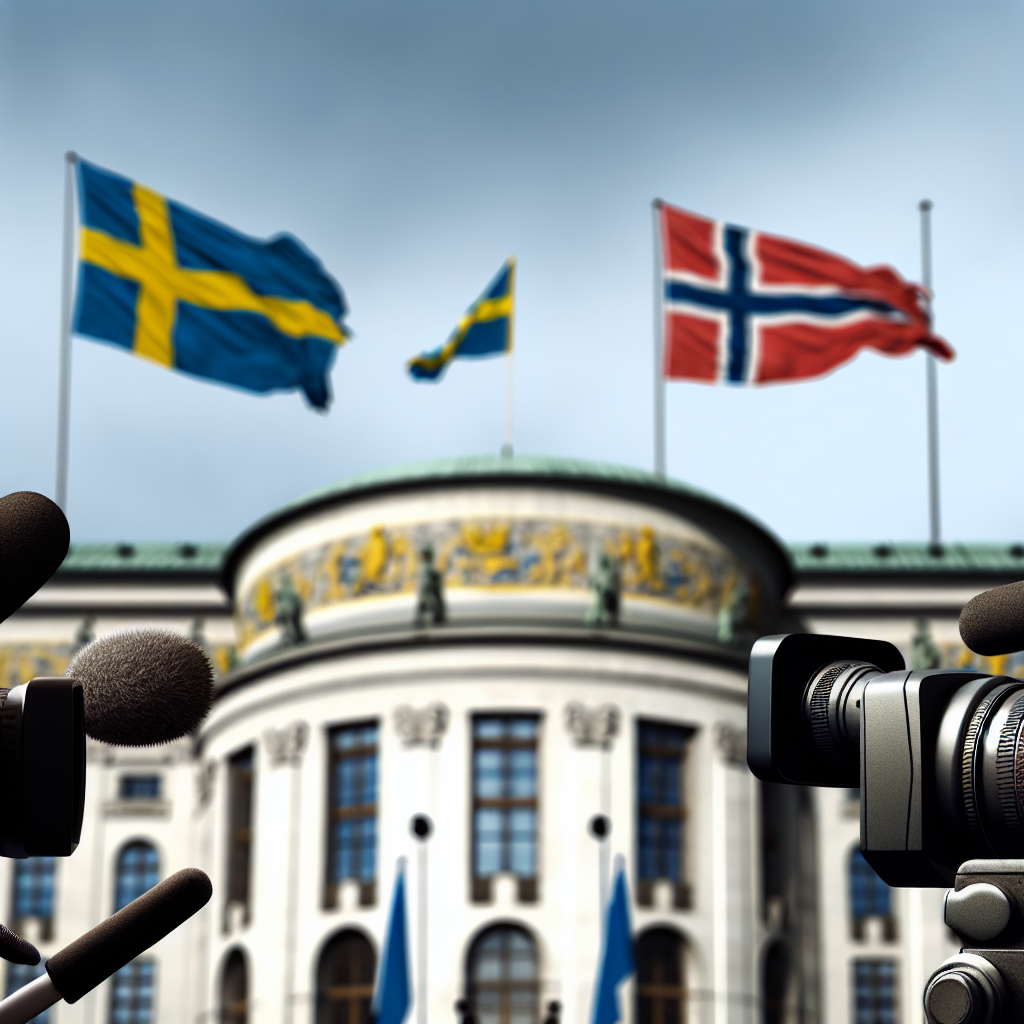
Sweden’s New Law Marks a Shift in Information Sharing Among Authorities
Starting December 1st of this year, Swedish authorities, municipalities, and regions will have the ability to share sensitive information with one another, a move aimed at combatting crime, social security fraud, and regulatory violations. This landmark legislation signifies a significant departure from practices that have remained unchanged for over half a century, as reported by Dagens Næringsliv.
“This is a major system change,” asserts Sweden’s Minister of Justice, Gunnar Strömmer.
At the heart of the new provision in the Swedish Public Information and Secrecy Act is the authorization for various agencies to exchange information regarding individuals’ personal and financial matters. This shift is expected to greatly enhance the effectiveness of collaboration among entities working to uphold law and order.
In contrast, Norway is grappling with its own challenges related to information sharing. Issues surrounding the flow of data—both between public agencies and between public and private sectors—have been identified as significant hurdles in the ongoing battle against serious crime, according to insights from the police and financial institutions.
Efforts are also underway in Norway to establish better protocols for the sharing of classified information. State Secretary Gunn Karin Gjul from the Ministry of Justice and Emergency Preparedness emphasizes the importance of this initiative.
“Access to information sharing to combat crime is an issue we take very seriously,” states Gjul.
While the new Swedish rules are being closely monitored, she notes, “It is too early to say which solution will be proposed” for addressing similar challenges in Norway.
As these developments unfold, the implications for law enforcement and public safety in both countries will undoubtedly be significant, prompting further dialogue on the balance between privacy and the vital need for collaboration in the face of crime.