
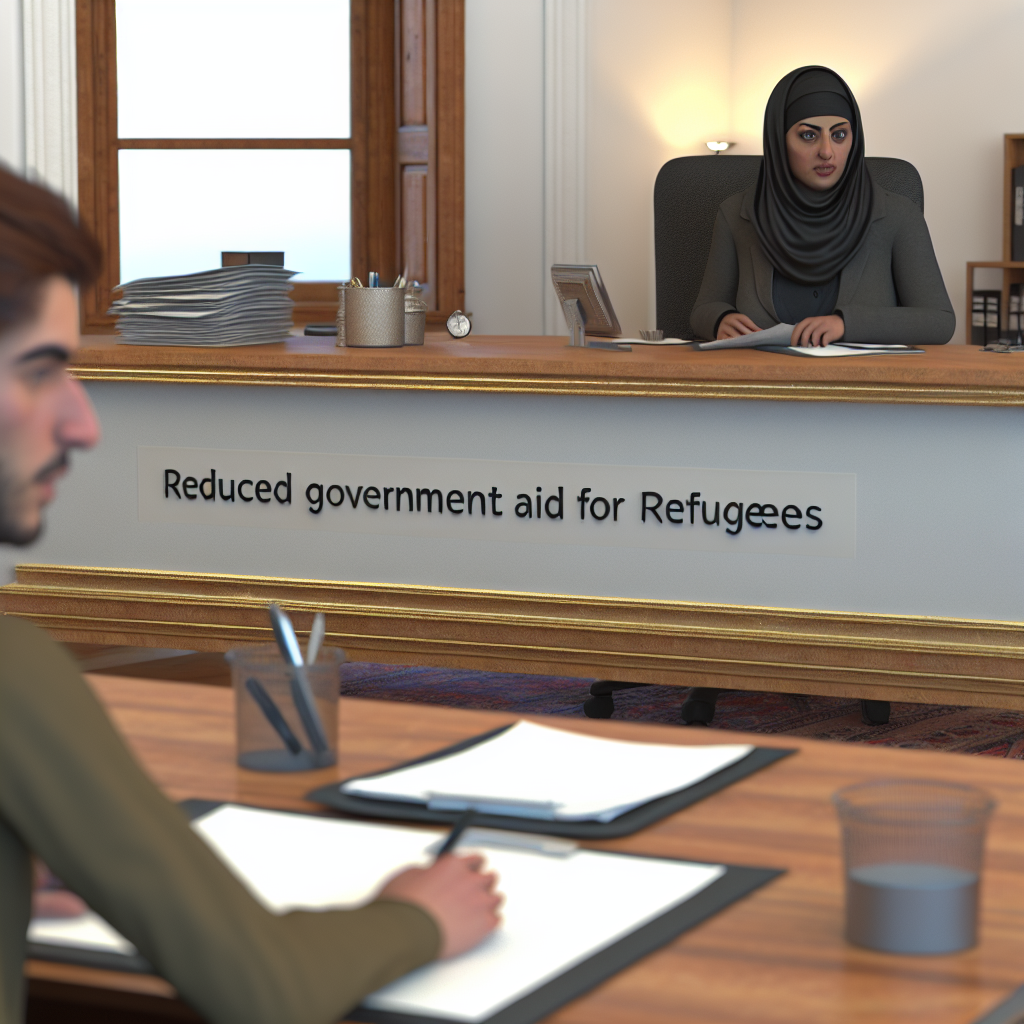
In a sweeping overhaul of its integration policy, the government has announced plans to enforce mandatory work requirements and reduce benefits to better assimilate refugees into the workforce. This substantial change could put added pressure on asylum reception centers nationwide.
Under the new proposal, refugees will lose their access to social assistancesocial assistancea temporary public support for individuals unable to meet their essential needs. and housing allowancehousing allowancea government scheme designed to aid low-income individuals struggling with high housing expenses. during their first five years in Norway.
The government aims to increase refugee employment rates, streamline the support system, and promote self-sufficiency by providing reduced benefits in exchange for more robust employment opportunities.
“Currently, refugees can receive more in benefits than they would earn through standard employment. That simply cannot continue,” stated Kjersti Stenseng, Norway’s Minister for Employment and Inclusion. “We are taking necessary steps to address this.”
The proposal has been submitted for public consultation.public consultationa process allowing stakeholders and experts to provide feedback on significant legislative changes.
A Landmark Restructuring in Over Two Decades
“Securing employment is not just beneficial for the individual—it enables them to support themselves and their families while fostering language skills and community integration,” Stenseng elaborated.
The minister believes that the revised policy will offer a more straightforward and predictable experience for both refugees and local governments.
“This represents the most substantial restructuring of our integration policy in over 20 years.”
“Do you have data supporting the efficacy of mandatory activity, or are these merely speculative assumptions?”
“The activity requirement has been implemented previously for individuals under 30. I genuinely believe it will expedite employment for many,” she responded.
“However, some experts argue that the policy for younger individuals hasn’t produced the intended results?”
– “It’s too soon to draw conclusions. There are numerous success stories. That said, I fully acknowledge the challenges; this is a significant shift, and we don’t have all the answers yet. Continued research and ongoing evaluation are crucial,” the minister replied thoughtfully.
Potential for Longer Reception Periods
Shifting to an integration benefit is projected to save the government NOK 250 million annually, based on departmental estimates.
However, the elimination of housing assistance could result in longer stays at reception centers, ultimately increasing costs:
“Should a large number of refugees congregate in reception centers, the UDI may be compelled to increase the number of available placements, leading to significantly higher expenditures,” the consultation document warns.
Unveiling a Monitor on Segregation
For years, Denmark and Sweden have been tracking parallel societies and vulnerable neighborhoods. Now, Norway plans to follow suit by introducing a segregation monitoring system focused on regions with high unemployment and significant immigrant populations.
“Our integration efforts have not met expectations, particularly evident in the overrepresentation of immigrants among the unemployed and those living at low income levels in areas with difficult living conditions,” Stenseng remarked during a recent interview with Aftenposten.