The Progress Party’s Grandparents Proposal: A Question of Identity
The Progress Party (FrP) has ignited a fiery debate by proposing a “grandparent test” to measure integration into Norwegian society. This unsettling proposal begs an important question: Can one be born in Norway yet still be deemed insufficiently Norwegian?
In recent days, discussions surrounding what it truly means to be “Norwegian” have dominated headlines. As a resident of Hadeland, I find this line of inquiry both troubling and woefully outdated.
As an immigrant in Hadeland, I’ve often heard, sometimes with a knowing grin, that I won’t be considered a true Hadelander until I reach my third generation here. Yet, I believe Hadeland embodies a “we” that includes newcomers, making it easy to share a laugh about such remarks—a bit of local pride, if you will.
However, when FrP proposes to institutionalize this “third-generation test,” the humor fades away. It becomes painfully clear that this perspective lacks sustainability, both locally and nationally. The proposal suggests maintaining detailed statistics on individuals with immigrant backgrounds up to the fourth generation. This means that even if you’re born and raised in Norway, with your parents also born here, your identity would still be scrutinized based on your grandparents’ origins.
When belonging is determined by the lineage of family, community becomes something hereditary rather than inclusive. This approach shifts the focus of integration from how one lives to who one’s ancestors were.
Personally, this resonates with me; many fellow Norwegians share this sentiment. My own grandfather wasn’t Norwegian, and several of my great-grandparents hailed from abroad. Should my roots serve as a measure for my place within the community? Am I, by this standard, not Norwegian enough?
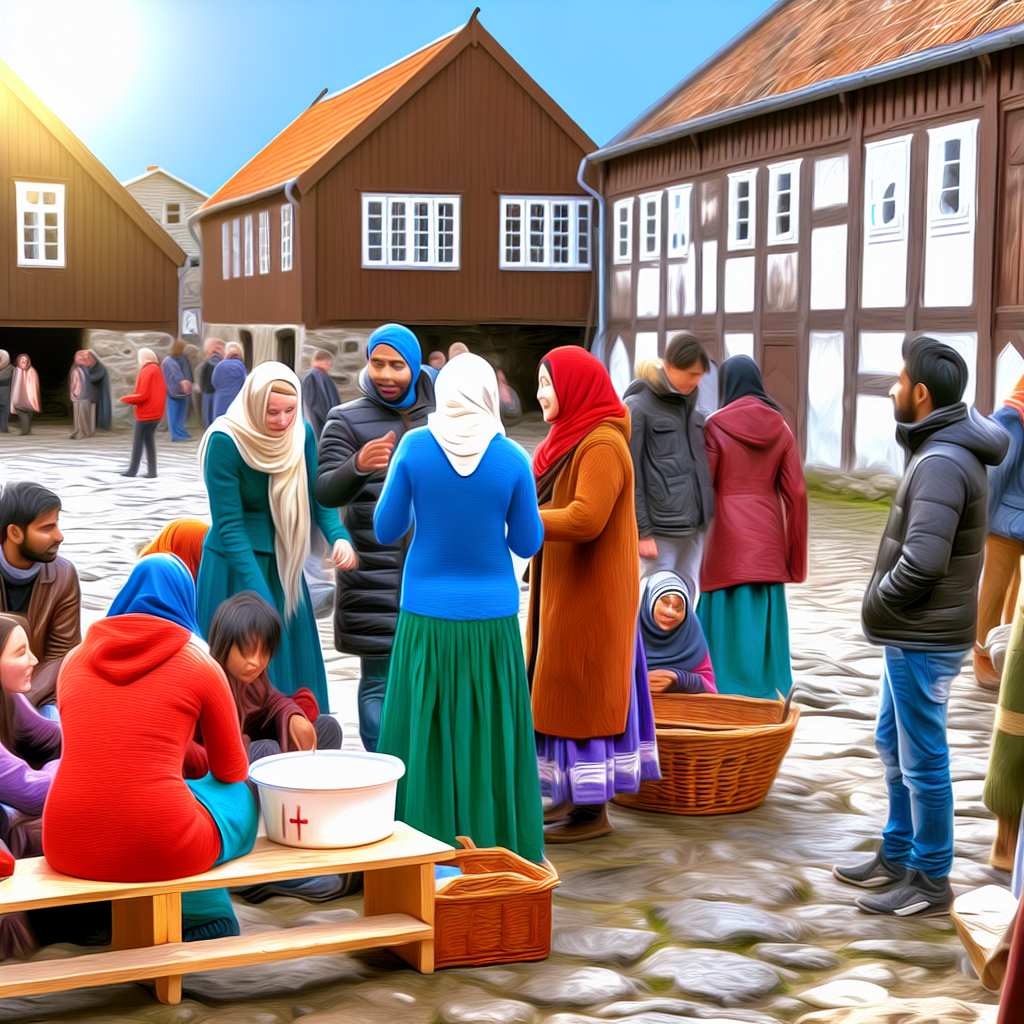
Perhaps it’s time to flip the narrative. Everyone in Hadeland who feels they belong should be embraced without concern for their ancestors’ origins. Norwegianness cannot be quantified by lineage alone. It is about gathering around a shared cultural heritage and a dynamic set of values that evolve as our society changes.
Being Norwegian means choosing to be part of the community, respecting its laws and values, and contributing to making your neighbors feel at home.
It’s high time we stop measuring familial ties, whether jokingly with a neighbor or through the cold metrics coming from Oslo. Such reasoning constructs an invisible barrier between “us” and “them,” a divide that remains intractable no matter the effort. This creates a politically manufactured sense of otherness that benefits no one.
We require policies that recognize individual contributions and efforts rather than merely tracing family trees. A society focused on lineage strays from the essence of an open community. To be Norwegian should embody ideals of participation, responsibility, and belonging—not bloodlines.