

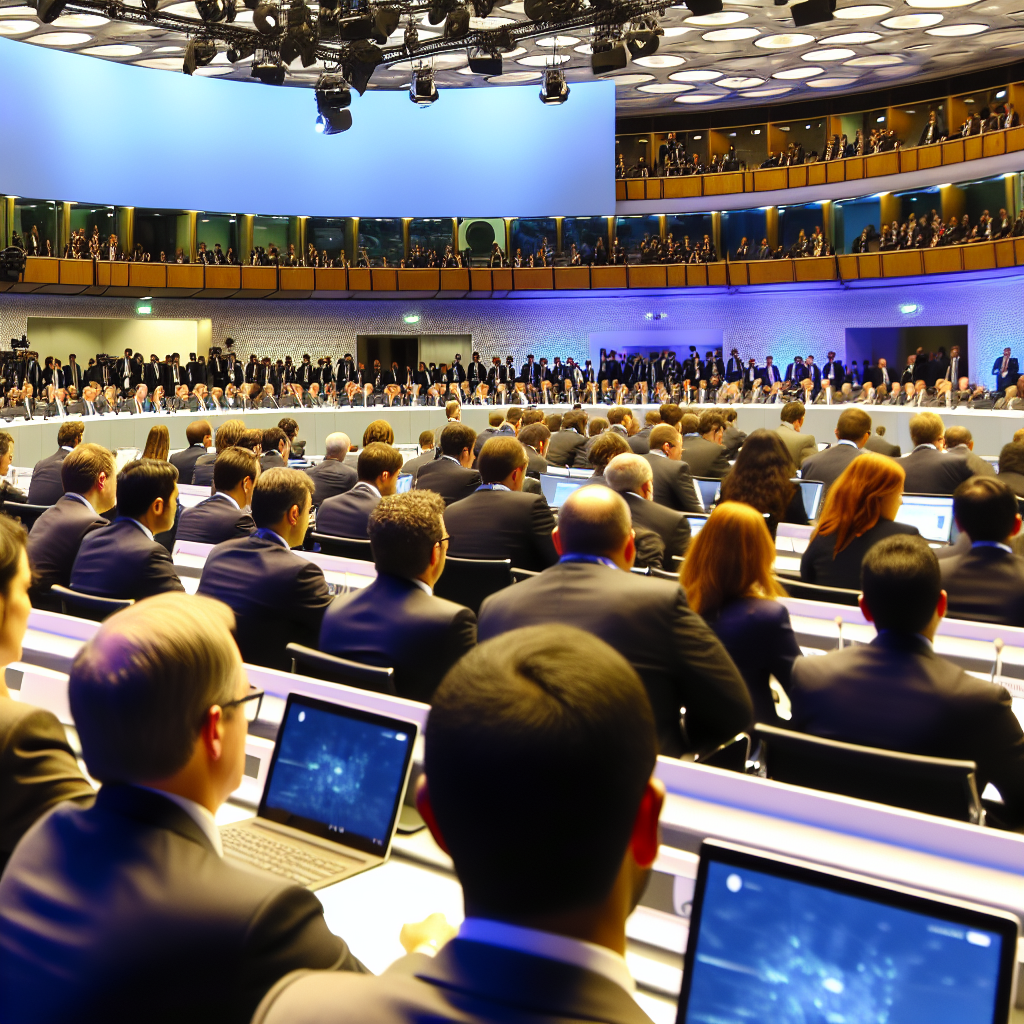
Munich Security Conference to Unveil Stark Report Amid Global Tensions
Next weekend, the Munich Security Conference (MSC) will convene, unveiling the timely report titled “Under Destruction.” This document is poised to serve as a critical discussion foundation for the upcoming security dialogue.
The report provides a sobering analysis of the global landscape, where the established rules-based order appears increasingly fragile, teetering on the brink of collapse. The authors do not pull punches in their assessment, employing emphatic language to illustrate a world riddled with instability.
“The world has entered a period characterized by wrecking-ball politics. Widespread destruction—rather than careful reform and political correction—is the order of the day,” the report boldly asserts, emphasizing the suffocating uncertainty that defines today’s geopolitical climate.
In his foreword, Wolfgang Ischinger, the MSC’s chair, confronts what he refers to as the “elephant in the room.”
“Given the significance of this reshaping of American foreign policy, we decided that this year’s Munich Security Report should address the ‘elephant in the room’ directly. Many other challenges on the agenda—from Europe’s security architecture to the fundamental principles of international law, trade, and technology—are intricately tied to America’s altered worldview,” Ischinger writes.
The report starkly reveals that the global order has entered a phase of “wrecking-ball politics.” In many Western nations, leaders who thrive on destruction rather than gradual reform have gained prominence. Their agendas thrive on a pervasive sense of discontent regarding democratic institutions, breeding skepticism about any genuine reform.
“In many Western societies, leaders who prefer destruction to gradual change have gained increased influence. Their divisive agendas stem from a widespread dissatisfaction with how democratic institutions function, and a pervasive loss of confidence in the possibility of meaningful reforms,” the report states.
Ironically, the document identifies former U.S. President Donald Trump as the archetype of these “demolition workers,” leading the charge against an international order that the United States itself helped to construct in the aftermath of World War II.
“As a result, the post-war international order is now in shambles, more than 80 years after reconstruction began,” it notes. Critics of Washington’s bulldozer policy lament that this destructive approach undermines the international community’s ability to confront humanity’s most pressing challenges.
They believe the bulldozer strategy will not yield effective solutions but instead create a landscape favoring the elite, neglecting the hopes of the broader populace yearning for transformative change.
In light of these challenges, the report underscores the need for advocates of a rules-based global order to galvanize their efforts.
“But if they hope to mitigate the worst effects of a politics steeped in destruction, they must become adept at reinforcing foundational principles, design more sustainable solutions, and dare to be ambitious architects of the future,” the report warns.
The MSC conducts extensive surveys across multiple nations to gauge citizens’ perceptions of risk. Alarmingly, respondents in almost all G7 and BRICS countries—notably excluding Japan and China—now regard the United States as a greater risk than they did last year.
As the conference approaches, Norway’s delegation is set to make a significant appearance, featuring Prime Minister Jonas Gahr Støre, Finance Minister Jens Stoltenberg, Foreign Minister Espen Barth Eide, Defense Minister Tore O. Sandvik, and Development Minister Åsmund Aukrust. Their presence illustrates Norway’s commitment to engaging in dialogue amid these turbulent times.