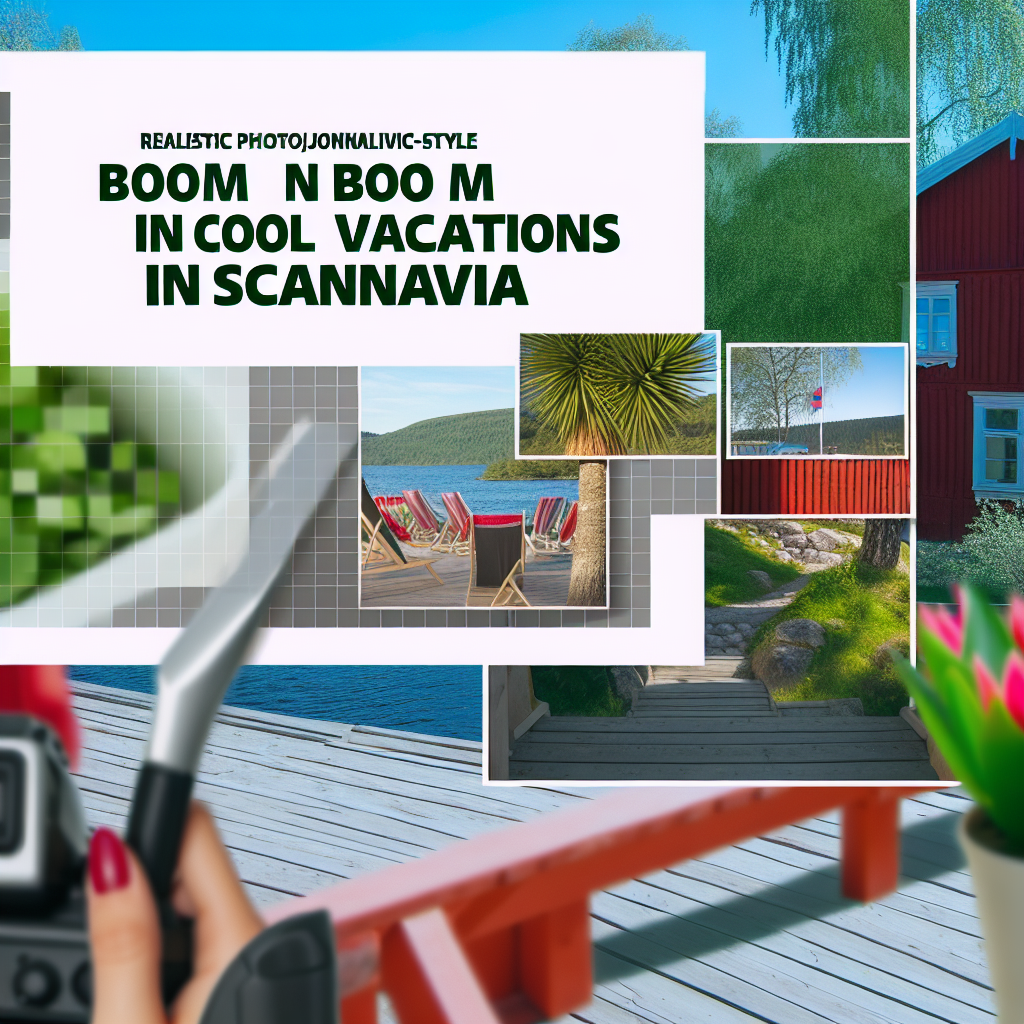
A few years ago, “coolcation” sounded like a travel industry buzzword.
Now, as we move through early 2026 with most Nordic countries having released their 2025 tourism figures, it looks much more like a structural shift in how Europeans and long-haul travelers choose their summer holidays.
Here at Life in Norway, we’ve long talked about changing travel patterns: northern lights tourism going mainstream, cruise ships heading further north, and once-quiet Arctic towns reinventing themselves as year-round destinations.
The cooling trend sits right on top of all that. But unlike some trends, this isn’t just hype. The statistics from across the Nordic region show real, measurable growth.
What is a Coolcation and Why Now?
The term “coolcation” emerged in mainstream travel media around 2023, combining “cool” and “vacation.”
At first it felt like clever branding. Yet as southern Europe endured repeated heatwaves in 2023 and 2024, it began to reflect a genuine behavioral shift.
The idea is simple. Instead of flocking to Mediterranean beach resorts in July and August, travelers head north in search of milder temperatures, cleaner air, more space, and nature-based experiences.
In Europe, that often means Scandinavia and the wider Nordic region.
And the climate data adds context. 2024 was confirmed as Europe’s warmest year on record, with repeated extreme heat events across southern and southeastern regions.
For many families in Spain, Italy, and France, a “cool” summer destination is no longer a novelty. It is a practical choice.
Norway’s Record Numbers & Tromsø’s Transformation
Norway has been one of the clearest beneficiaries of this shift. While final consolidated national figures for 2025 confirm continued growth in foreign guest nights, it is the regional breakdowns that tell the story.
Northern Norway, in particular, has seen sustained increases not just in winter aurora tourism, but in shoulder and summer seasons.
Tromsø stands out. Already transformed over the past decade from a relatively quiet Arctic university town into an international winter hotspot, Tromsø set new visitor records again in 2025.
Increased international air connectivity, expanded cruise calls, and strong hotel occupancy through summer and autumn have pushed total guest nights to historic highs.
What is striking is not only the volume, but the seasonality shift. Growth is no longer confined to peak northern lights months. Summer hiking, midnight sun experiences, fjord kayaking, and wildlife tours are drawing visitors who might once have chosen the Mediterranean.
Airlines have responded. New and expanded routes from southern Europe and long-haul markets continue to funnel travelers north. And unlike previous tourism booms, this one is less about novelty and more about climate resilience.
Finland & The Rise of Northern Lapland
It is not just Norway. According to Visit Finland, 2025 was a record year for foreign tourism.
Overnight hotel stays by international visitors reached an all-time high of 7.2 million, up 12% year on year. The total number of foreign tourists rose to 5.1 million, with particularly strong growth from Japan, China, India, Taiwan, the United States, Australia, the United Kingdom, Germany, Italy and France.
Crucially, growth was strongest among higher-spending leisure and business travellers. And it was visible outside the traditional peak season.
In Finnish Lapland, summer overnight stays increased as part of a deliberate strategy to create year-round tourism. The winter season also stretched further into April and October.
That combination, a longer winter and a stronger summer, fits perfectly with the cooling narrative. Visitors are no longer just chasing snow. They are chasing moderation. Fresh air. Manageable temperatures. Space.
Iceland & The North Atlantic Appeal
In Iceland, the appeal has long rested on dramatic landscapes and shoulder-season flexibility. But even there, summer travel has remained robust as southern Europe struggles with extreme heat.
Visitor flows remain heavily international, and Iceland’s positioning as a stopover hub between North America and Europe continues to channel long-haul travelers into the Nordic region.
For many Americans, combining Iceland with Norway or Finland is now a logical two-country “cool” itinerary. This will get easier later this year with the introduction of improved connections from Reykjavik to Norway.
A Hotter North: The Climate Paradox
Here is the irony. The Nordic region is heating up too.
Norway has experienced warmer-than-average summers in recent years. Southern Norway has seen heatwaves, while even Arctic areas have recorded unusually high temperatures. Glaciers are retreating. Snow seasons are becoming less predictable at lower elevations.
A coolcation in Scandinavia is going to be cooler than Rome or Seville in July. But it is not necessarily cool in absolute terms.
This paradox sits at the heart of the trend. Travelers are responding to relative climate differences, not absolute stability. The north feels safer, calmer, more breathable.
Yet the long-term climate trajectory raises difficult questions about infrastructure, environmental pressure, and sustainability.
Is This Sustainable or Just Overtourism Moving North?
For Norway, the debate feels familiar. Places like Lofoten, Geiranger, and Preikestolen were already grappling with visitor pressure before the cooling narrative took off. The planned introduction of a modest tourism tax reflects a recognition that growth must be managed.
Tromsø’s rapid expansion has triggered local debates about housing, short-term rentals, cruise ship capacity, and environmental impact.
Unlike Barcelona or Venice, the issue is not city center overcrowding in the traditional sense. It is strain on fragile Arctic ecosystems and small-town infrastructure.
The Nordic advantage has always been space and nature. If those qualities are compromised, the cooling appeal weakens.
A Structural Shift, Not a Passing Trend
What makes this different from a typical travel fad is the data.
There’s consistent year-on-year growth from southern Europe. Record foreign guest nights in Finland. Expanded air routes to Arctic destinations. High-spending long-haul visitors targeting northern regions. Seasonality flattening as spring and autumn become viable travel windows.
Taken together, this suggests a structural adjustment in European travel patterns.
Coolcations are not replacing Mediterranean holidays entirely. But they are carving out a significant share of summer travel decisions, particularly among families and older travelers who are increasingly climate-aware.
For Norway and its Nordic neighbours, that presents both an opportunity and a responsibility. The region has marketed itself for years as wild, clean, and uncrowded. Now the world is paying attention in larger numbers.
The question for 2026 and beyond is not whether coolcations are real. The numbers show they are. The real question is whether the Nordic region can stay cool, in every sense of the word.