

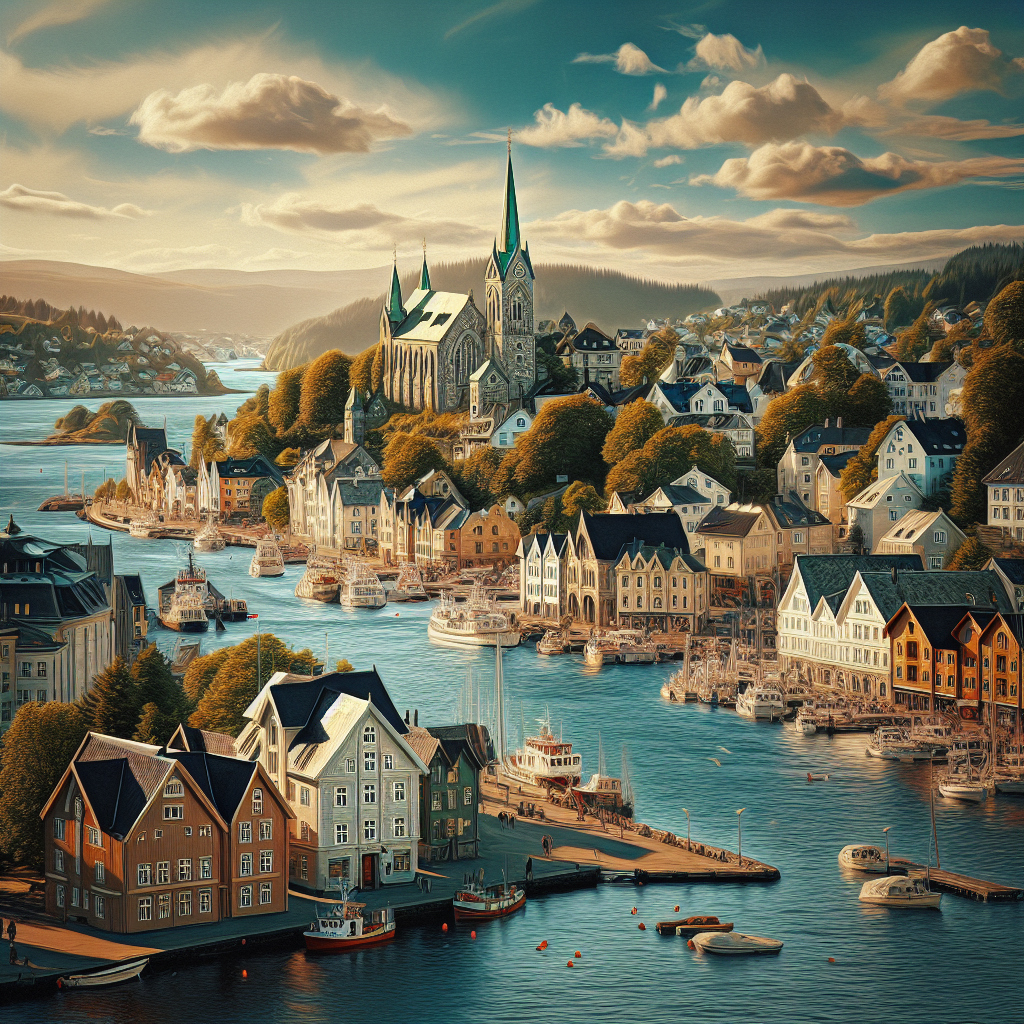
It may lack the narrow, dramatic walls of western Norway’s fjords, but the Oslofjord more than makes up for it with islands, beaches, historic towns, and easy access to outdoor life.
The Oslofjord region is Norway’s most densely populated area. Around two million people live along its shores, including the population of Oslo itself.
In fact, more than 40 percent of Norwegians live within a 45-minute drive of the fjord. This concentration of people makes the Oslofjord the country’s busiest stretch of water, filled with cruise ships, ferries, cargo vessels, and pleasure boats.
Yet despite this constant activity, it is still surprisingly easy to find quiet stretches of coastline where the only sounds are waves and seabirds.
An Introduction to the Oslofjord
The Oslofjord is not a fjord in the strict geological sense of the word. In Norwegian, fjord is used more broadly than in English, covering a wider variety of inlets and waterways.
Geographically, the Oslofjord is an inlet of the Skagerrak sea. It stretches south from Oslo to the outer lighthouses of Torbjørnskjær and Færder, forming a long and varied coastline rather than a single dramatic channel.
Near the town of Drøbak, the fjord narrows dramatically at the Drøbak Sound, dividing it into two distinct sections.
North of this point lies the inner Oslofjord, while the broader, more open waters to the south are known as the outer Oslofjord.
The inner section is narrower, more sheltered, and defined by forested hills, beaches, and clusters of islands. It is this part of the fjord that most people associate with everyday life in Oslo.
The Inner Oslofjord
When people in Oslo talk about “the fjord,” they almost always mean the inner Oslofjord. In summer, it becomes one of the city’s most vibrant spaces.
Cruise ships glide past the city centre, ferries arrive from Denmark, island boats shuttle back and forth, and hundreds of private boats fill the water.
Kayaking, canoeing, diving, fishing, and swimming are all popular here, especially during warm weather. On a sunny weekend, the fjord feels like an extension of the city itself.
One of the inner fjord’s defining features is the group of small islands just offshore from central Oslo. These recreational islands are served by passenger ferries that form part of the city’s public transport system. As a result, they are remarkably cheap and easy to visit.
The ferries depart from the piers near City Hall, close to Aker Brygge. During the summer months, departures are frequent enough to allow easy island hopping. Outside the peak season, however, services are much more limited and require some planning.
The main island
Just five minutes by ferry from the city centre, Hovedøya is the closest island to Oslo and one of the most popular. On warm days, its beaches are packed with locals soaking up the sun.
Hovedøya offers much more than swimming, particularly for visitors interested in history. The island’s most striking feature is the ruins of Hovedøya Abbey, a 12th-century Cistercian monastery founded by English monks.
The abbey functioned for nearly 400 years before political turmoil during a royal succession led to its downfall. When the abbot backed the losing side, the monastery was closed and later burned down. Today, the ruins are atmospheric and surprisingly extensive, offering a glimpse into medieval religious life in Norway.
Nearby, a small seasonal café operates during the summer months, serving pizza, ice cream, beer, and classic Norwegian sausages. Elsewhere on the island, open grassy areas invite picnics and games, while wooded trails reveal remnants of Hovedøya’s later military role.
The island once housed two cannon batteries and served as an arsenal for Akershus Fortress on the mainland. Close to the ferry quay, a beautifully restored timber building now functions as a gallery and studio space, adding a cultural layer to the visit.
Other nearby islands each have their own character. Langøyene is known for beaches and camping, while Lindøya has a more residential feel, dotted with summer cabins. What unites many of these islands is their distinctive color palette.
Cabins are required to follow a strict color scheme of red, blue, green, or yellow. Combined with green lawns, forested hills, and blue water, the result is one of the Oslofjord’s most visually striking landscapes.
The tip of the nose
The residential peninsula of The tip of the nose juts out into the fjord directly opposite Oslo. Home to around 17,500 people, it has become a popular place to live thanks to its combination of nature and proximity to the city.
Many residents commute by ferry, enjoying one of Norway’s more scenic daily journeys. Regular services run between Nesodden and Aker Brygge throughout the day.
Nesodden also has a strong cultural and historical identity. The charming Nesodden Church dates back to the 12th century and remains an important local landmark.
Towns of the Oslofjord
As the fjord widens and moves south towards the Skagerrak, a series of towns and villages line its shores. There are far too many to cover in detail, but a few stand out as particularly rewarding stops.
Drøbak
With its maritime heritage, coastal walking routes, and location at the narrowest point of the fjord, Drøbak is a favorite among both locals and visitors.
Just offshore lies Oscarsborg Fortress, a site steeped in history. Built in the 17th century, the fortress is best known for its role in April 1940, when its batteries sank the German cruiser Blucher during the Battle of Drøbak Sound.
The sinking delayed the German advance on Oslo and allowed the Norwegian government and royal family to escape.
Tønsberg
One of Scandinavia’s oldest cities, Tønsberg has deep historical roots. Founded during the Viking Age, it became one of Norway’s most important medieval towns.
Viking burial mounds and church ruins dot the surrounding area, making Tønsberg a rewarding destination for history enthusiasts, particularly during the warmer months. The city is also considered the starting point of the Vestfold Viking Trail, which links several major archaeological sites along the fjord.
The famous Oseberg ship, now displayed in Oslo, was discovered not far from here.
Today, Tønsberg Brygge forms the heart of the city. Once a hub of medieval trade, the waterfront now hosts restaurants, bars, and leisure boats, with a layout dating largely from the early 19th century.
Nearby, the coastal paths of Ilene Nature Reserve offer a gentler experience. The 7.5-kilometre trail is family-friendly and popular with birdwatchers, while the neighboring island of Nøtterøy provides additional coastal walks.
Horten
A small port town with gardens, canals, and a relaxed waterfront, Horten is another pleasant Oslofjord summer destination.
Just outside the town lies the Midgard Viking Centre, located beside the impressive Borre burial mounds. A reconstructed longhouse and exhibitions help bring the Viking Age vividly to life.
Åsgård beach
Situated between Tønsberg and Horten, Åsgårdstrand is one of the Oslofjord’s classic summer towns. Long associated with artists, it is best known as a favorite retreat of Edvard Munch, who spent many summers here.
Munch’s house is open to visitors, and the town’s relaxed atmosphere, beaches, and harbor make it especially appealing in warm weather.
Moss
Across the fjord lies Moss, a town with a long history of settlement stretching back more than 7,000 years. In modern times, Moss has been known as an industrial centre, particularly for paper mills and metalworks.
For a period, it also gained international recognition due to Moss Airport Rygge, which served as a major base for Ryanair before closing to civilian traffic in 2016 following the airline’s withdrawal from Norway.
The Outer Oslofjord
South of the Drøbak Sound, the Oslofjord opens out dramatically. The coastline becomes flatter, the islands more fragmented, and the influence of the open sea increasingly noticeable.
This is the outer Oslofjord, a region shaped less by forests and city life and more by skerries, fishing harbours, beaches, and maritime traditions.
While the inner fjord feels like an extension of Oslo’s urban space, the outer Oslofjord has a distinctly coastal character. Summer cottages cluster along the shore, small boats dominate local harbours, and life follows the rhythms of weather, tides, and holiday seasons.
The water here is generally saltier and clearer than further north, making it particularly popular for swimming, sailing, and diving during the warmer months.
Faerder National Park
One of the defining features of the outer fjord is Færder National Park, which protects large areas of coastal and marine environment at the southern end of the Oslofjord.
The park consists of islands, skerries, shallow seabeds, and open water, offering important habitats for seabirds and marine life. Unlike many national parks in Norway, Færder is heavily influenced by human use, with traditional boating routes and summer recreation coexisting alongside conservation efforts.
The lighthouse at Færder marks the point where the fjord meets the Skagerrak, and for many locals, this area represents the symbolic end of the Oslofjord and the beginning of the open sea.
Sandefjord
On the western side of the fjord, Sandefjord is one of the region’s most important coastal towns. Long associated with shipping and maritime industries, it is perhaps best known for its role in Norway’s whaling history.
Today, Sandefjord combines beaches, coastal paths, and a lively harbor with museums and cultural attractions. Its location also makes it a useful base for exploring the outer Oslofjord by boat, with ferry connections and good road access to surrounding coastal areas.
Fredrikstad
On the eastern side, Fredrikstad stands out for its historical significance. The fortified old town, Gamlebyen, is one of the best-preserved star fortresses in northern Europe and remains a lived-in community rather than an open-air museum.
Cobblestone streets, ramparts, cafés, and small shops give Fredrikstad a character unlike anywhere else along the fjord. The nearby river estuary also adds another layer to the town’s maritime identity, blending river and coastal culture in one compact area.
Inner Oslofjord or Outer Oslofjord?
Choosing between the inner and outer Oslofjord largely depends on what kind of experience you are looking for.
The inner fjord is ideal for short visits, island hopping, and combining nature with city sightseeing. Everything is close together, easy to reach, and well served by public transport.
The outer fjord rewards slower travel. Distances are greater, the landscape is more open, and a car or boat becomes far more useful. In return, visitors gain access to quieter beaches, traditional harbor towns, and a stronger sense of Norway’s coastal heritage.
Together, these two halves form a surprisingly varied region, one that shows how Norway’s relationship with the sea extends far beyond the dramatic fjords of the west coast.
How to Explore the Oslofjord
Public transport makes parts of the Oslofjord easy to reach, but a car offers the greatest flexibility for longer stays. Train and bus routes run along both the eastern and western sides of the fjord, although they do not serve every town or coastal area.
Drivers can cross the fjord using the busy Horten–Moss ferry, Norway’s busiest ferry route. The 30-minute crossing carries millions of passengers each year and provides a useful shortcut between the two sides of the fjord.
Further north, the Oslofjord Tunnel near Drøbak offers an alternative crossing. Stretching 7.3 kilometers beneath the fjord, it forms part of the E134 highway.
During the summer, a fast passenger ferry also runs from Aker Brygge in Oslo to Drøbak. While slower than the bus, it is far more comfortable and offers excellent views along the way. For up-to-date transport information, Ruter and Vy are the best resources.
If you enjoyed this article, why not share it on Pinterest? We’ve got the perfect pin for you. Just hit those social sharing buttons.