

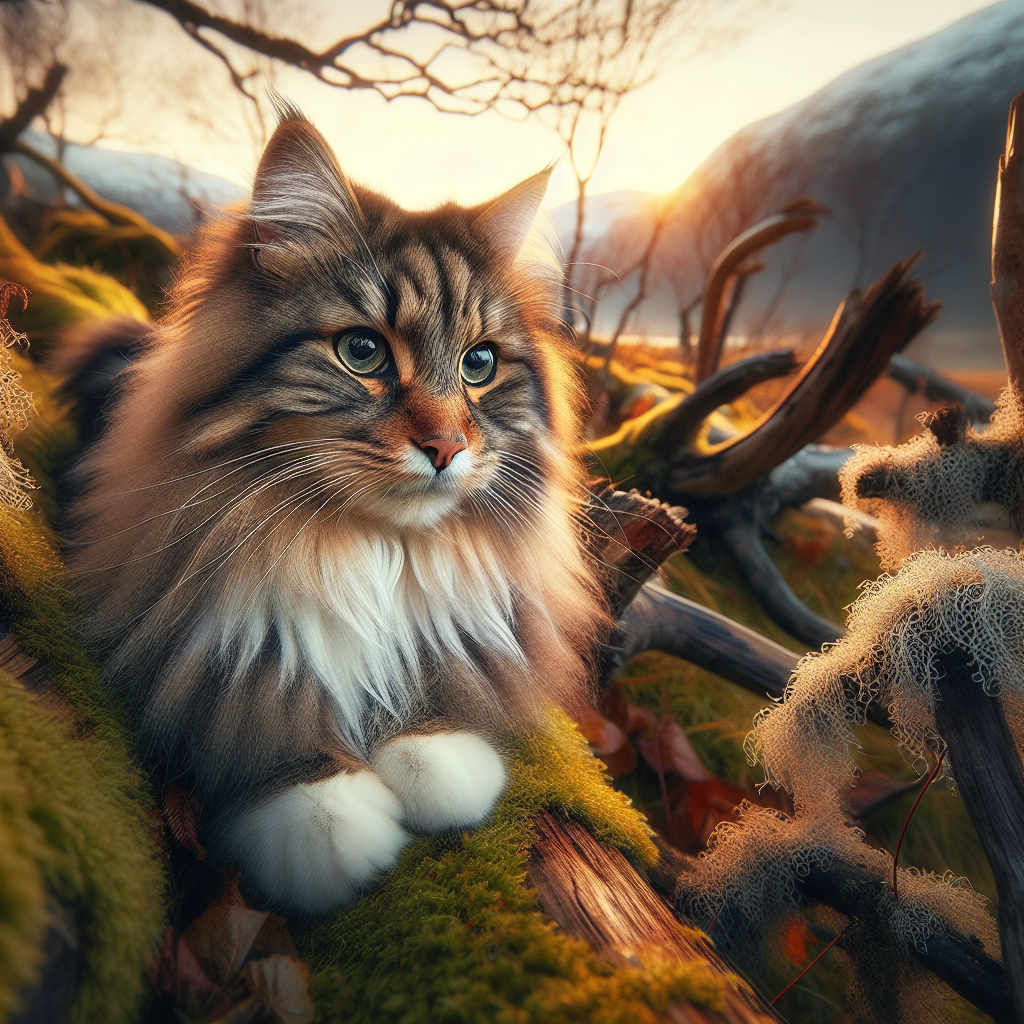
With its thick coat, powerful build and deep roots in folklore, the Norwegian forest cat is one of Scandinavia’s most distinctive animals. But what is it really like to live with one? Let’s find out…
Cats have long held a special place in Norwegian homes, but few breeds capture the country’s landscape and history quite like the Norwegian forest cat, or Norwegian forest cat.
Built for harsh winters and dense woodland, this striking breed looks almost untamed. Yet behind the rugged exterior lies a surprisingly social and affectionate companion.
From Viking legends to modern living rooms, the story of the Norwegian forest cat is closely tied to Norway itself.
What Is a Norwegian Forest Cat?
The Norwegian forest cat is a natural breed, meaning it developed over time without intensive human intervention. Its physical traits are the result of generations of adaptation to Scandinavia’s cold, wet climate.
A dense double coat protects against snow and rain. The outer layer repels water, while the woolly undercoat provides insulation. In winter, this coat becomes especially thick, giving the cat its famously majestic appearance.
The breed is also powerfully built. Males can weigh anywhere between 6 and 10 kilograms, with females typically smaller. Unlike many domestic cats, they mature slowly, often taking four or five years to reach full size.
One of the most distinctive features is the body shape. The hind legs are slightly longer than the front legs, giving the cat a strong climbing ability. This is not just aesthetic. In the wild, it allowed the cat to navigate trees, rocky terrain and deep snow with ease.
Although often compared to the Maine Coon, the Norwegian forest cat has a more triangular face and a straighter profile, reflecting its independent development in Northern Europe.
A Cat of Myth and Legend
The origins of the Norwegian forest cat are not fully documented, but they are deeply embedded in Norwegian folklore.
Stories from the Viking Age describe a large, long-haired cat capable of climbing sheer rock faces. These mythical creatures appear in several Norse tales, often linked to magic and the wilderness.
One of the most famous associations is with the goddess Freyja, whose chariot was said to be pulled by giant cats. While these were not explicitly identified as forest cats, many believe the legend reflects early sightings of the breed or its ancestors.
There are also more practical theories. Some historians suggest that long-haired cats were brought to Norway by traders or Vikings, possibly from regions such as Byzantium. Others point to similarities with Siberian cats.
What is more certain is that the modern breed developed through natural selection. Cats that could survive cold winters, hunt effectively and shed water thrived. Over time, these traits became standard.
For centuries, these cats lived largely outdoors, especially on farms. Their role was simple but essential: control rodents and protect food supplies. Even today, semi-wild cats with similar traits can still be found in rural parts of Norway.
From Farm Cat to National Treasure
The Norwegian forest cat remained largely unknown outside Scandinavia until the 20th century.
By the early 1900s, interest in preserving the breed began to grow among Norwegian cat enthusiasts. However, crossbreeding with other domestic cats threatened its survival.
Serious conservation efforts began in the 1970s. Breeders worked to standardize the breed and protect its genetic line. This led to official recognition in Europe and later worldwide.
Today, the Norwegian forest cat is often considered Norway’s “national cat,” celebrated for both its appearance and its heritage.
Personality and Behaviour
Despite its wild appearance, the Norwegian forest cat is known for a balanced and sociable temperament.
They are typically friendly, curious and intelligent. Many owners describe them as quietly affectionate rather than overly demanding. They enjoy human company but tend to avoid being overly clingy.
This makes them well suited to family life. They are generally tolerant of children and can adapt to living with other animals, provided introductions are handled properly.
There is, however, one trait that remains firmly intact: the instinct to climb.
These cats love height. In a Norwegian forest, that might mean tall trees. In a modern home, it usually means shelves, wardrobes or the highest point in the room. Anyone considering the breed should be prepared to provide climbing opportunities, such as cat trees or wall-mounted platforms.
They are also playful well into adulthood, although not hyperactive. Their intelligence means they benefit from stimulation, including toys, puzzles and interaction.
Health and Lifespan
The Norwegian forest cat is generally considered a robust and healthy breed. A typical lifespan ranges from 14 to 16 years, although many live longer with proper care.
That said, there are some inherited conditions to be aware of.
One of the most significant is hypertrophic cardiomyopathy, a common heart condition in cats. Responsible breeders will screen for this.
Hip dysplasia, more commonly associated with dogs, can also affect this breed. It may lead to reduced mobility or reluctance to jump.
A rarer condition, glycogen storage disease type IV, is a serious genetic disorder that typically appears early in life. Although uncommon, it highlights the importance of choosing a reputable breeder.
Any breeder who claims their cats are completely free of health risks should be treated with caution. Like all animals, Norwegian forest cats can develop health issues, and transparency is key.
Grooming and Care
One of the biggest misconceptions about the Norwegian forest cat is that its long coat requires constant grooming.
In reality, the coat is relatively low maintenance compared to other long-haired breeds. The texture is less prone to matting, although regular brushing is still recommended, particularly during seasonal shedding in spring and autumn.
They are well adapted to colder climates, but they can live comfortably indoors in other environments too. In warmer regions, owners should ensure access to cool spaces and fresh water.
Diet, exercise and mental stimulation are just as important as grooming. Despite their size, these cats are agile and benefit from regular activity.
Breed Clubs and Organizations
Several organizations exist to support the breed, promote responsible ownership and maintain breeding standards. Their role goes far beyond social clubs.
These groups help safeguard the long-term health and identity of the Norwegian forest cat, which came close to extinction in the early 20th century before coordinated breeding efforts revived it.
In Norway, Norsk Skogkattring has played a key role since the 1970s, when dedicated breeders came together to protect the forest cat from disappearing through crossbreeding.
The organization continues to oversee breeding recommendations, maintain pedigree records, and organize shows and events that showcase the breed. Its work is closely tied to the formal recognition of the Norwegian forest cat in Europe during that same decade.
In the United States, the NFC Fanciers’ Association supports breeders and enthusiasts, helping to preserve the breed internationally.
Like many US-based cat associations, it focuses on education, ethical breeding practices and participation in competitive shows, which play a significant role in maintaining consistent breed standards across different regions.
In the UK, the Norwegian Forest Cat Club works alongside organizations such as the Governing Council of the Cat Fancy, the country’s main pedigree cat registry. Founded in the early 20th century, the GCCF oversees registration, breeding standards and cat shows across Britain, working with more than 100 affiliated clubs.
Together, these organizations form part of a wider international network that ensures the Norwegian forest cat remains a healthy, recognizable and well-managed breed.
For prospective owners, they are also a valuable resource. Many provide breeder listings, welfare advice and guidance on what to expect from the breed, helping people make informed decisions before bringing a forest cat into their home.
Is a Norwegian Forest Cat Right for You?
The Norwegian forest cat is not just a beautiful animal. It is a breed shaped by landscape, climate and history.
For those willing to accommodate its size, climbing instincts and seasonal shedding, it can be a rewarding companion. It combines independence with affection, and resilience with charm.
Perhaps that is why it remains so popular, not only in Norway but across Europe and beyond. It is more than a pet. In many ways, it is a small piece of Norway’s natural and cultural heritage, brought into the home.