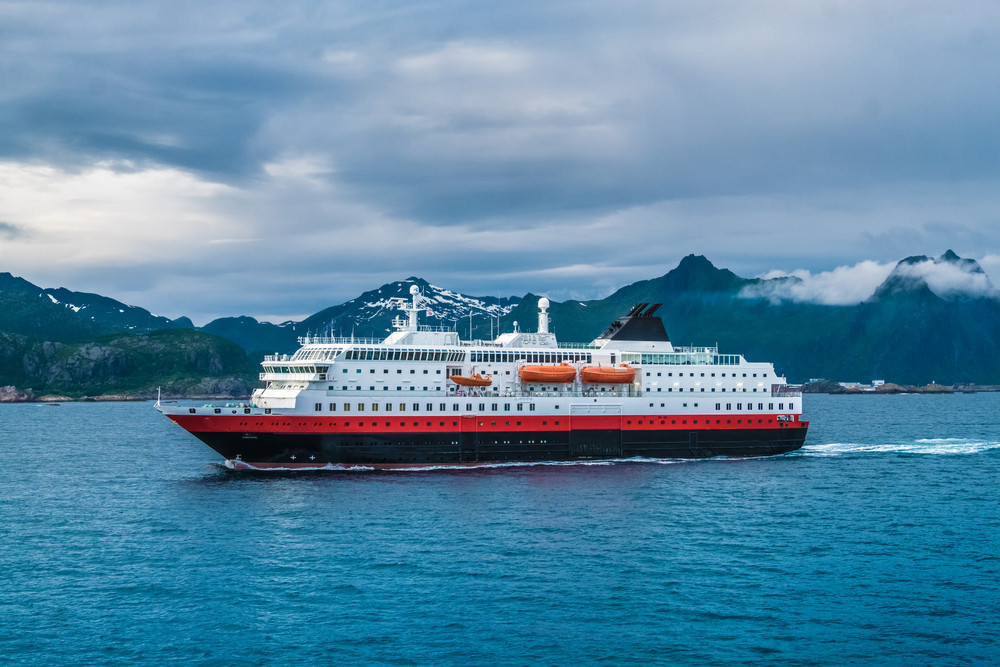
Most people who cruise in Norway do so to see the beautiful fjords typical of this country and observe local wildlife, first and foremost the majestic polar bear. However, a new ban implemented by the Norwegian government at the beginning of 2025 is making it even more difficult for cruisers to see these animals up close.
The Svalbard Environment Act is now forcing vessels to stay hundreds of feet away from these animals and retreat if approached. This makes it, unfortunately, extra hard for people to take pictures of these animals. The ban is highly controversial. While the Norwegian government believes these measures are necessary to protect local wildlife, expedition operators and nature photographers think they will have no impact other than harming the tourism industry.
Cruise Ships Are Crushing World’s Oldest Creatures Living In Antarctica, According To New Study
A new study finds luxury cruises heading to Antarctica are detrimental to ocean floors.
On January 1, 2025, the Norwegian government implemented the so-called Svalbard Environment Act. The new regulations aimed at protecting local wildlife prohibited cruises from getting too close to polar bears. According to the official document:
One must keep at least 300 meters away from bears. In the period from March 1 to June 30, one must keep at least 500 meters away. If one discovers a bear at close range, one is obliged to retreat.
The Svalbard Environment Act does not apply to people staying in inhabited areas who are not obliged to retreat in the case of polar bears, as well as to people staying at ‘research stations, cabins, tents or similar facilities’. Offenders risk five years in prison if causing substantial environmental damage.
|
Svalbard Information |
|
|---|---|
|
Population |
2,530 (2003) |
|
State |
Norway |
|
Area |
23,956 sq mi |
|
Iceland |
Nine |
People working in the tourism sector are now complaining that at this distance, photography becomes very tough. Most people cruising in this region dream of taking the perfect shot of these majestic creatures. According to experts, a 1640-foot distance is too far away for most telephoto lenses, meaning that those heading to this Norwegian region to photograph polar bears are likely to cancel their trips.
Not by chance, some cruise operators are now saying that ‘thousands of cabins’ are now sailing empty due to the new regulations.
The Debate: ‘Conservation Fascism’ Or Necessary Measures?
The Norwegian government claims the new measures were put in place to protect the local fauna now seriously endangered by the melting ice caused by climate change. According to a recent fossil discovery, polar bears may have once traversed the Scottish Highlands during the Ice Age. However, their habitats continue to shrink today.
It is important for them to be able to search for food, hunt, rest, and take care of their cubs without interference from humans. (…) Keeping a good distance will also ensure that dangerous situations do not arise, and that polar bears do not get used to humans over time.
Despite this, however, many are opposed to the new regulations. For instance, Mark Carwardine, a zoologist and an environmental activist, accuses the Norwegian government of wanting to end tourism in Svalbard. According to him, the new rules won’t make any practical difference as vessels are already prohibited from approaching polar bears in any way that would cause disturbance.
He added that the real challenge these animals face is climate change, not tourism. He also blamed the Norwegian government for expanding oil and gas exploration in areas inhabited by polar bears, accusing politicians of being hypocritical.
Expedition leader and photographer Paul Goldstein referred to the new rules as a case of ‘conservation fascism’:
I have led small ship charters in the region since 2004. Never once have I seen a single incident where tourists intimidate or affect the behavior of polar bears. (…) If your precision optics demand a lens the size of a Stinger missile, the pleasure and thrill is being denied to almost all the gallery.
Only with time will experts be able to verify whether the new regulations have successfully protected these endangered animals or if they will have a negative impact on the tourist sector. For now, however, cruises in Norway will have to comply with the new rules.