Chasing the Northern Lights inside the Arctic Circle is no longer a hazy dream reserved for polar explorers. From coastal cruises along Norway’s fjords to glass-roofed igloos in Finnish Lapland and snowmobile safaris on Svalbard, there is now a tour for almost every budget and adventure level. Choosing the right trip, however, means balancing aurora odds, daylight activities, comfort and cost. This guide breaks down the standout Arctic Circle tours and experiences you can book now, with concrete examples to help you decide what fits your style.
Get the latest updates straight to your inbox!
Understanding Arctic Circle Northern Lights Tours
Most Northern Lights trips inside the Arctic Circle cluster around a few key regions: northern Norway (Tromsø, Alta and the Lofoten Islands), Swedish Lapland (Abisko and Kiruna), Finnish Lapland (Rovaniemi, Levi and Saariselkä), Iceland’s north and east, plus more remote options like Svalbard and Greenland. Tour operators typically run concentrated aurora seasons from roughly late September to early April, when the nights are long enough for the sky to stay dark and solar activity can paint it with shifting bands of green and occasional pink or purple.
For many travelers, a classic entry point is a short, small-group “aurora chase” by minibus from a city base. In Tromsø, for instance, operators such as Nordic Sky Adventures and Arctic Adventure Tours run evening trips that drive out of the coastal cloud belt toward clearer inland skies in groups of 8 to 15 people, usually including warm suits, hot drinks and a basic tripod. Typical prices in winter 2025 and early 2026 run in the region of 1,400 to 1,900 Norwegian kroner per person, depending on group size and included photography support.
Multi-day Arctic Circle packages layer in daytime adventure. In Finnish Lapland, it is common to see three- to five-night itineraries combining nightly aurora hunts with husky sledding, snowmobiling and reindeer farm visits, often based around Rovaniemi or Levi. A four-night package with a glass igloo stay and activities can easily reach or exceed 1,500 to 2,000 euros per person in peak season once meals and transfers are factored in. By contrast, self-guided trips in Swedish Lapland, where you book your own cabin in Abisko and add individual excursions, can come in noticeably lower if you travel off-peak and cook some of your own meals.
For those seeking slower travel, coastal voyages along Norway’s historic Bergen to Kirkenes route, operated by companies like Hurtigruten and Havila Voyages, function as moving Arctic Circle platforms. These ships follow a timetable of local port calls while also positioning you under frequently active auroral zones on consecutive nights, which means multiple viewing chances even if cloud or solar conditions are poor on a given evening.
Norway’s Coastal Voyages and Fjord-Based Aurora Cruises
Few Arctic journeys are as iconic as sailing along Norway’s jagged coast under a winter sky. Both Hurtigruten and Havila Voyages now market dedicated winter itineraries that emphasize the Northern Lights, with departures typically scheduled between October and March. A full round-trip Bergen to Kirkenes sailing runs 11 or 12 nights, though many travelers opt for shorter northbound or southbound segments of 5 to 7 nights to save time and cost.
On these voyages, the ship itself is your base camp. Cabins range from compact inside rooms to balcony suites, and pricing for winter 2025 and the 2025/26 season generally starts in the ballpark of 1,600 to 2,000 euros per person for several nights in a basic cabin, rising significantly for premium categories and all-inclusive packages. Some itineraries add extra land stays, such as a pre-cruise night in Bergen and a post-cruise night in Tromsø, or excursions like dog sledding outside Alta and snowmobiling on Finnmarksvidda plateau.
Havila has drawn attention with its so-called Northern Lights guarantee on certain winter sailings along the coastal route. The general concept is that if the aurora does not appear during your cruise within defined dates, you receive a credit toward a shorter future voyage, providing a form of insurance against bad luck. Travelers should always read the current terms carefully, but for many, this policy is a compelling reason to consider a small-ship Norwegian coastal itinerary over a mainstream ocean cruise that visits the region only briefly.
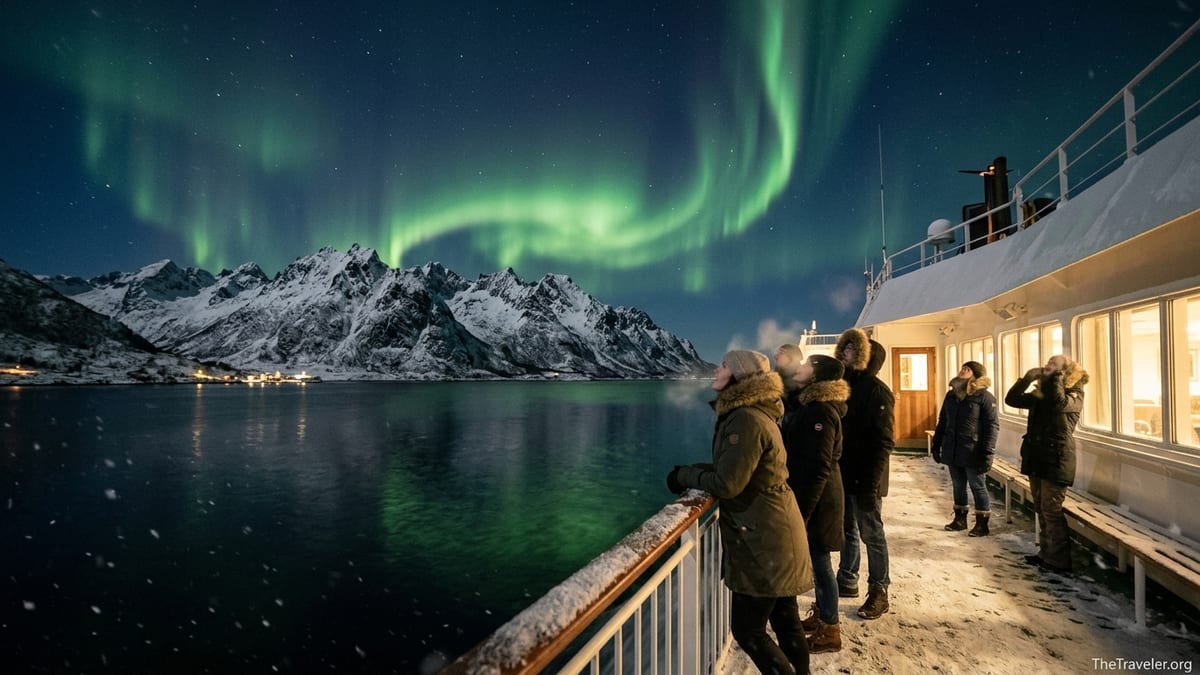
Practical experience matters at sea. Recent traveler reports from winter 2025 highlight that while large cruise ships sometimes offer Northern Lights viewing from the outer decks, smaller coastal vessels stopping nightly above the Arctic Circle tend to give more frequent and flexible viewing opportunities. Many aurora enthusiasts describe spending hours on the aft deck of a coastal ferry between ports like Tromsø, Harstad and Svolvær, stepping into the lounge to warm up between displays, with the ship’s crew announcing overhead when the lights become active.
Lapland Lodge Stays, Glass Igloos and Family-Friendly Tours
For travelers hoping to combine Northern Lights viewing with a comfortable fixed base and family-friendly activities, Finnish Lapland is often the easiest introduction to the Arctic Circle. Rovaniemi, known as the “official hometown of Santa Claus,” has a small airport well connected to Helsinki and multiple Northern Lights tour operators offering guaranteed or small-group chases by road. As of the 2025/26 season, some companies advertise “unlimited mileage” aurora hunts around Rovaniemi that stay out as long as conditions warrant, using modern 4×4 vans and providing professional photography assistance so guests take home usable images even from a first attempt.
Iconic accommodations add to the draw. Around Levi, Saariselkä and Rovaniemi, there are clusters of glass-roofed igloos and aurora cabins where you can watch the sky from bed. A night in one of these igloos during peak winter dates can easily cost from 400 to 800 euros per unit depending on the level of luxury, and many are sold as part of packages that include breakfast and select activities. Families often pair a two-night igloo stay with two or three nights in a more standard cabin or hotel to balance cost, giving several nights of possible aurora viewing without committing the entire budget to the most expensive room type.
On the Swedish side of Lapland, Kiruna and nearby Abisko have built a reputation among aurora enthusiasts for their relatively dry climate and mountain-sheltered skies. Small outfits around Kiruna and Abisko run minibus chases in groups of roughly 8 to 15 people, plus easy-going nighttime walks along frozen lakes in Abisko National Park. Some tours specifically compare Kiruna and Abisko conditions in their marketing, encouraging visitors to split their stay across both locations. Price points are similar to northern Norway in local currency terms, often starting in the equivalent of around 150 to 200 euros per person for an evening tour including hot drinks and warm clothing.
Another classic Lapland experience is combining lights with ice and snow architecture. The Icehotel in Jukkasjärvi, near Kiruna, and seasonal snow hotels in various Finnish and Norwegian locations offer one-night stays in artfully sculpted ice rooms maintained at sub-zero temperatures, alongside warmer “chalet” rooms for the rest of the trip. Many Northern Lights packages in this region explicitly include a single night in an ice room plus multiple nights in conventional lodging, framed around aurora excursions and daytime husky or reindeer activities.
High-Adrenaline Arctic Adventures: Svalbard, Snowmobiles and Huskies
For those who want more adrenaline than a cozy cabin, Arctic Circle tours can easily turn into full-scale expeditions. Svalbard, the Norwegian archipelago between mainland Norway and the North Pole, is one of the most dramatic places you can chase the lights. Multi-day trips based in Longyearbyen offer polar-night Northern Lights adventure packages between roughly October and February, when the sun does not rise for weeks and the aurora can glow even at midday twilight.
Operators on Svalbard run four-day itineraries that combine dog sledding, ice cave visits and aurora searching. A typical package includes thermal outerwear, local guiding, equipment and full-board accommodation in a rustic basecamp or guesthouse. Because of the remoteness and environmental regulations, prices are higher than on the mainland. By the 2025/26 winter season, travelers can expect to pay several thousand euros per person for an all-inclusive four-day Svalbard Northern Lights adventure, particularly if it features headline activities like snowmobile expeditions to Barentsburg or overnight stays in wilderness lodges away from Longyearbyen’s lights.
Snowmobile safaris have become a staple in many Arctic destinations, from Levi and Rovaniemi to Tromsø, Alta and Svalbard. Two-day snowmobile trips to remote communities, combined with husky sledding, appear in tour brochures for Svalbard and northern Norway’s Finnmark region. Given the inherent risk, reputable operators provide full safety briefings, helmets, thermal suits and often require a valid driver’s license for those piloting the snowmobiles. Travel insurance that covers motorized winter activities is highly recommended, and travelers with back or joint issues are generally advised to confirm suitability in advance.
Dog sledding, meanwhile, remains a deeply atmospheric way to experience the Arctic. In Tromsø and Alta, half-day husky tours are often combined with an evening Northern Lights component, where you mush or ride in a sled under a darkening sky and then warm up in a lavvu tent with a meal. In Svalbard, pure dog sledding days sometimes focus more on wilderness and less on guaranteed aurora viewing, but the combination of polar landscapes, star fields and the possibility of lights overhead can be unforgettable even if the aurora remains faint.
Choosing Between Guided Chases, Self-Drive and Cruises
Once you know where you want to go, the next critical decision is how you want to structure your time. Guided aurora chases in a minibus or 4×4 remain the most popular choice for first-time visitors in places like Tromsø, Kiruna, Abisko and Rovaniemi. The main advantage is that experienced guides monitor weather and space-weather forecasts and drive long distances if necessary to find clear skies. Many tours in the 2025/26 season highlight that they are willing to travel “unlimited mileage” within the night’s safe driving range, and some publish success rates above 90 percent over recent winters, though these figures should be treated as indicative rather than guaranteed.
Self-drive itineraries, where you rent a car and base yourself in a cabin, can be more flexible and sometimes cheaper, particularly in Swedish and Finnish Lapland where distances between towns are manageable. However, winter driving north of the Arctic Circle involves icy roads, blowing snow and total darkness for much of the day in midwinter. Rental car companies may require studded tires for certain periods, and you will need to be comfortable with local rules on emergency equipment and speed. Many repeat aurora travelers blend the two approaches: taking one or two guided chases early in the trip to learn what clear-sky areas look like, then using a rental car for local excursions once they have gained confidence.
Cruises and coastal voyages sit in a third category. Here you avoid winter driving and logistics almost entirely, but you surrender precise control over your location each night. The ship’s route and schedule are fixed, and while this still offers multiple passes under the auroral oval, you cannot simply decide to camp under a clear patch of sky inland if coastal conditions turn cloudy. That said, the combination of daylight fjord scenery, warm accommodation and long sequences of nights at sea makes these voyages particularly attractive for travelers worried about standing outside in extreme cold for extended periods.
Budget also weighs heavily. A single-night aurora chase in Tromsø or Rovaniemi can cost roughly the same as a day’s car rental with fuel, but it buys you targeted expertise and the comfort of not managing road conditions. In contrast, a week-long coastal voyage or a multi-day Svalbard package will usually represent a larger overall investment but deliver a denser bundle of experiences, from glacier visits and wildlife watching to curated meals and lectures onboard or at basecamps.
Costs, Booking Windows and When to Go
Arctic Circle Northern Lights trips are highly seasonal, and prices tend to track school holidays and major festivals. In Finland and Sweden, December and early January are influenced by Christmas and New Year demand, especially around Santa-themed attractions in Rovaniemi and festive stays at log cabins and igloo villages. In Norway, February and March often bring a mix of dependable snow cover and somewhat milder temperatures than the deepest midwinter, driving strong demand for both fjord cruises and land-based packages.
For 2025 and winter 2025/26, many specialist tour operators recommend booking key departures at least 9 to 12 months ahead if you want specific dates, such as late February coastal voyages or peak-season glass igloos. Small-group aurora tours from hubs like Tromsø and Abisko can also sell out on weekends and during solar-activity peaks forecast by space-weather agencies, so reserving at least a few months in advance is prudent during popular windows. Shoulder-season dates in late September, October and early April remain easier to secure on shorter notice and sometimes come with lower prices, though snow-based activities may be more limited at the edges of winter.
As a broad guideline, expect a long-weekend Northern Lights escape from a European gateway to start in the range of 800 to 1,200 euros per person if you travel modestly, stay in standard hotels and book simple evening tours. More elaborate itineraries, such as a 10- to 12-night Norway coastal voyage with excursions or a multi-country Arctic land and sea itinerary combining Norway and Finnish Lapland, can climb well past 3,000 to 4,000 euros per person, particularly once flights from North America are included. Travelers from the United States and Canada often plan Northern Lights trips as once-in-a-decade experiences and are more inclined to choose these longer, bundled itineraries.
Timing your travel for solar activity is another consideration. The aurora is ultimately driven by the sun, and while professional forecasts cannot promise specific displays years in advance, solar cycles do influence overall activity levels. Many operators note that the mid-2020s sit near an active solar period, which broadly increases the chances of strong auroral events on any given clear night. That said, even in less active years, multi-night stays remain one of the most reliable ways to maximize your odds of seeing good displays, regardless of whether you travel on a coastal ferry, base yourself at a Lapland lodge or head to Svalbard.
How to Assess Operators and Stay Safe in the Arctic
With interest in Northern Lights tourism surging, new operators appear each season, especially in popular hubs like Tromsø and Rovaniemi. When choosing a tour, look for clear information on group size, included equipment, guide qualifications and contingency plans. Established Arctic specialists typically cap group sizes between 8 and 16 guests, provide thermal suits and boots, and state whether a professional photographer or aurora guide accompanies the group. Some even offer free photo downloads or assistance with camera settings, which can be valuable if you are new to night photography.
Reading recent, independent traveler feedback is particularly useful for understanding how companies handle marginal conditions. For instance, some Tromsø and Abisko guides have built reputations in winter 2024 and 2025 for being “aurora chasers” who will drive several hours inland and stay out until late to find a clear gap in the clouds. Others market more relaxed “campfire under the stars” evenings near town that prioritize comfort and atmosphere over aggressive mileage. Neither approach is inherently better, but matching your expectations to the operator’s style helps avoid disappointment.
Safety should always be part of the decision. Arctic nights can drop well below freezing, and even short aurora stops at roadside viewpoints involve icy surfaces and wind chill. Reputable operators provide or recommend appropriate thermal layers, traction aids for footwear where needed, and clear guidance on what to wear. For higher-risk activities like snowmobiling, ice caving or multi-day dog sledding expeditions, look for companies that specify group ratios, emergency equipment, communication devices and experience operating in the specific region. Travel insurance that covers evacuation and adventure sports is strongly recommended for remote trips in Svalbard, Greenland and far northern Norway.
Finally, consider environmental and cultural impact. Many long-standing Arctic operators now emphasize low-impact travel by limiting group sizes, working with local Sámi communities and supporting citizen-science projects that monitor aurora activity or climate indicators. Booking with organizations that employ local guides and follow strict wildlife and landscape guidelines helps ensure that Northern Lights tourism remains sustainable for the communities and ecosystems that make these journeys possible.
The Takeaway
There has never been more choice when it comes to Arctic Circle Northern Lights tours. Whether you imagine yourself wrapped in a blanket on the aft deck of a Norwegian coastal ship, watching ribbons of green twist above the Lofoten wall, or prefer the glow of a log fire in a Lapland cabin as you wait for an aurora alert, the key is designing a trip that balances romance with realism. The combination of where you go, how long you stay and which style of tour you choose matters more than any single “best” destination.
For first-time visitors who want a straightforward, comfortable introduction, a four- or five-night Lapland lodge stay with one or two guided chases and classic winter activities is often the easiest path. Travelers drawn to slow travel and dramatic scenery may find that a winter coastal voyage on a smaller Norwegian ship, especially one that offers a Northern Lights guarantee, gives them the best blend of comfort and sky time. Those who crave extremes and already feel at home in winter conditions can look to Svalbard or multi-day snowmobile and husky expeditions that turn aurora hunting into a full-fledged Arctic adventure.
Whichever route you choose, plan for at least three or four nights under dark skies, be flexible about weather, and focus on the total experience rather than a single photograph. The Northern Lights are famously elusive, but the landscapes, wildlife and cultures of the Arctic Circle hold their own magic, even when the sky stays dark. With smart planning and a reliable operator, the odds are good that you will bring home not only aurora images but also a deeper connection to one of the planet’s most extraordinary regions.
FAQ
Q1. When is the best time of year to book an Arctic Circle Northern Lights tour?
The strongest combination of darkness and winter activities typically runs from late September to early April, with many operators focusing on October to March. December can be crowded and expensive around holidays, while February and March often offer more stable snow and slightly milder temperatures.
Q2. How many nights should I stay to have a good chance of seeing the Northern Lights?
Most Arctic specialists recommend planning at least three or four nights under clear, dark skies. Each additional night increases your odds of catching a strong display, which is why many tours build in multiple aurora opportunities rather than relying on a single evening.
Q3. Is it better to book a land-based Northern Lights tour or a coastal cruise?
Land-based tours give you more flexibility to move toward clear skies or choose different activities each day, while coastal cruises offer a relaxed, all-in-one experience with multiple nights at sea under the auroral oval. The best choice depends on whether you value freedom of movement or the simplicity of unpacking once and letting the itinerary carry you along.
Q4. How cold does it get on Northern Lights trips, and what should I wear?
Temperatures north of the Arctic Circle in winter can routinely drop below minus 10 degrees Celsius and sometimes much lower inland. Dress in layers with a moisture-wicking base, insulating mid-layer, windproof outer shell, warm hat, insulated gloves and winter boots. Many tour operators provide thermal suits and boots for night excursions, but it is wise to arrive with solid base and mid-layers of your own.
Q5. Are Northern Lights tours suitable for children and older travelers?
Yes, many Lapland lodge stays and gentle aurora camps are designed with families and older guests in mind, offering short walks, warm shelters and early-return options. More strenuous activities such as snowmobiling, full-day husky safaris or Svalbard expeditions may have age limits or fitness requirements, so it is important to check tour details and discuss any mobility concerns in advance.
Q6. How much do Arctic Circle Northern Lights trips usually cost?
Prices vary widely. A simple long-weekend trip with standard hotel rooms and one or two evening tours might start around 800 to 1,200 euros per person, excluding flights. Multi-day cruises along the Norwegian coast, glass-igloo packages and remote expeditions to places like Svalbard typically cost several thousand euros per person once activities and travel are included.
Q7. Can I drive myself to see the Northern Lights instead of joining a tour?
Self-drive trips can work well for confident winter drivers, especially in Swedish and Finnish Lapland where road networks are good. However, driving on icy roads in darkness and snow can be challenging, and guided tours have the advantage of local knowledge, real-time weather tracking and the ability to focus on the sky instead of road conditions.
Q8. How reliable are “Northern Lights guarantees” offered by some cruises and tours?
Guarantees usually do not promise that you will see the lights on your specific trip. Instead, they often provide a credit toward a future voyage if no aurora is officially recorded during defined dates. Policies vary and can change by season, so travelers should always read current terms and conditions before booking.
Q9. Do I need special camera gear to photograph the Northern Lights?
You do not need professional equipment, but a camera that allows manual control of shutter speed, aperture and ISO, plus a sturdy tripod, will improve your results. Many Northern Lights tours now include basic photography assistance, and some even provide tripods and show you how to adjust smartphone settings to capture usable images.
Q10. How can I minimize my environmental impact when booking an Arctic Circle tour?
Choose operators that limit group sizes, employ local guides and follow clear guidelines on wildlife, waste and cultural respect. Consider taking fewer, longer trips rather than multiple short flights, offset emissions where possible, and support businesses that invest in renewable energy and community projects in Arctic regions.