

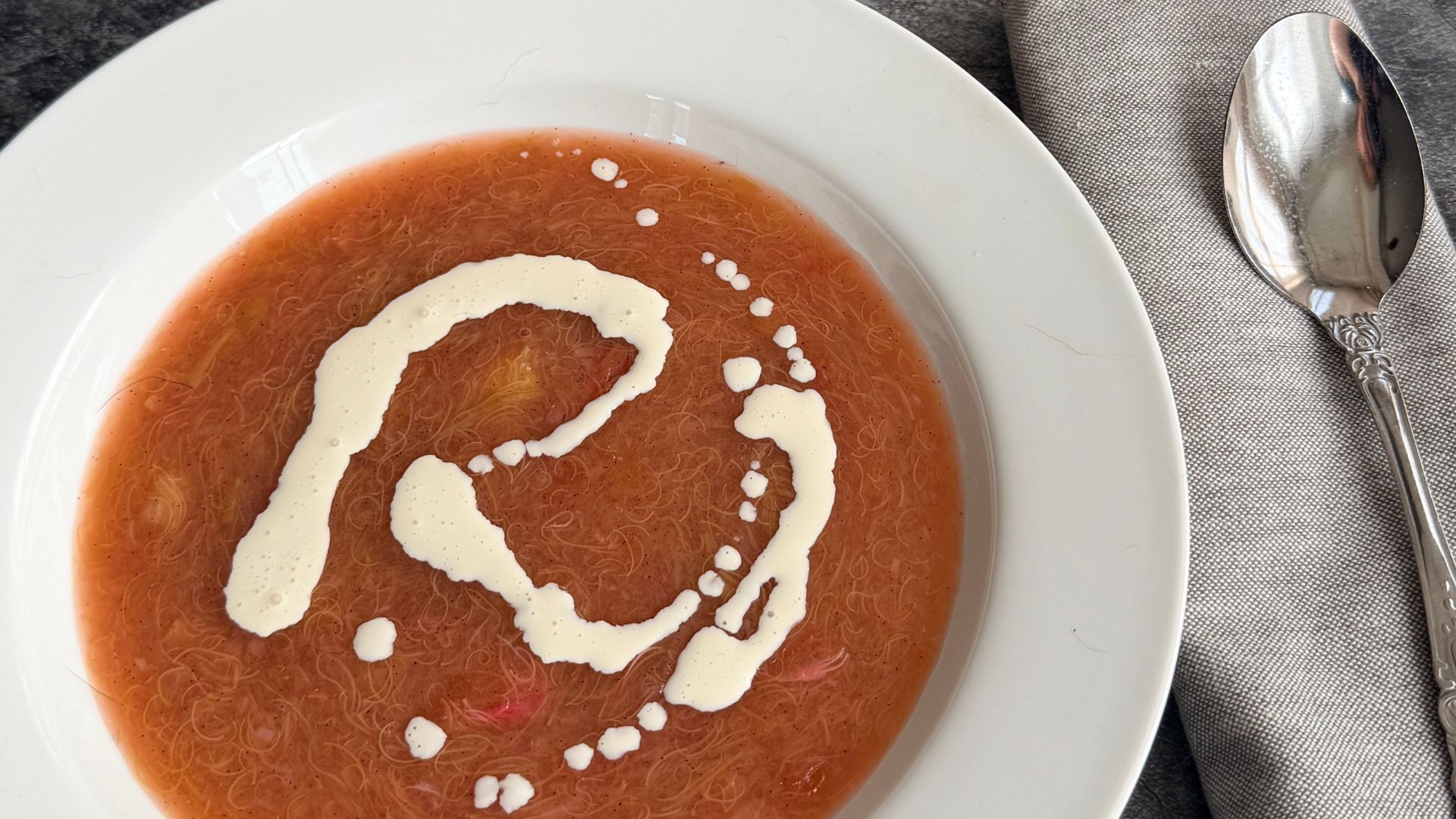
There are certain foods that don’t need much dressing up to feel special, and rhubarb porridge is one of them.
For me, rhubarb has always belonged to that tender stretch of the Norwegian year when spring finally loosens its grip and summer begins to make itself known in small, stubborn ways. Before the berries arrive in full force, before the gardens start overflowing with currants and gooseberries, there is rhubarb. Tall, crinkled leaves, pale green and rosy stalks, and that sharp, mouth-puckering flavor so many Norwegian children remember from dipping raw stalks into sugar.
Rhubarb porridge is one of the simplest and most nostalgic ways to use it. It is not really porridge in the oatmeal sense of the word, but rather a softly thickened fruit dessert, made by simmering rhubarb with water and sugar, then thickening it with potato starch until it becomes silky and spoonable.
Served warm or cold with milk or cream poured over the top, it is humble, tart, sweet, and unmistakably Norwegian.
I always think of dishes like this as quiet keepers of history. They rarely shout for attention, yet they carry the memory of gardens, seasons, resourcefulness, and the way Norwegians have always made something meaningful out of what grows close to home.
Rhubarb in Norway
Rhubarb has a much longer and more curious history than its modest garden appearance might suggest. Long before it became the plant we associate with pies, jams, juiceand summer desserts, rhubarb was valued as a medicinal plant. Its roots were used in traditional medicine, and for a time, it was such a prized commodity in Europe that it was subject to trade, secrecy, and even smuggling.
Rhubarb came to Norway in the 1700s, where it was first grown for medicinal use and also as an ornamental plant. It wasn’t until the 1800s that it really found its way into Norwegian kitchens, and one of the early ways people used it was in rhubarb porridge, served with milk.
That makes so much sense to me, because rhubarb porridge is exactly the kind of dish that belongs in a Norwegian household kitchen. It requires very little, keeps the plant’s flavor at the center, and turns a sour stalk from the garden into something comforting and generous.
As sugar became more available, rhubarb became even more beloved in Norwegian homes. It was cooked into porridgesoup, jam, compote, juice, desserts, and wine, and because the plant is hardy and easy to grow in cool, damp climates, it became a familiar sight in gardens across the country.
Many older Norwegian homes had a rhubarb corner, a rhubarb corner, sometimes half-forgotten but still producing faithfully year after year.
There is something almost comical about rhubarb’s personality. It asks for very little, grows with great confidence, and then demands sugar before it will behave politely at the table.
A Taste of Early Summer
In Norway, rhubarb is closely tied to early summer, and the younger stalks are the ones people tend to prize most. They are usually more tender and less fibrous, which is why many traditional recipes mention using rhubarb before St. Hans, the midsummer celebration on June 23rd. After that, the stalks can become tougher and more woody, although they can still be used depending on the plant.
Rhubarb porridge belongs to that moment in the season when you are craving something fresh and bright, but the full abundance of summer has not yet arrived. It is tart enough to wake you up, sweet enough to feel like dessert, and soft enough to eat from a bowl with a spoon while the cream slowly slips into the pink fruit.
Growing up in Norway, I remember rhubarb as something that was treated with both affection and practicality.
You didn’t need to buy it in little precious bundles wrapped in plastic. Someone had it in the garden, or their neighbor did, or there was a patch somewhere that had been there for years. It was part of the edible landscape, one of those plants that made the short northern growing season feel like it had finally opened its pantry door.
Keeping This Recipe Plant-Based
Traditionally, rhubarb porridge is served with milk, cream milkcream, or sometimes whipped cream. For this plant-based version, I wanted to keep the spirit of that contrast: the tart, warm fruit against something cold, pale, and creamy.
The vanilla-scented cashew cream is my nod to the old-fashioned cream poured around the edges of the bowl. It is not meant to turn this into a modern dessert with too many flourishes. It is meant to sit quietly beside the rhubarb, softening its acidity and adding a little roundness from vanilla.
The cashew cream should be pourable, not thick like frosting. Think of it as a silky plant-based cream that can be spooned or drizzled over the porridge just before serving.
A Few Notes Before You Begin
Use only the rhubarb stalks, never the leaves, as the leaves are not edible.
You do not need to peel rhubarb unless the stalks are very tough or stringy. Some people peel them out of habit, but leaving the skin on often gives the porridge a prettier pink colour.
Potato starch is traditional and given rhubarb porridge its glossy, old-fashioned texture. The key is to stir it into cold water first, then add it to the hot rhubarb while stirring constantly. Once the mixture thickens, avoid boiling it hard, as that can weaken the texture.
I love using a whole vanilla bean pod in the porridge; the flavor is so fresh and intense, and it matches the freshness of the rhubarb, but a good vanilla extract or paste will do too.
The amount of sugar will depend on your rhubarb. Some stalks are gentle and fruity, while others arrive with the attitude of a sour little troll, so taste and adjust as needed.
Rhubarb Porridge with Vanilla-Scented Cashew Cream
Serve 6
Ingredients
For the rhubarb porridge:
1 ½ lbs (700 g) rhubarb, trimmed and cut into 1-inch pieces
1 quart (1 litre) of water
¾ cup (150 g) sugar, plus more to taste
1 vanilla bean pod, split in half, vanilla scraped out (optional)
Pinch of sea salt
4 tablespoons potato starch
⅓ cup (80 ml) cold water
Optional toppings:
Additional sugar
For the vanilla cashew cream:
1 cup (130 g) raw cashews, soaked overnight or covered with boiling water and soaked for 1 hour
½ cup (125 ml) cold water, plus more as needed
2 tablespoons maple syrup or organic cane sugar
1 teaspoon vanilla extract, or the seeds from 1 vanilla bean
Tiny pinch of sea salt
1-2 teaspoons fresh lemon juice
Directions
To make the rhubarb porridge:
Place the rhubarb, 1 quart (1 liter) of water, sugar, vanilla pod, and salt in a medium saucepan and bring to a gentle simmer over medium heat.
Let the rhubarb cook for 10 to 12 minutes, stirring occasionally, until the stalks have softened and begun to fall apart into a rosy, fragrant compote. Watch the pot, as this happens quicker than you think!
Taste and add a little more sugar if needed, keeping in mind that the cashew cream will soften the tartness when served.
In a small bowl, whisk the potato starch with the cold water until completely smooth.
Lower the heat and slowly pour the potato starch slurry into the rhubarb mixture while stirring constantly. Do not pour it all in at once, as the potato starch might get lumpy.
Continue stirring until the porridge thickens and turns glossy, then remove the pan from the heat as soon as you see the first lazy bubble rise to the surface. Do not let it boil hard after adding the potato starch.
Pour the rhubarb porridge into a serving bowl and sprinkle a thin layer of sugar over the surface to help prevent a skin from forming.
Let it cool slightly (or completely if you prefer it chilled!)
Serve warm, room temperature, or chilled.
To make the vanilla cashew cream:
Drain the soaked cashews and place them in a high-speed blender with the water, maple syrup or sugar, vanilla, salt, and lemon juice.
Blend until completely smooth and silky, adding another tablespoon or two of water if needed to create a pourable cream.
Chill until ready to serve.
Two serves:
Spoon the rhubarb porridge into small bowls, drizzle with some optional additional sugar, and serve with the vanilla cashew cream on the side, letting everyone pour as much as they like over the top.
I like it best slightly chilled, when the rhubarb has settled into its tart sweetness, and the cream creates pale ribbons through the pink porridge. It is simple, seasonal, and quietly beautiful in the way so much Norwegian food is, rooted in what is available, shaped by memory, and made special not by extravagance but by timing.
Rhubarb porridge is not a dessert that tries to impress you. It does something better. It reminds you that the first true taste of summer can come from a plant growing in the corner of the garden, waiting patiently for someone to remember it.
More Recipes To Try….
Pickled Rhubarb
Strawberry-Rhubarb Cake
Spiced Strawberry-Rhubarb Crumble
For the rhubarb porridge
- 1 ½ lbs (700 g rhubarb), trimmed and cut into 1-inch pieces
- 1 quart (1 litre) water
- ¾ cup (150 g) of sugar plus more two keys
- 1 vanilla bean pod split in half, vanilla scraped out (optional)
- Pinch of sea salt
- 4 tablespoons potato starch
- ⅓ cup (80 ml) of cold water
- Optional toppings:
- Additional sugar
For the vanilla cashew cream
- 1 cup (130 g) raw cashews, soaked overnight or covered with boiling water and soaked for 1 hour
- ½ cup (125 ml) of cold water plus more as needed
- 2 tablespoons maple syrup or organic cane sugar
- 1 teaspoon vanilla extract or the seeds from 1 vanilla bean
- Tiny pinch of sea salt
- 1-2 teaspoons fresh lemon juice
Make the rhubarb porridge
-
Place the rhubarb, 1 quart (1 liter) of water, sugar, vanilla pod and salt in a medium saucepan and bring to a gentle simmer over medium heat.
-
Let the rhubarb cook for 10 to 12 minutes, stirring occasionally, until the stalks have softened and begun to fall apart into a rosy, fragrant compote.
-
Taste and add a little more sugar if needed, keeping in mind that the cashew cream will soften the tartness when served.
-
In a small bowl, whisk the potato starch with the cold water until completely smooth.
-
Lower the heat and slowly pour the potato starch slurry into the rhubarb mixture while stirring constantly. Do not pour it all in at once, as the potato starch might get lumpy.
-
Continue stirring until the porridge thickens and turns glossy, then remove the pan from the heat as soon as you see the first lazy bubble rise to the surface. Do not let it boil hard after the potato starch has been added.
-
Pour the rhubarb porridge into a serving bowl and sprinkle a thin layer of sugar over the surface to help prevent a skin from forming. Let it cool slightly (or completely if you prefer it chilled!)
-
Serve warm, room temperature, or chilled.
Make the vanilla cashew cream
-
Drain the soaked cashews and place them in a high-speed blender with the water, maple syrup or sugar, vanilla, salt, and lemon juice.
-
Blend until completely smooth and silky, adding another tablespoon or two of water if needed to create a pourable cream.
-
Chill until ready to serve.
Two Serves
-
Spoon the rhubarb porridge into small bowls, drizzle with some optional additional sugar, and serve with the vanilla cashew cream on the side, letting everyone pour as much as they like over the top.
-
I like it best slightly chilled, when the rhubarb has settled into its tart sweetness and the cream creates pale ribbons through the pink porridge. It is simple, seasonal, and quietly beautiful in the way so much Norwegian food is, rooted in what is available, shaped by memory, and made special not by extravagance but by timing.
-
Rhubarb porridge is not a dessert that tries to impress you. It does something better. It reminds you that the first true taste of summer can come from a plant growing in the corner of the garden, waiting patiently for someone to remember it.