
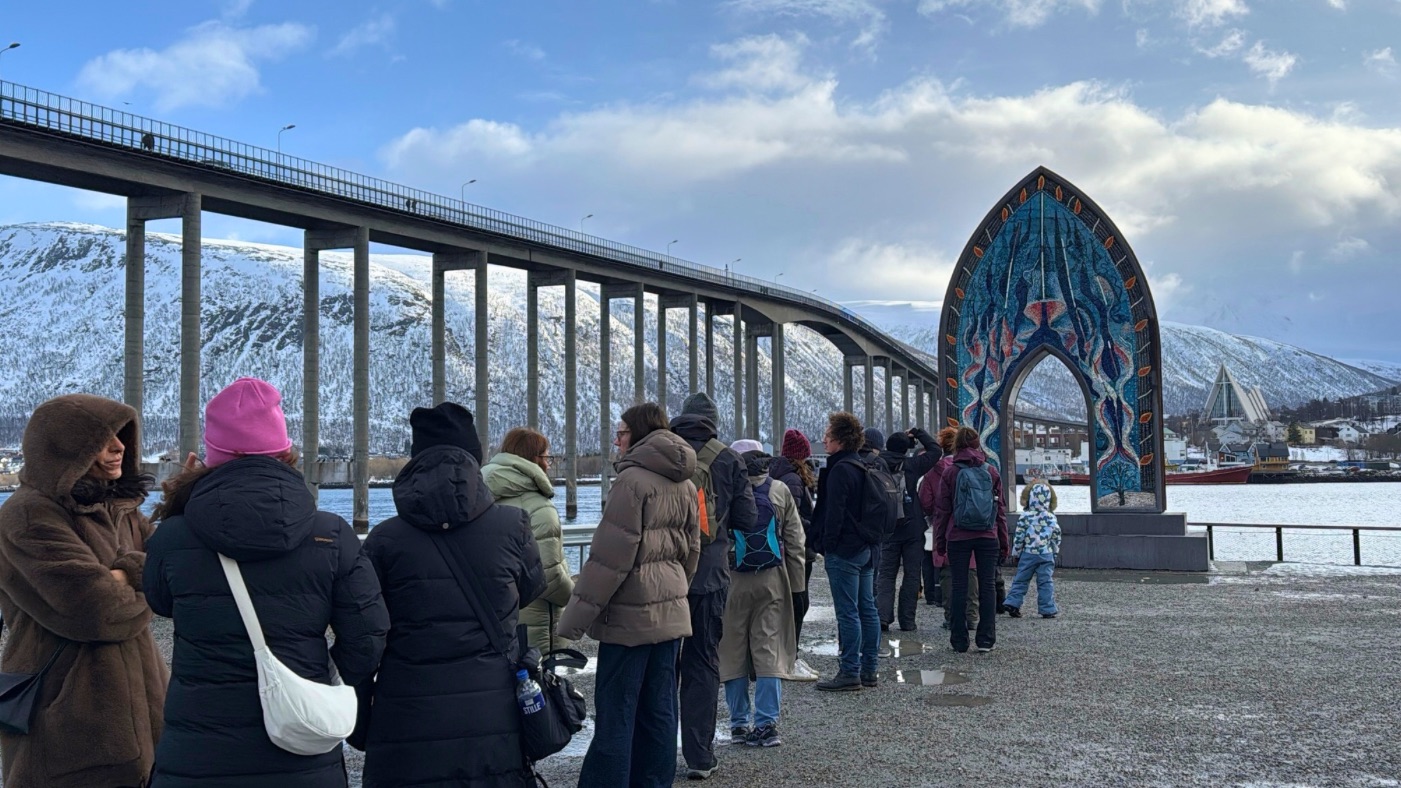
Tromsø could become the first municipality in Norway to introduce a tourist tax, after local politicians approved a plan to bring in a visitor contribution from 1 January 2027.
The Arctic city must still receive approval from the Ministry of Trade, Industry and Fisheries before the fee can be introduced.
Under Norway’s new visitor contribution law, only municipalities that can demonstrate significant pressure from tourism will be allowed to introduce the tax.
“I don’t think that will be a problem for municipalities in the Tromsø region,” Helga Bårdsdatter Kristiansen, sustainability adviser at Tromsø municipality, told NRK.
She said the municipality was pleased to finally have the opportunity to introduce a visitor contribution.
“There has been a lot of hard work from Tromsø municipality, both administratively and politically. Now we are getting close. We are in close dialogue with KS to ensure a good collection system that is predictable for the municipality and tourism businesses,” said Kristiansen.
KS is the Norwegian Association of Local and Regional Authorities, an organization that represents municipalities and county authorities in Norway.
What Is A Tourist Tax?
In Norway, the new fee is officially known as a visitor contributionor visitor contribution. In practice, it is a local tourist tax paid by visitors, most commonly through accommodation providers.
The idea is not to discourage tourism, but to help finance the local services and infrastructure used by visitors as well as residents. These can include public toilets, waste management, signs, trails, transport solutions and measures to reduce pressure on vulnerable natural areas.
Tromsø is a clear example of the kind of destination the law was designed for. The city has seen strong growth in international tourism in recent years, especially during the winter season, when northern lights trips, whale watching, dog sledding and other Arctic experiences draw visitors from around the world.
According to Tromsø municipality, the municipality recorded more than 1.3 million commercial overnight stays in 2025. It also received around 180 cruise calls and more than 190,000 cruise passengers.
A Three Percent Accommodation Fee
Tromsø municipality will submit its plan for the visitor contribution to the ministry on 1 July. At first, the fee will be introduced as an accommodation charge.
According to KS, Tromsø is the first Norwegian municipality known to have formally approved the introduction of a tourist tax.
“We don’t know of any other municipalities that have done this yet, but there are surely more that will do so,” said Helge Eide, area director at KS.
Kristiansen said Norway’s visitor contribution law sets the framework for how the scheme must work: “It is 3 percent on accommodation. Both hotels and short-term rentals.”
That means visitors staying in hotels in Tromsø, or apartments, holiday homes or other short-term rentals, would pay the additional charge as part of their accommodation cost.
Asked how the fee might affect the number of tourists traveling to Tromsø, Kristiansen said the municipality does not expect a major impact.
“It may affect some segments of the travel industry, such as courses and conferences. We do not believe it will affect whether travelers will come here or not.”
“It is not a very large fee, and it is very common in most European countries and cities,” said the sustainability adviser.
Tromsø Looks To Iceland
Tromsø has looked abroad while developing its plans, especially to Iceland, where tourism growth has also placed pressure on local communities and infrastructure.
“Iceland has a number of fee systems for visitor pressure. Paris also has the same. They have 8 euros per visitor per night,” said Kristiansen.
Tourist taxes are common in many European cities, although the exact model varies. Some destinations charge a fixed amount per person per night, while others calculate the fee as a percentage of the accommodation price.
Norway has long debated whether local authorities should be able to charge visitors directly. The issue has become more urgent in places where tourism has grown quickly, but where the cost of maintaining toilets, paths, waste facilities, parking areas and other shared infrastructure has largely fallen on local taxpayers.
The visitor contribution law enters into force on 1 July 2026. Municipalities that want to introduce the fee must have their plans approved by the ministry and must also adopt a local regulation before collection can begin.
Regional Cooperation
Tromsø municipality must also consider how it will work with neighboring municipalities.
That is especially important in the Tromsø region, where many visitors sleep in Tromsø but take excursions across municipal borders. Popular day trips from the city often involve surrounding areas such as Lyngen, Kvaløya and other parts of northern Troms.
“Most of the accommodation facilities are in Tromsø. But many of the excursions from here go beyond the municipal borders. The pressure will be felt in Karlsøy, Balsfjord, Storfjord and Lyngen. We are in dialogue with our neighboring municipalities, through our intermunicipal political council, about how we should coordinate these processes,” said Kristiansen.
According to Kristiansen, those municipalities are also working on similar measures: “All the municipalities in the Tromsø region will probably apply to introduce a visitor contribution.”
Tromsø municipality says the money raised will be used for measures that benefit both residents and visitors.
On its website, the municipality points to improved signage, waste management, toilets, transport solutions and measures to manage visitor flows and reduce pressure in vulnerable areas as important priorities.
A cruise passenger fee may also be introduced later. “For Tromsø, there will also be a cruise fee in the longer term. We are waiting for the ministry to finish the processes around that. It will also be included in the visitor contribution,” said Kristiansen.