

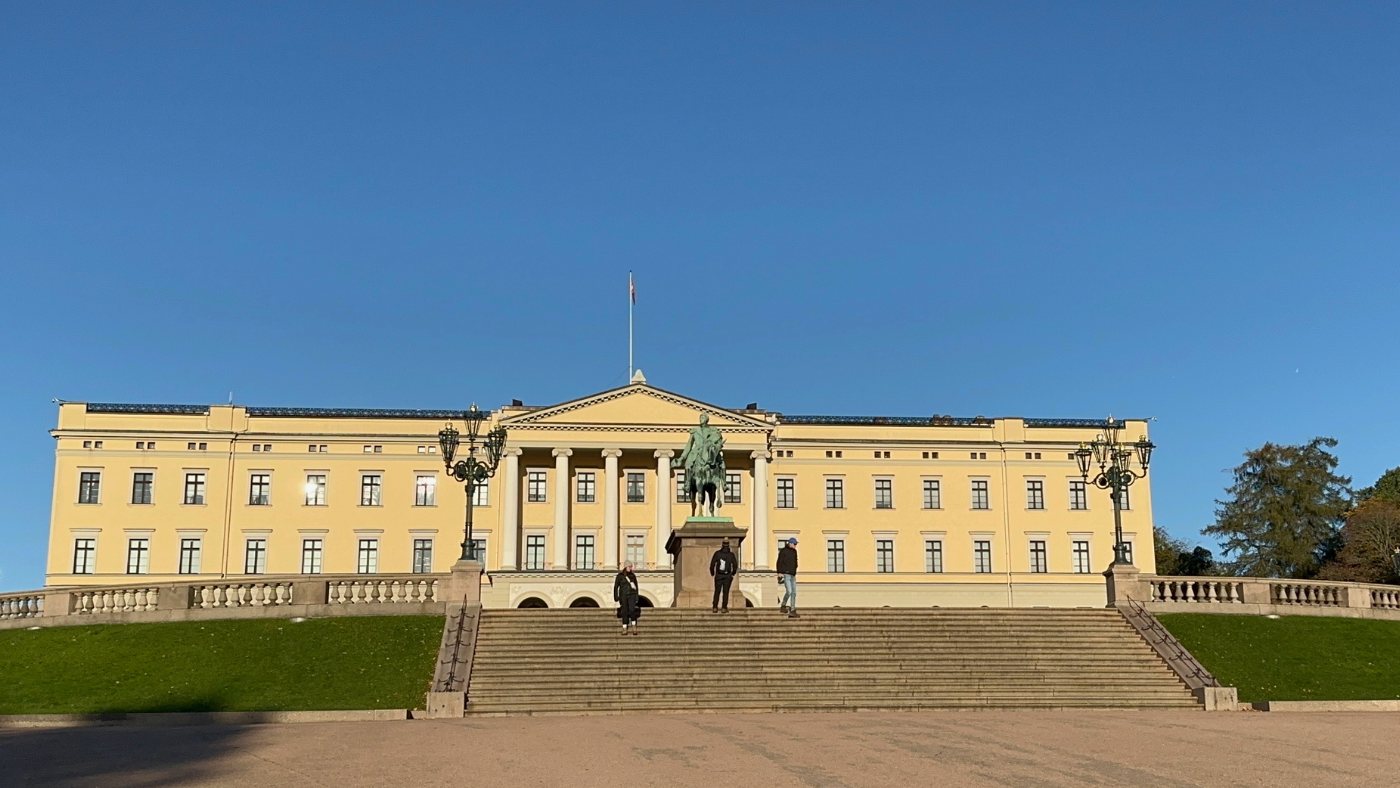
A recent opinion piece in The Guardian has captured a feeling that has been growing in Norway for some time: the country’s monarchy, long seen as unusually modest and close to the people, is facing one of the most serious crises of confidence in its modern history.
For decades, Norway’s royal family seemed to occupy a special place in national life.
This was not the grand, remote monarchy often associated with other European countries. Norway’s royal family were carefully woven into the country’s self-image: informal, approachable, patriotic, and broadly in tune with modern Norwegian values.
They were the royals who waved to children on Constitution Day, spoke warmly about diversity, used the language of duty rather than privilege, and seemed to understand that monarchy in Norway only works if it feels compatible with equality.
That image has not disappeared overnight. King Harald and Queen Sonja remain widely respected, and many Norwegians still support the monarchy as an institution.
But the mood around the royal family has changed. What once felt like a national fairytale now feels much more complicated. by Magnus Nome in the Guardian captures a sense that has been growing in Norway for some time: that the monarchy’s greatest strength, public trust, can no longer be taken for granted.
A difficult year for Norway’s royal family
The immediate context is a series of very different, but overlapping, stories.
The first is deeply personal and has prompted widespread sympathy. Crown Princess Mette-Marit, who has lived with pulmonary fibrosis since 2018, recently underwent a successful lung transplant at Oslo University Hospital.
The palace has said she will remain in hospital for several weeks as part of the normal recovery process for transplant patients.
Many Norwegians have responded with warmth and concern. Here illness is not a scandal, and it should not be treated as one. But the timing has placed her health story into an already intense public conversation about the future of the royal house.
The second story is far more troubling. Marius Borg Høiby, Mette-Marit’s son from a previous relationship, was recently sentenced to four years in prison after being convicted by the Oslo District Court. He has appealed the verdict.
Høiby is not a royal, has no title, and is not in the line of succession. Even so, he grew up in close proximity to the royal family and has often been associated with it in the public imagination.
That distinction matters legally and constitutionally, but it has not prevented the case from damaging the royal family’s public image.
The third story concerns Mette-Marit’s past contact with Jeffrey Epstein. Revelations about the extent of that contact, followed by a televised interview with NRK, left many Norwegians feeling that important questions remained unanswered.
Mette-Marit expressed regret and said she had been deceived, but the interview did not draw a line under the matter for many viewers.
Taken separately, these stories are very different. Taken together, they have created something more serious: a crisis of trust.
Why trust matters so much in Norway
All monarchies depend on public consent to some degree, but Norway’s monarchy depends on it more than most.
Norway is not a country that instinctively loves hierarchy. The constitution of 1814 abolished nobility, and modern Norwegian society places enormous value on equality, modesty, and the idea that no one should think themselves better than others.
That makes monarchy an odd fit on paper. Yet in practice, Norway’s royal family has survived because it has managed to present itself less as an elite dynasty and more as a unifying national institution.
This began with modern Norway itself. After the union with Sweden ended in 1905, Norwegians voted in favor of inviting Prince Carl of Denmark to become king. He took the name Haakon VII and quickly came to symbolize the newly independent country. During the Second World War, his refusal to submit to the German occupation made him a powerful symbol of resistance.
His son, King Olav V, strengthened the idea of a people’s monarchy. He is still remembered for his down-to-earth manner, including the famous image of him taking the tram during the oil crisis in the 1970s.
King Harald continued that tradition in a modern key. One of the most memorable moments of his reign came in 2016, when he gave a speech describing Norwegians as people from the north, south, and all parts of the world, people who believe in God, Allah, everything and nothing, and people who love each other across gender and identity.
It was widely praised because it captured the inclusive image many Norwegians wanted of themselves.
This is the royal bargain in Norway. The monarchy is inherited and undemocratic in form, but it has been tolerated because it has seemed humble, useful, and emotionally connected to the people.
When that emotional connection weakens, the constitutional argument becomes harder to avoid.
The Mette-Marit fairytale
No one embodied the modern Norwegian royal fairytale more clearly than Mette-Marit.
When Crown Prince Haakon chose to marry her, it was controversial. She was a single mother with a past that did not fit traditional royal expectations. In many countries, that would have been treated as a permanent obstacle. In Norway, after an initial storm, it became part of the story.
The marriage was presented as love over convention. For many people, that made the monarchy seem more modern, not less. Mette-Marit grew into her role, became associated with cultural and humanitarian causes, and over time won respect from many former critics.
That is why the present crisis feels so sharp. The person who once helped modernize the monarchy is now at the center of questions about judgement, transparency, and suitability for the future role of queen.
Is Norway becoming republican?
Despite the headlines, Norway is not on the verge of becoming a republic.
Republican proposals are raised regularly in the Storting, usually by politicians from the left and centre-left. They are typically framed as matters of democratic principle: in a modern democracy, the head of state should not inherit the role through birth.
That argument has gained more attention this year, but not enough to change the system. Earlier in 2026, the Storting once again voted overwhelmingly to retain the monarchy. The result showed that while the public mood has shifted, the political system has not.
There is also an important distinction between disappointment in individual royals and support for abolishing the monarchy. Many Norwegians can be critical of Mette-Marit, unhappy with the palace’s handling of recent questions, and still prefer a constitutional monarchy to an elected president.
For many, the question is not “monarchy or republic?” It is “what kind of monarchy can Norway accept?” That is a much more dangerous question for the palace than it might first appear.
A monarchy built on ordinariness
One of the reasons the recent controversies have hit so hard is that Norway’s monarchy has always relied on the illusion, or perhaps the hope, of ordinariness.
Norwegians know the royals live privileged lives. They know the institution is hereditary. But the royal family has generally avoided the excessive glamor and celebrity culture associated with some other monarchies.
That low-key image suited Norway. It allowed people to accept the contradiction of a royal family in an egalitarian society. The royals were special, but not too special. Different, but not distant. Formal when necessary, but recognizably Norwegian.
The Epstein revelations challenge that image because they connect the Crown Princess, however indirectly and however regrettably, to a world of global wealth, private networks, and elite access. For a monarchy that depends on appearing grounded, that association is damaging.
The Høiby case is different, but it also cuts into the same issue. It raises questions about proximity, judgment, and how much protection or exceptional treatment may be assumed around people close to the royal family, even when they are not royal themselves.
That does not mean every online accusation is fair. Far from it. Much of the discussion has become toxic, especially around Mette-Marit’s illness.
There is no basis for conspiracy theories about her medical treatment, and her serious health condition deserves compassion. But the palace’s problem is that when trust is weakened, rumors find more room to grow.
The challenge for Crown Prince Haakon
Crown Prince Haakon has long been seen as a serious, thoughtful, and capable heir. For many years, he appeared to represent the future of the monarchy: modern, international, socially aware, and comfortable with a more open Norway. That future now looks more difficult.
If King Harald’s reign has been defined by continuity and affection, Haakon’s may begin under much more intense scrutiny. He will inherit not only the throne, but the unresolved questions surrounding the monarchy’s role, transparency, finances, family boundaries, and relevance.
This does not mean he cannot succeed. In fact, the monarchy’s best chance of recovery may depend on him. But the old assumption that public affection would automatically transfer from Harald to Haakon no longer feels quite as secure.
Norway’s monarchy has survived because it adapted. It became less grand, less distant, and more inclusive. The next adaptation may need to be about openness.