Betting, lotteries and online games are legal in Norway, but only within a tightly controlled system. Here’s how the Norwegian gambling model works, from Lotto and football betting to casinos, poker and problem gambling support.
As a Brit, I grew up with gambling as part of everyday sports culture. A small bet on the football was never especially dramatic.
It was something to make a televised match a little more interesting, especially if you had no natural reason to care about the result. Norway takes a very different approach.
There are no high street betting shops here. There are no legal land-based casinos. Sports betting, lotteries and online casino games are channelled through a small number of approved operators, with strict rules on marketing, age limits, loss limits and player registration.
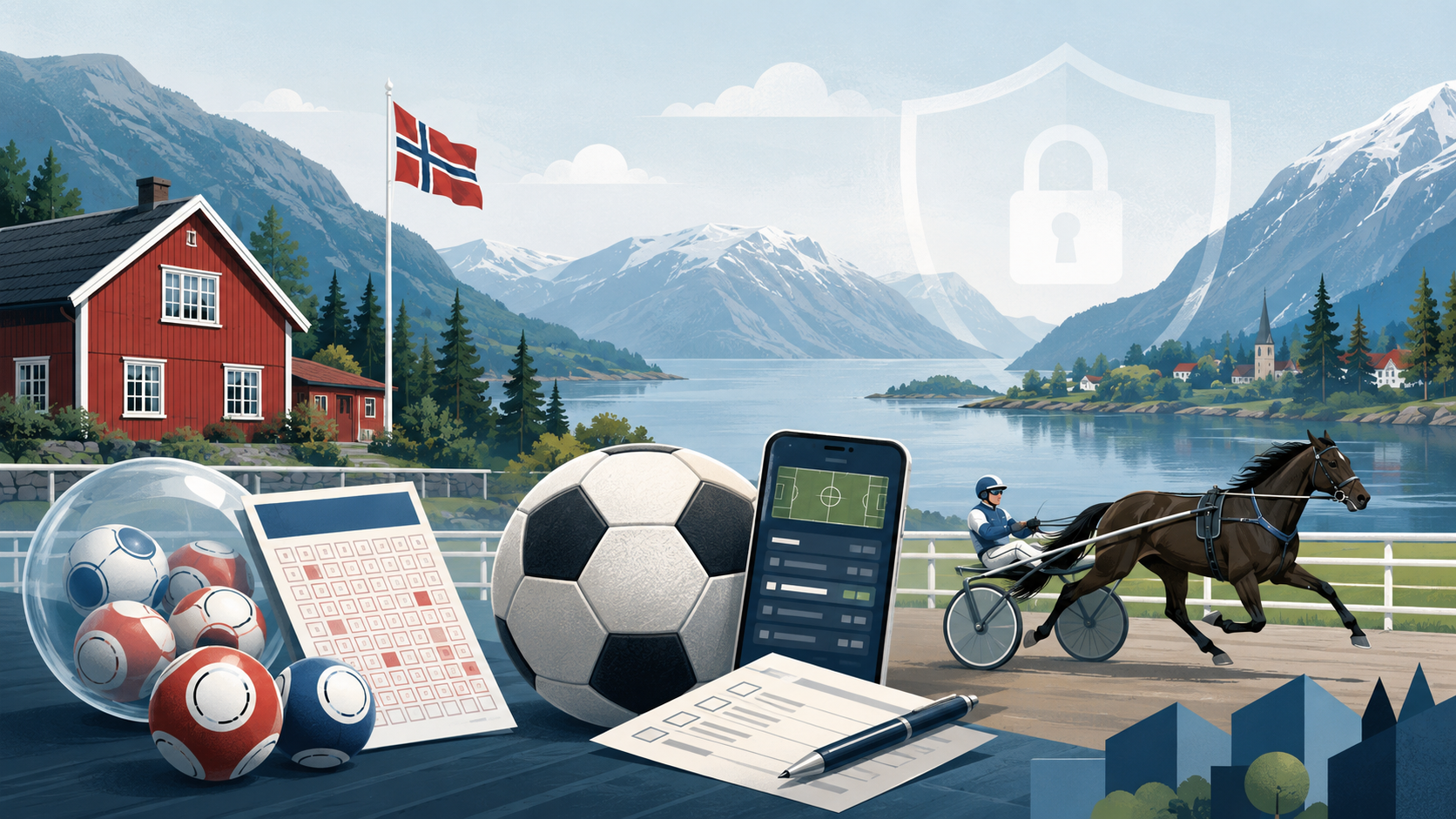
That does not mean gambling does not exist in Norway. Far from it. Lotto is part of weekly life for many people, football betting is available, online casino games are offered by the state-owned Norsk Tipping, and horse racing has its own dedicated operator.
But Norway’s gambling market is built around one central idea: gambling should be controlled, not encouraged.
Is Gambling Legal In Norway?
Yes, gambling is legal in Norway, but only when offered under the country’s regulated system.
The main operator is Norsk Tipping, a state-owned company based in Hamar. It offers lotteries, sports betting, scratchcards, online casino games, bingo-style games and gaming terminals. For horse racing and trotting, the approved operator is Norsk Rikstoto.
Beyond these two, some charities, organisations and associations can run lotteries or bingo under licence. There are also limited exceptions for small private games, including certain low-stakes poker games at home.
The important point is that Norway does not have an open gambling market in the way the UK, Ireland or many other European countries do. Private betting companies and online casinos cannot simply apply for a Norwegian licence and compete for customers.
Norway’s gambling system is known as the exclusive rights model. In plain English, that means the state gives a very small number of operators the right to offer gambling, while blocking or restricting everyone else.
Why Norway Regulates Gambling So Strictly
Norway’s gambling policy has three main aims: to prevent gambling problems, to reduce financial crime, and to limit private profit from gambling.
This is why the Norwegian authorities have long defended the monopoly model. The argument is not that gambling is harmless if the state runs it. Rather, the argument is that if people are going to gamble anyway, they should be channelled into a regulated environment where there are tools to limit harm.
That word, channelled, comes up a lot in Norwegian gambling policy. Norsk Tipping is expected to offer games that are attractive enough to compete with illegal or unregulated alternatives, but not so aggressive that they create unnecessary harm.
It is a delicate balance. If the regulated offer is too boring, more people may use foreign websites. If it becomes too attractive, critics argue the state is simply promoting gambling under the cover of responsibility.
This tension explains much of the debate around gambling in Norway today.
The Legacy Of Slot Machines
To understand Norway’s attitude to gambling, it helps to look back at the slot machine era.
In the 1990s and early 2000s, slot machines could be found in supermarkets, petrol stations, pubs and other public places across Norway. They became one of the most visible forms of gambling in the country and were strongly associated with problem gambling.
The authorities eventually acted. Traditional slot machines were removed from the market in 2007. They were later replaced by state-controlled gaming terminals, known as Multix and Belago, with tighter limits, player registration and other responsible gambling tools.
For many people in Norway, the slot machine period remains a warning sign. It showed how quickly gambling could become normalised when it was widely available in everyday settings.
Norsk Tipping: Norway’s Main Gambling Operator
Norsk Tipping is the name most people in Norway associate with gambling. Its games are available online, through its app, and at thousands of points of sale around the country.
Its best-known products include Lotto, Vikinglotto, Eurojackpot, Joker, Nabolaget, Extra and Keno. It also runs Flax scratchcards, sports betting under the Oddsen brand, and online casino games such as KongKasino.
For many Norwegians, Norsk Tipping is not seen in quite the same way as a private gambling company. That is partly because its profits are distributed to good causes, including sport, culture, health and rehabilitation, humanitarian organisations, and local voluntary groups.
This is not just a vague marketing claim. The distribution of Norsk Tipping’s surplus is built into the Norwegian system. Through Grasrotandelen, players can also choose a local club or organisation to receive a share linked to their gambling activity.
This helps explain why Lotto, in particular, has such broad acceptance in Norway. For many players, it is not only a chance to dream about a big win. It is also framed as a small contribution to sport, culture and local community life.
Lottery Games In Norway
Lottery games are the most mainstream form of gambling in Norway.
The classic Saturday Lotto draw is familiar to many people, while Vikinglotto and Eurojackpot connect Norwegian players with larger Nordic and European prize pools. Joker, Nabolaget, Extra and Keno add further variety, and Flax scratchcards remain a familiar sight in kiosks and shops.
For international residents, Eurojackpot is often the most recognisable product because it operates across many European countries. In Norway, however, it is bought through Norsk Tipping.
Lottery wins from Norsk Tipping are generally tax-free in Norway. That includes large jackpot wins. However, if a major win remains in your bank account or becomes part of your assets, it may affect your wealth tax position later.
The popularity of lottery games also explains why problems at Norsk Tipping attract so much attention.
In 2025, the company faced intense scrutiny after serious errors related to Eurojackpot and Lotto, including cases in which some customers were wrongly informed of inflated prize amounts.
The incidents damaged trust and triggered renewed debate about whether a state monopoly is automatically safer or more reliable than a licensed private market.
Football Betting In Norway
Football betting is legal in Norway, but it is very different from the betting culture in the UK.
There are no Ladbrokes, William Hill or Betfred shops on Norwegian high streets. Instead, legal sports betting is offered through Norsk Tipping’s Oddsen service.
Oddsen covers football and many other sports, including ice hockey, handball, tennis, basketball, winter sports and some esports. Players can bet before matches or live, depending on the event and the rules in place at the time.
There is also Tipping, the traditional pools-style football game that has a long history in Norway. For many older Norwegians, “å tippe” still simply means to fill in a football coupon.
For modern sports bettors, the Norsk Tipping offer can feel more limited than what they may know from the UK or other regulated betting markets. The range of markets may be narrower.
Although it’s not limited just to Norwegian football, promotional offers are restricted, and there is much less of the relentless advertising culture that surrounds football betting elsewhere.
Even so, sports betting remains one of the more sensitive parts of the Norwegian market. Football is popular, live odds can be risky for people with gambling problems, and big tournaments create a surge of attention.
During major events such as the World Cup, the authorities face a difficult question: should Norsk Tipping be more available so players stay within the regulated system, or should availability be limited to protect vulnerable players? There is no easy answer, and the debate continues.
Online Gambling And Foreign Betting Sites
This is where things get complicated. Under Norwegian rules, Norsk Tipping is the only company that can legally offer online casino games and sports betting to people in Norway. Norsk Rikstoto covers horse racing.
Foreign gambling companies are not allowed to target the Norwegian market with unlicensed gambling.
In practice, many Norwegians have used foreign betting sites and online casinos over the years. Some of these sites have offered Norwegian language options, accepted Norwegian kroner, or marketed themselves directly to Norwegian customers.
The Norwegian authorities have responded with several measures. Payment blocking was introduced to stop transactions between Norwegian banks and illegal gambling operators. A ban on foreign gambling advertising distributed through television channels aimed at Norway also came into force.
More recently, Norway introduced DNS blocking of illegal gambling websites, meaning users attempting to access blocked sites can be redirected to an information page.
For ordinary players, the legal situation is often misunderstood. The Norwegian system primarily targets operators, marketing and payment facilitation, rather than individual players. However, using offshore sites can still create practical problems.
Payments may be blocked, consumer protection may be weaker, responsible gambling tools may not apply, and tax rules can be more complicated than with Norsk Tipping.
Are There Casinos In Norway?
There are no legal land-based casinos in Norway. Casino-style games are available online through Norsk Tipping’s KongKasino, but physical casinos are not part of the Norwegian gambling landscape.
This can surprise visitors, especially those arriving from countries where casinos are normal entertainment venues.
Some gambling is permitted on ships sailing in regular traffic between Norway and foreign ports. This is why casino areas may appear on certain ferries, even though similar venues are not allowed on land in Norway.
Horse Racing And Trotting
Horse betting in Norway is handled by Norsk Rikstoto.
If you are used to British horse racing, Norway’s version may feel unfamiliar. Trotting, or harness racing, plays a major role. Instead of a jockey riding on the horse’s back, the driver sits behind the horse in a two-wheeled cart called a sulky.
To British eyes, it can look unusual at first. But trotting has a long tradition in Norway and the wider Nordic region, with its own tracks, followers and betting culture.
Norsk Rikstoto is separate from Norsk Tipping, but it fits within the same overall model. It exists to keep horse betting inside a regulated framework, while profits support the horse racing sector.
Bingo, Lotteries And Local Fundraising
Not all gambling in Norway is run directly by Norsk Tipping or Norsk Rikstoto.
Bingo halls, charitable lotteries and fundraising lotteries also exist, but they are regulated. Organisations may be granted permission to run lotteries, and some smaller gaming activities can be allowed without prior approval if they meet strict conditions.
This is an important part of the Norwegian picture. Gambling is not only seen as a commercial entertainment product. It is also tied to fundraising for voluntary organisations, sports clubs and humanitarian causes.
That connection is one reason the system has broad political support. Many local clubs and associations benefit from gambling revenues, either directly through Grasrotandelen or indirectly through the distribution of Norsk Tipping’s surplus.
Poker In Norway
Poker has had a complicated history in Norway. For many years, organised poker for money was effectively prohibited. The rules have since softened, but only within limits.
Private poker games can be allowed in a private home, provided they are low stakes, not organised as a business, and meet restrictions on participants, age and entry fees. Larger poker events require permission, and the Norwegian Poker Championship has operated under a regulated framework.
This article is only a broad overview. If poker is your main interest, it is worth reading our separate guide to playing poker in Norway, as the details matter.
Age Limits And Player Controls
The legal age for gambling in Norway is 18. For Norsk Tipping, players must register, and most gambling is linked to a personal account. This is central to the Norwegian model.
If the operator knows who is playing, it can apply loss limits, offer self-exclusion, monitor risk patterns and intervene when necessary.
Players can set personal limits. There are also mandatory maximum loss limits, with stricter limits for younger players. Norsk Tipping has introduced lower monthly loss limits for young adults, reflecting concern that people under 25 can be especially vulnerable to gambling harm.
The Debate Over Norway’s Gambling Monopoly
Norway’s gambling monopoly has supporters and critics.
Supporters argue that the model keeps gambling under democratic control, prevents aggressive competition, reduces advertising pressure, and ensures that profits go to public and voluntary causes rather than private shareholders.
They also point to the danger of a fully liberalised market. In countries with many licensed operators, gambling advertising can become extremely visible, especially around football. Norway has deliberately tried to avoid that.
Critics make a different argument. They say the monopoly limits consumer choice, may push some players toward foreign sites, and gives the state a financial interest in gambling while claiming to protect people from it.
Recent problems at Norsk Tipping have strengthened that criticism. A state monopoly may be designed for responsibility, but it is not automatically immune from technical failures, compliance problems or poor decision-making.
This is the central contradiction in Norwegian gambling policy. The state wants to reduce gambling harm, but it also runs the main gambling company.
Is Change Coming?
For years, there has been speculation that Norway might move towards a licensing model, allowing private companies to operate legally under Norwegian rules.
So far, that has not happened. If anything, recent developments have strengthened enforcement of the monopoly model. Payment blocking, advertising restrictions and DNS blocking all point in the same direction: Norway is trying to make the existing system work, rather than replace it.
That does not mean the debate is over. Online gambling is difficult to contain within national borders. International sports sponsorship, social media, streaming, influencers and offshore casinos all make it harder for Norway to keep foreign gambling brands away from Norwegian eyes.
At the same time, public trust in Norsk Tipping matters. If the state operator is asking people to accept limited choice in the name of safety, it has to be seen as competent, transparent and genuinely responsible.
Getting Help For Gambling Problems In Norway
Gambling problems can affect anyone, regardless of income, education, nationality or background.
Warning signs include gambling with money you cannot afford to lose, chasing losses, hiding gambling from family or friends, borrowing money to gamble, or feeling restless and irritable when trying to stop.
In Norway, Hjelpelinjen offers anonymous help for people with gambling or gaming problems. You can call 800 800 40 or use the chat service through Hjelpelinjen’s website. Spillavhengighet Norge also offers support for people with gambling problems and their relatives.
If you are worried about your gambling, do not wait until the situation becomes dramatic. The earlier you talk to someone, the easier it is to regain control.