

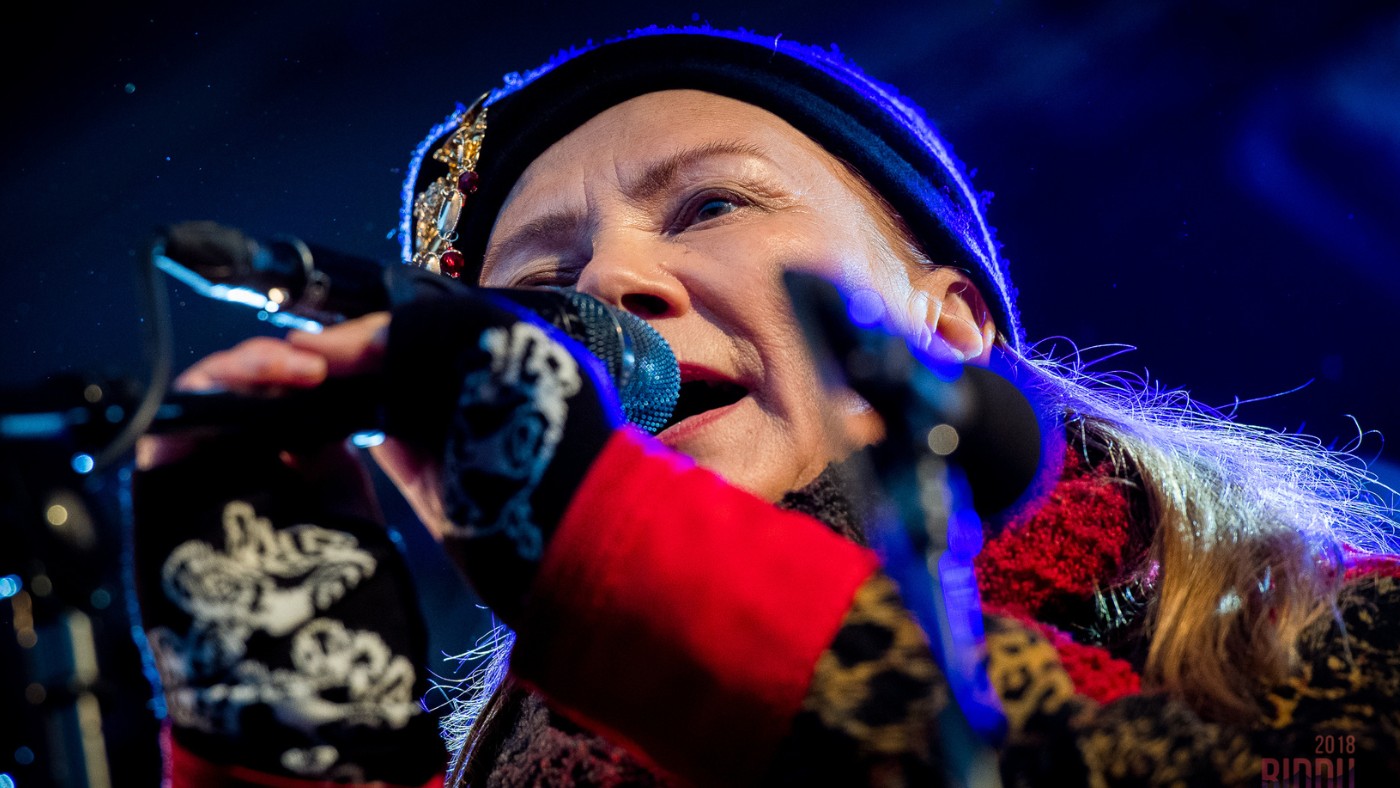
For more than three decades, Mari Boine has fused joik, jazz, rock and world music to bring Sami culture to audiences far beyond northern Norway.
Mari Boine is one of Norway’s most important musical voices. Not simply because of her voice itself, although that is unforgettable, but because of what she has done with it.
Born near Karasjok in Finnmark, Boine grew up in the heart of Sápmi, the traditional homeland of the Sami people that stretches across northern Norway, Sweden, Finland and parts of Russia.
Her parents made a living from salmon fishing and farming, and she was raised close to the landscape that would later become such a strong presence in her music.
But Boine also grew up at a time when Sami language and culture were still marked by generations of suppression. In school and public life, Norwegian language and identity were promoted at the expense of Sami traditions.
For many Sami families, that meant shame, silence, and a complicated relationship with their own heritage. Boine’s music helped challenge that.
The power of joik
At the heart of Mari Boine’s sound is joik, the traditional vocal music of the Sami people.
To call joik simply “Sami folk singing” does not quite capture it. A joik is often connected to a person, animal, place or memory. It is not always a song about something. It can be a way of calling something into presence.
That makes joik difficult to explain, but easy to feel. In Boine’s music, the voice does not just carry melody. It carries landscape, history, regret, grief, pride and healing.
Joik was once viewed with suspicion by Christian authorities and discouraged as part of wider efforts to assimilate the Sami into Norwegian society. That history gives Boine’s work much of its strength.
When she brought joik into concert halls, festivals and international record collections, she was not just modernizing an old tradition. She was reclaiming it.
The breakthrough: Gula Gula
Although Boine had already released music before then, her breakthrough came with Yellow Yellow in 1989.
The album combines Sami musical traditions with electric instruments, percussion and a contemporary world music sound. It was later released internationally by Real World Records, the label founded by Peter Gabriel, helping Boine reach listeners far beyond Scandinavia.
The title track remains one of her best-known songs. Its atmosphere is spacious and intense, with Boine’s voice rising over a soundscape that feels both ancient and modern. The album also made it clear that her music was not simply decorative or atmospheric. It had a message.
Boine has often spoken about how anger at the treatment of Sami people helped unlock her songwriting. That anger did not produce simple protest songs. Instead, it became something deeper: music rooted in personal experience, cultural memory and spiritual connection to the land.
More than tradition
One reason Boine’s music has traveled so widely is that it refuses to stay in one category.
There is joik in her work, but also jazz, folk, rock, electronic textures and musical ideas from other Indigenous cultures. Some songs feel meditative. Others are rhythmic and forceful. At times, here music sounds like a ceremony. At others, it sounds like a conversation between the Arctic and the wider world.
That blend has made her one of Norway’s most recognizable artists internationally. She has won major awards, including the Nordic Council Music Prize, and has been honored in Norway for her artistic contribution.
But perhaps her greatest achievement is harder to measure. Boine helped change the way Sami culture was seen, both by outsiders and by many Sami themselves.
Singing in English
In 2017, Boine released See the Womanan album that marked a notable shift. While she had long promoted Sami language and culture through her music, most of the songs on this album were in English.
That made the album more accessible to international listeners, but it did not mean she had moved away from her roots. The songs explore women’s lives, love, longing and survival, while keeping the atmosphere and intensity that made her music so distinctive.
The album also included lyrics by John Trudell, the Native American poet and activist. That connection made sense. Boine has often drawn parallels between the experiences of Sami people and other Indigenous peoples, especially around land, spirituality, language and cultural survival.
Returning to the roots
Here more recent album Alvareleased in 2024, brings the story forward. Rather than presenting Boine as an artist of the past, it shows her still reflecting on Sami identity, activism, memory and personal resilience.
That matters because Mari Boine’s significance is not just historical. She remains part of an active cultural conversation.
Today, Sami music is far more visible than it was when Boine began her career. A younger generation of Sami artists, performers and DJs are mixing traditional elements with pop, rap, electronic music and global sounds.
The confidence of that scene did not appear from nowhere. Boine helped make space for it.
Life in Norway’s high north
After years of international travel, Boine returned to live in Finnmark, close to where she grew up. The landscapes of northern Norway are not just a backdrop to her work. They are part of its emotional centre.
Open spaces, winter darkness, returning light, reindeer herding, rivers, plateaus and family histories all echo through her music. So too do the political questions that continue to affect Sami communities today, from land rights to language preservation and the future of traditional livelihoods.
For visitors to northern Norway, Boine’s music offers a different way to understand the region. It is not only a place of fjords, northern lights and dramatic scenery. It is also Sápmi, a living Indigenous homeland with its own languages, traditions and struggles.
Mari Boine gave the world a voice many people outside the north had never heard before. And once heard, it is difficult to forget.