
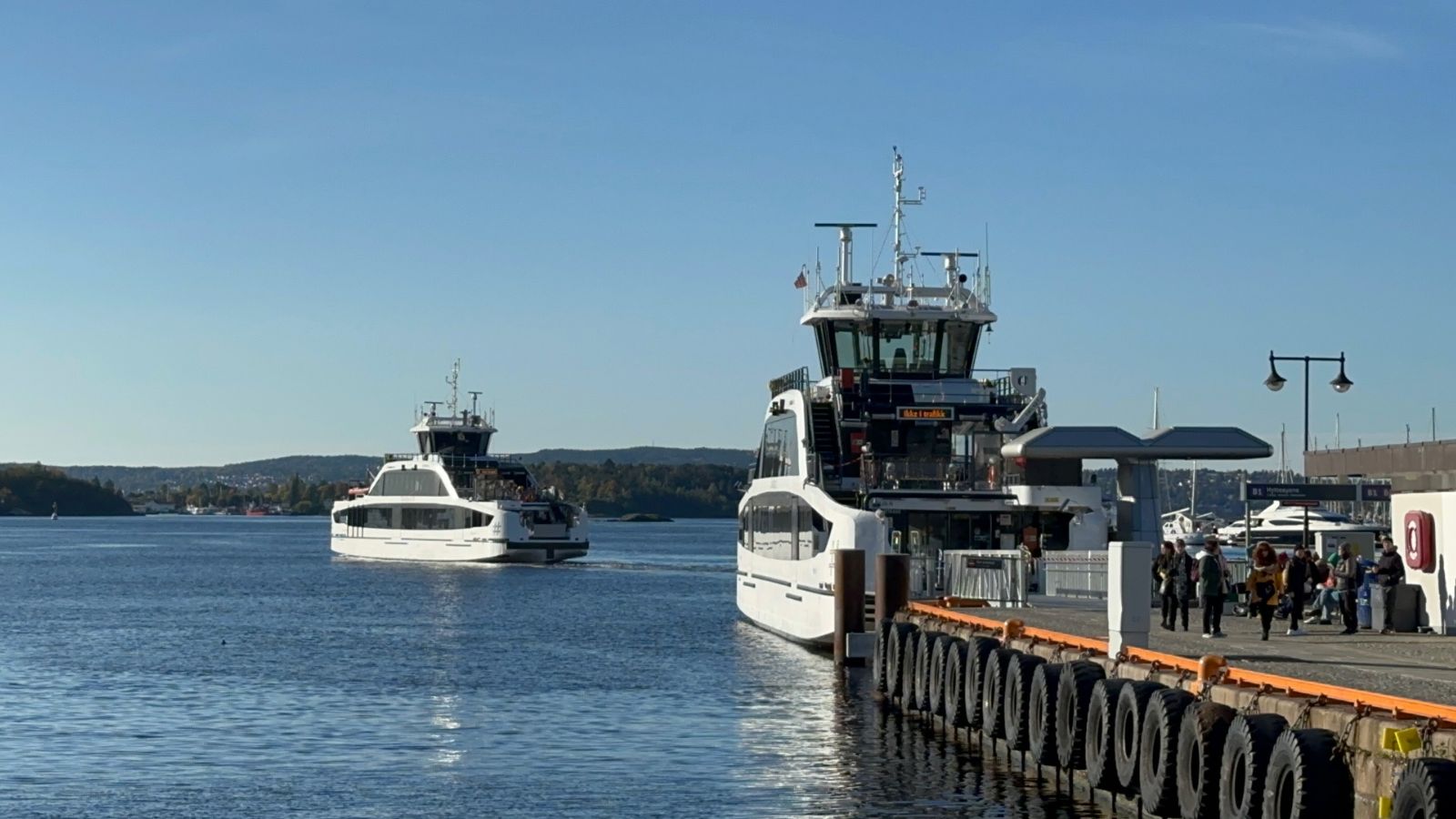
Electric ferries are changing the way people move around Norway, but the real story is bigger than technology. In a country shaped by fjords, islands, and long coastlines, ferries are part of everyday life.
For many visitors, a ferry ride in Norway is a highlight of the trip. You drive down to a quay, join a line of cars, and watch as a vessel glides across the fjord towards you.
Once on board, you step out of the car, breathe in the sea air, and take in a view that would be a tourist attraction in almost any other country. If you are lucky, there might even be coffee and a svele waiting inside.
It feels like a break in the journey. It’s a scenic pause and a little unexpected bonus.
For many people who live in Norway, ferries are something else entirely. They are the way to work, school, the hospital, the supermarket, and family gatherings. They are part of the road network. They are written into daily routines, business deliveries, emergency planning, and public transport timetables.
That is why Norway’s electric ferry revolution is so important. It is not just about making a tourist experience quieter or greener, although it does that too. It is about changing a core part of how Norway moves.
Norway Is A Country Built Around Water
Look at a map of Norway and it is easy to understand why ferries matter.
The country is long, mountainous, and deeply cut by fjords. Along the coast, thousands of islands, skerries, sounds, and inlets create a landscape where roads often reach the water and simply stop.
In some places, a bridge or tunnel has solved the problem. In many others, the ferry remains the most practical solution.
This is especially true in western and northern Norway. Around the fjords, ferries connect road journeys that would otherwise involve hours of driving. Along the coast, passenger boats link small communities to regional towns. In island municipalities, boats are not an optional extra. They are lifelines.
Visitors sometimes misunderstand this. They see “ferry” and think of a cruise, or perhaps a long international sailing with cabins and restaurants. Norway certainly has those too. But the local ferry system is different.
A car ferry across a fjord may take 10, 20, or 40 minutes. A passenger boat may connect islands on a route that functions more like a bus. In many parts of the country, the ferry is not a special event. It is simply the next section of the journey.
That everyday quality is what makes Norwegian ferries so fascinating.
Ferries Are Roads That Move
When travelling around Norway by car, it is common for a route planner to include a ferry crossing as if it were just another road segment. That is because, in practical terms, it often is.
You drive to the quay, wait in the correct lane, board when directed, and continue on the other side. On many routes, there is no need to book ahead. Payment is often handled automatically through systems such as AutoPASS or FerryPay, making the experience much simpler than many first-time visitors expect.
Of course, there are exceptions. Some tourist-heavy routes can become busy in summer, especially those on popular fjord or island itineraries.
Routes such as Bodø to Moskenes in Lofoten, Geiranger to Hellesylt, or Lauvvik to Lysebotn can require more planning. Weather can also affect services, particularly on exposed coastal routes.
But for the most part, ferries are an ordinary part of Norwegian mobility. They help stitch together a country where geography has always made transport difficult.
That is also why ferries carry a cultural weight. They are places where Norway briefly gathers. Commuters, campervans, delivery trucks, cyclists, schoolchildren, tourists, and locals all board the same vessel. For a few minutes, everyone is moving together.
The Ferry As A Norwegian Travel Experience
Even when ferries are routine, they still offer something special.
On a road trip in western Norway, the ferry can be one of the best viewpoints of the day. Instead of looking at a fjord from the shore, you are suddenly in the middle of it.
Mountains rise on both sides. Spectacular waterfalls appear in the distance, and all of a sudden they are right in front of you. Small farms cling to slopes that seem impossible to work.
In northern Norway, ferries and express boats can feel even more dramatic. The weather changes quickly. One moment the sea is calm and glassy, the next the wind picks up and the horizon disappears into rain. On clear days, the crossings between islands can be unforgettable.
This is why many visitors come away with fond memories of Norwegian ferries, even if they did not plan to. The ferry was not the destination, but it became part of the story.
There is also a social side. The ferry café, where it exists, is a small but important part of Norwegian road culture. Coffee, hot dogs, waffles, and simple meals have fuelled countless journeys along the coast.
The svele is a particularly iconic ferry snack, especially on the west coast. This soft, pancake-like treat is often served folded with butter, sugar, or brown cheese, and for many Norwegians it is inseparable from the experience of crossing a fjord.
But the future of the ferry is changing. Increasingly, that future is electric.
The Electric Ferry Revolution Began On A Fjord
Norway’s modern electric ferry story is often traced to the MF Ampere.
In 2015, the vessel began operating on the Lavik to Oppedal route across the Sognefjord. It was the world’s first fully electric car ferry, and it quickly became a symbol of what could be possible.
At first glance, it may not have seemed revolutionary to ordinary passengers. The crossing still looked like a ferry crossing. Cars still rolled on and off. The fjord was still the fjord.
But under the surface, something significant had changed. Instead of relying on diesel in the usual way, the vessel ran on batteries. Charging infrastructure at the quays allowed it to operate on a short, regular route.
It was quieter, cleaner, and proof that electric operation could work in real public transport, not just in a demonstration project.
That last point is important. Norway did not electrify ferries only because the technology was interesting. It happened because public ferry routes are tendered, funded, regulated, and planned as part of the transport system. Requirements in public contracts helped push operators and shipbuilders to innovate.
In other words, this was not just a story about one clever boat. It was a story about how procurement, politics, engineering, and geography came together.
Since then, electric and hybrid ferries have become increasingly common in Norway. The country is now seen as a global leader in battery-powered ferry transport, especially on shorter crossings where vessels can recharge regularly.
Why Norway Was Ready For Electric Ferries
Electric ferries make particular sense in Norway for several reasons.
First, many ferry routes are short and repetitive. A vessel may cross the same stretch of water dozens of times a day, returning to the same quays again and again. That makes charging easier to plan than it would be for a ship travelling unpredictable long-distance routes.
Second, Norway’s electricity supply is relatively clean by international standards, with hydropower playing a major role. That means switching from diesel to electricity can bring meaningful emissions benefits, especially on busy public routes.
Third, Norway already had strong maritime expertise. Shipyards, ferry operators, equipment suppliers, and public transport authorities had the experience needed to test, build, and operate new systems.
Finally, the geography created the need. Ferries are not niche or marginal in Norway. If you can reduce emissions from ferries, you are greening a visible and essential part of everyday travel.
Not Every Ferry Can Simply Go Electric
It would be easy to present this as a simple success story. Diesel ferries are old, electric ferries are new, and the future is obvious. Reality though is more complicated.
Not all ferry routes are equally suited to battery operation. Longer crossings require more energy. Some remote quays may not have enough grid capacity. Rougher waters, demanding schedules, and larger vessels all make electrification more complex.
That is one reason Norway is also experimenting with other solutions, including hybrid vessels, biofuels, and hydrogen. The world’s first liquid hydrogen-powered ferry, MF Hydra, entered service in Norway, showing that the search for zero-emission maritime transport is not limited to batteries alone.
Even so, the direction of travel is clear. Public authorities expect a large share of domestic car ferry routes to be suitable for electric operation by 2030, while other routes may need different low or zero-emission solutions.
This is where Norway’s ferry story becomes especially interesting. The goal is not simply to copy one solution everywhere. It is to match the technology to the route.
That may sound obvious, but in a country as geographically varied as Norway, it matters.
The Next Challenge: Fast Passenger Boats
Car ferries are only part of the story. Along the Norwegian coast, fast passenger boats, known in Norwegian as hurtigbåt, play a crucial role. They connect islands, coastal towns, and smaller communities, often over longer distances than a short fjord crossing.
These vessels have been harder to electrify. They need speed, range, reliability, and enough comfort for passengers travelling across sometimes challenging waters. Traditional battery-electric solutions can struggle with that combination, especially if the route is long and charging opportunities are limited.
That is why a new generation of electric hydrofoil vessels has attracted attention.
In 2026, Norwegian transport company Boreal announced an order for 20 Candela P-12 electric hydrofoil vessels. These are small passenger vessels designed to lift above the water on computer-controlled hydrofoils, reducing drag and energy use.
The idea is that by using less energy, the vessel can travel faster and farther on battery power than a conventional electric boat of similar size.
The first two vessels are expected to be delivered in 2027, with the rest planned in stages from 2028 to 2030.
It is an eye-catching story, partly because of the phrase “flying ferries.” But the more important point is practical. If the technology works as intended, it could make electric operation possible on routes that have been too demanding for earlier battery-powered vessels.
That would matter not just for tourists, but for commuters and coastal communities.
What Travellers Might Notice
Electric ferries are often quieter than diesel vessels. There may be less vibration. There’s less fuel smell.
For passengers, that can make a short crossing feel calmer and more pleasant. For people living near ferry quays, reduced noise and local emissions can also make a difference.
On fast passenger boats, the potential change could be even more noticeable. If electric hydrofoil vessels become common, some routes may become quieter, smoother, and more comfortable. They may also open up new possibilities for public transport on water, particularly around coastal towns and fjord communities.
Tourists may think first of the scenery. Locals may think first of reliability, cost, frequency, and whether the boat actually serves the places people need to go. Both perspectives matter.
The best transport projects in Norway are rarely just about being impressive. They have to work in winter, in bad weather, for schoolchildren, for workers, for elderly passengers, for goods, and for communities that cannot simply choose another route.
Ferries, Bridges, And The Future Of The Coast
Norway has spent decades building bridges, subsea tunnels, and new roads to replace some ferry crossings. In many places, that has transformed daily life.
A tunnel can remove waiting time. A bridge can make a journey more predictable. A ferry-free road can help businesses and emergency services. It is easy to understand why many communities have wanted permanent links.
But ferries have not disappeared, and they are unlikely to disappear from Norway any time soon.
Some crossings are too wide, too deep, too exposed, or too expensive to replace easily. Some islands and coastal communities will always need boats. In other places, a ferry may remain the most sensible option, especially if it can operate with low emissions.
There is also a case for seeing ferries not as a failure of infrastructure, but as infrastructure in their own right.
A well-run ferry route can be flexible. It can adapt to demand. It can connect places without carving new roads through difficult landscapes. It can be upgraded as technology improves. In a country where nature is both an attraction and an obstacle, that flexibility matters.
Electric ferries strengthen that argument. If a ferry can be quiet, reliable, low-emission, and pleasant to use, it becomes harder to see it as merely a gap waiting to be replaced by concrete.