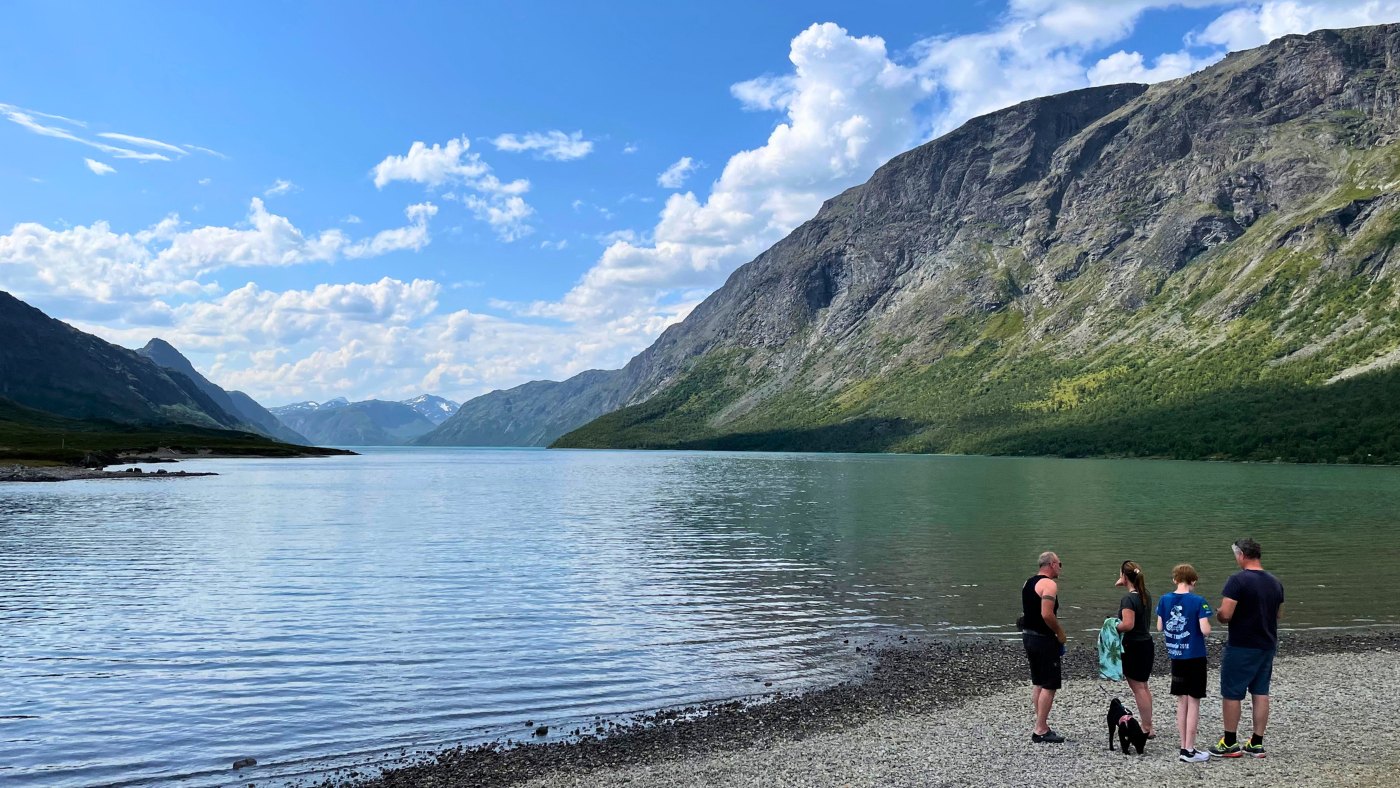
Norway’s national parks are often described as wild, remote and untouched. In reality, they are something more interesting: carefully protected landscapes shaped by long traditions of use, restraint, and trust.
Visitors arriving in Norway often expect its national parks to function like those elsewhere in the world. Clearly market highlights. Visitor centers at every entrance. Viewpoints engineered for maximum impact.
What they usually encounter instead is something quieter, and occasionally confusing. Long distances without facilities. Few signs. Seasonal closures. And large areas that seem to exist without obvious invitation.
This is not an accident. Norway’s national parks are built on a different idea of what protection means, and what visitors are expected to bring with them.
What a National Park Means in Norway
In Norway, national parks are first and foremost about protectionnot presentation. Their purpose is to safeguard large, connected natural landscapes and ecosystems, often with minimal physical intervention.
Recreation is allowed, encouraged even, but it is secondary to conservation.
This philosophy explains much of what visitors notice immediately. Infrastructure is limited. Trails are often simple rather than engineered. Facilities appear where they are necessary, not where they are convenient. The landscape is expected to remain dominant.
Many Norwegian parks are also working environments. They include grazing land, fishing waters, hunting areas, and reindeer migration routes. Protection does not mean freezing nature in time, but managing it carefully.
Together, these principles shape a diverse network of protected areas, some of which have become particularly significant for visitors and for Norway’s conservation story.
Notable National Parks in Norway
Norway has more than 40 national parks, each protecting a different type of landscape, but a handful stand out for their scale, significance, or ability to illustrate how the system works in practice.
Rondane National Park: Norway’s first national park is defined by broad mountain plateaus, subtle peaks, and a conservation model that prioritizes wildlife, particularly wild reindeer, over visitor infrastructure.
Jotunheimen National Park: Home to Norway’s highest mountains, Jotunheimen is the country’s most alpine national park and the natural choice for classic summit hikes and high-mountain trekking.
Hardangervidda National Park: Europe’s largest mountain plateau is a vast, open landscape shaped by weather, water, and ancient migration routes, best understood through distance rather than dramatic viewpoints.
Jostedalsbreen National Park: Centered on mainland Europe’s largest glacier, this park protects a dynamic landscape of ice, valleys, and meltwater that clearly illustrates how climate and geology shape Norway’s terrain.
Saltfjellet–Svartisen National Park: Straddling the Arctic Circle, this immense park combines high plateaus with Norway’s second-largest glacier system and marks the transition from southern to Arctic Norway.
Lofotodden National Park: Norway’s newest national park protects a dramatic coastal mountain landscape in the outer Lofoten islands, balancing extreme scenery with strict limits on development.
National Parks of Svalbard: Covering vast Arctic landscapes of glaciers, tundra, and polar desert, Svalbard’s national parks prioritize large-scale ecosystem protection over access, tourism, or infrastructure.
A Brief History of National Parks in Norway
Norway’s national park system developed relatively late compared to some other countries.
The first, Rondane National Park, was established in 1962. Its creation reflected a growing awareness that large mountain landscapes needed formal protection from development, particularly as roads, hydropower, and tourism expanded.
Over the following decades, the system grew steadily. Today, Norway has more than 40 national parks on the mainland, with additional protected areas in Svalbard. Together, they cover a significant portion of the country’s land area.
What matters more than the number, however, is the intent. Norwegian conservation thinking emphasizes scale, continuity, and most of all, restraint. Parks are designed to function ecologically, not to maximize visitor throughput.
Not All National Parks Are the Same
One reason visitors struggle to “rank” Norway’s national parks is that they vary enormously in character.
Some are defined by high alpine terrain and glaciers, where weather and elevation dominate every decision. Others protect vast plateaus shaped by ice and wind rather than dramatic peaks.
Forest and lake parks prioritize silence and distance over views. Coastal and Arctic parks introduce entirely different rhythms, influenced by sea, light, and seasonal extremes.
Understanding this variety is key. A park like Jotunheimen National Park rewards those seeking classic mountain hikes. Femundsmarka National Park, by contrast, is better experienced by canoe than by foot, with water shaping travel. Saltfjellet–Svartisen National Park is defined by scale and its position at the edge of the Arctic.
Choosing the right park is less about fame, and more about fit.
People Live In and Around These Landscapes
One of the most persistent myths about Norwegian national parks is that they are untouched wilderness. In reality, many have been shaped by human use for centuries.
Farms sit at the edges of protected areas. Summer grazing continues in mountain valleys. Sámi reindeer herding routes cross multiple national parks, particularly in central and northern Norway.
Cabins, both private and run by the Norwegian Trekking Association, provide shelter and continuity in otherwise exposed landscapes.
Rather than removing people, Norway’s approach has usually been to regulate activity carefully. This is why seasonal closures, particularly during reindeer calving, are common. Access is adjusted to suit nature, not the other way around.
Visiting a Norwegian National Park
Visiting a national park in Norway requires a different mindset from many other destinations.
Facilities are limited by design. Visitor centers may be unstaffed. Trails are marked, but not over-signposted. Distances can be long, and weather changes quickly, even in summer. Self-reliance is assumed.
At the same time, Norway’s right to roam allows broad access for hiking, camping, and foraging, provided visitors behave responsibly. This freedom is balanced by expectation. You are trusted to plan properly, carry what you need, and leave minimal traces.
For some visitors, this feels liberating. For others, it can feel intimidating. Understanding this cultural contract is essential to enjoying Norway’s protected landscapes.
When National Parks Are at Their Best
Summer is the most popular time to visit Norway’s national parks, but it is not always the most revealing. Trails are open, facilities operate, and access is easiest, yet the landscape can feel busier and more managed.
Autumn often brings clearer air, stronger colours, and fewer people, especially in mountain and forest parks. Winter transforms many parks entirely, shifting focus from hiking to skiing and changing the relationship between distance, effort, and silence.
Spring is the most restricted season, shaped by snowmelt and wildlife protection, but it also reveals the underlying rhythms that govern these landscapes. Each season offers a different perspective. None is objectively “best”.
How to Choose the Right National Park for You
Rather than asking which national park is the most famous, it helps to ask what kind of experience you want.
Those drawn to dramatic scenery and classic hikes will gravitate towards alpine regions. Visitors seeking quiet and immersion may prefer forest and lake landscapes.
Travelers without a car might choose parks accessible by rail or main roads. Those comfortable with planning and navigation can explore areas where infrastructure is deliberately sparse.
Norway’s national parks are not designed to impress everyone equally. They are designed to reward those who meet them on their own terms.
Why National Parks Matter in Norway
National parks occupy a particular place in Norwegian society. They reflect long-term thinking, trust in public institutions, and a willingness to limit short-term use for future benefit. They are also expressions of national identity, rooted in the idea that nature is something to live alongside, not dominate.
This is why Norway protects so much land without turning it into a spectacle. The value lies not in how many people visit, but in what remains protected when they leave.
For visitors willing to slow down, plan carefully, and accept a degree of uncertainty, Norway’s national parks offer something increasingly rare: landscapes that exist primarily for their own sake.