

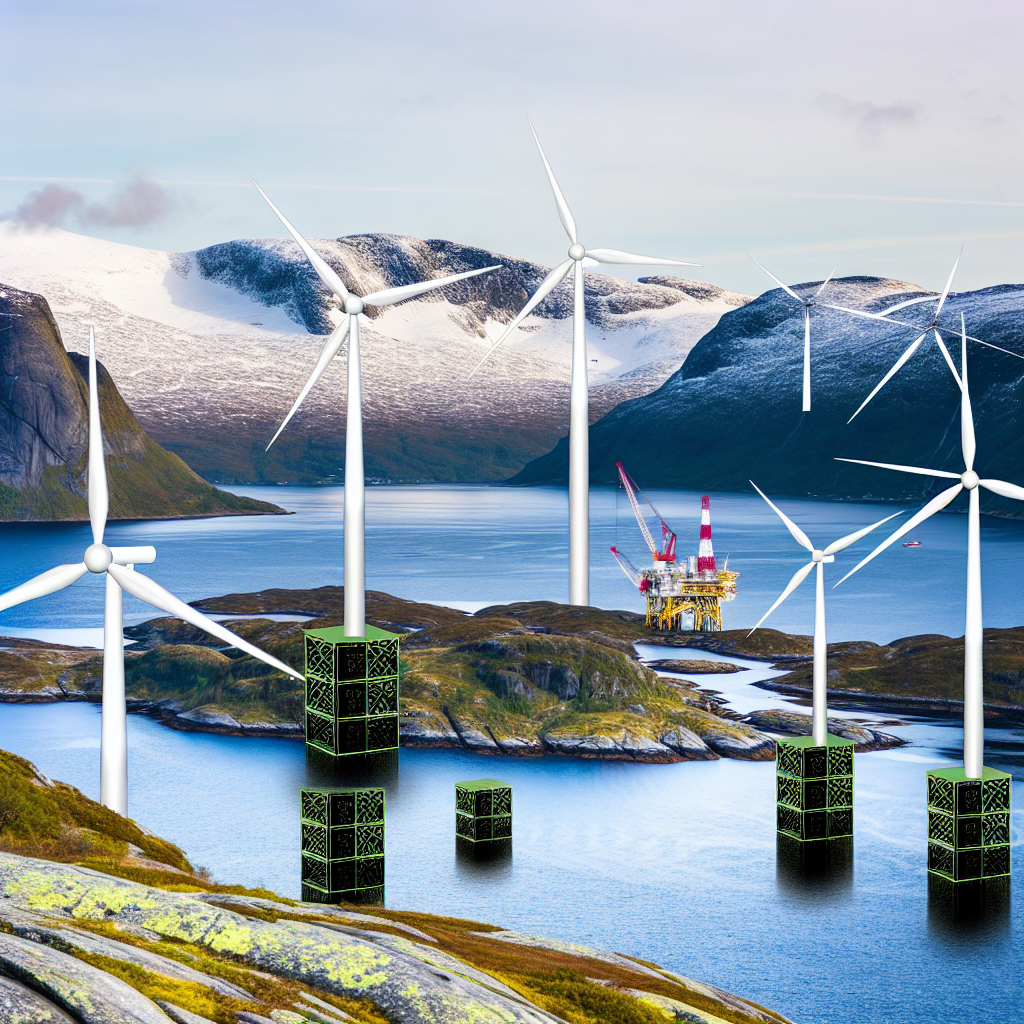
From oil platforms in the North Sea to wind farms off Britain and debates in the Norwegian parliament, Equinor sits at the heart of Norway’s economy and its climate contradictions.
If you spend any time in Norway, you will hear the name Equinor sooner or later. It comes up in discussions about jobs, the sovereign wealth fund, climate policy, energy prices and even local politics.
Yet for many newcomers, visitors, or even long-term residents, it is not entirely clear what Equinor actually is.
Is it just Norway’s old oil company with a new name? Is it a renewable energy pioneer? Or is it something in between?
The truth is more complicated. And understanding Equinor helps explain Norway’s oil and gas story, and how modern Norway works.
From Statoil to Equinor
Equinor was founded in 1972 as Statoil, short for “Den norske stats oljeselskap” — the Norwegian state oil company. It was created after major oil discoveries on the Norwegian continental shelf, most famously the Ekofisk field.
From the beginning, the company was central to Norway’s strategy: maintain national control over petroleum resources, build domestic expertise, and ensure that oil revenues benefit society as a whole.
In 2018, Statoil changed its name to Equinor. The company argued that dropping “oil” reflected a broader energy strategy and ambitions in renewables. Critics saw it as branding more than substance.
Nearly a decade later, the name Equinor is established. But the debate about what the company represents has not disappeared.
Who Owns Equinor?
Equinor is a publicly listed company on the Oslo Stock Exchange and the New York Stock Exchange. However, the Norwegian government remains the dominant shareholder, owning around 67% through the Ministry of Trade, Industry and Fisheries.
This majority ownership is crucial. It means:
– The Norwegian state receives large dividends when profits are high
– The government has significant influence over long-term direction
– The company’s decisions are inseparable from Norwegian politics
When oil and gas prices surge, state revenues surge. When profits fall, the impact is felt in public finances.
In short, Equinor is not just another corporation. It is deeply embedded in Norway’s economic model.
What Does Equinor Actually Do?
Despite its broader branding, Equinor remains primarily an oil and gas company.
The majority of its revenue and profits still come from exploration, production and export of oil and natural gas, mainly from the Norwegian continental shelf. The company operates some of Norway’s largest offshore fields and is a key supplier of gas to Europe.
After Russia’s invasion of Ukraine in 2022 and the sharp reduction of Russian gas exports, Norwegian gas became even more important to European energy security. Equinor’s role in supplying Germany, the UK and other countries was suddenly geopolitical as well as economic.
At the same time, Equinor has invested in renewable energy. Its most visible renewable projects are offshore wind farms, particularly in the UK and the United States.
The company has also invested in floating offshore wind technology, including the Hywind projects off Norway and Scotland.
However, renewables still represent a relatively small share of total capital expenditure compared with oil and gas. This imbalance is at the center of the ongoing debate.
Equinor and the Sovereign Wealth Fund
To understand why Equinor matters, you need to understand the Government Pension Fund Global, often called Norway’s oil fund.
Oil and gas revenues, including taxes paid by Equinor and dividends from the state’s ownership stake, are transferred into this fund. It is now one of the largest sovereign wealth funds in the world, investing globally in stocks, bonds and real estate.
While the fund is often described as separate from “oil money”, its origins are clear. Without decades of production by companies such as Equinor, the fund would not exist in its current form.
When Equinor does well, the fund ultimately benefits. When energy prices soar, Norway’s fiscal room expands.
This link is why debates about Equinor are never just about one company. They are about the long-term sustainability of the Norwegian welfare state.
The Climate Dilemma
Norway likes to present itself as a climate leader. It has ambitious targets for cutting emissions, introduced strong incentives for electric vehicles and significant renewable electricity production from hydropower.
Yet it also remains a major exporter of fossil fuels.
Equinor sits at the center of this tension. On the one hand, the company has reduced operational emissions on the Norwegian shelf, invested in carbon capture and storage projects such as Northern Lights, and expanded offshore wind capacity.
On the other hand, it continues to explore for new oil and gas fields.
Environmental organizations have repeatedly criticized Equinor’s Arctic exploration and international projects. Campaigners argue that approving new fossil fuel developments is incompatible with the goals of the Paris Agreement.
There have been protests outside Equinor’s annual general meetings, legal challenges over Arctic drilling licences, and criticism from youth climate activists. In some cases, courts have been asked to determine whether new oil licenses violate constitutional environmental protections.
In recent years, controversy has also surrounded Equinor’s large offshore wind investments in the United States, particularly where rising costs and political opposition have led to delays and write-downs.
Critics have questioned whether the company misjudged market conditions, while others argue such investments are essential to transition away from fossil fuels.
The company is therefore criticized from both sides: by environmentalists who say it is not moving fast enough, and by commentators who argue that renewable projects are too risky or expensive.
Energy Profits and Public Debate
The energy price spikes of 2022 and 2023 brought Equinor back into Norwegian headlines in a different way.
As gas prices soared, Equinor reported record profits. The Norwegian state received record revenues. At the same time, households and businesses across Europe faced rising energy bills.
In Norway, where most electricity comes from hydropower, power prices also increased sharply in southern regions due to European market connections. Although Equinor is not responsible for hydropower pricing, the broader perception of “energy companies making billions” fed political debate.
Questions emerged about windfall taxes, dividend levels and how much of the extraordinary profits should be redistributed domestically.
For many Norwegians, the situation highlighted the complicated position of being both a climate-conscious country and a major fossil fuel exporter.
Jobs and Regional Identity
Beyond national politics, Equinor plays a major role in regional economies.
Stavanger, often described as Norway’s oil capital, grew dramatically after the oil discoveries of the 1970s. Entire local supply chains developed around offshore engineering, drilling services and subsea technology.
Thousands of people are directly employed by Equinor, and many more work in related industries.
In some coastal communities, oil and gas activity has shaped identity and opportunity for generations. Calls to rapidly scale back production are therefore experienced not just as climate policy, but as questions about local livelihoods.
This social dimension is easy to overlook from a distance.
Is Equinor Really Transitioning?
The central question remains: is Equinor transforming into a broad energy company, or is oil and gas still its core business?
Official strategy documents emphasize “net zero” ambitions and increasing investment in renewables and low-carbon solutions. The company has targets for reducing emissions intensity and expanding renewable capacity.
However, production forecasts still include significant oil and gas output for decades to come. Exploration continues. New field developments are approved.
Supporters argue that global energy demand remains high and that Norwegian production, with relatively low operational emissions compared to some other regions, is preferable to higher-emission alternatives.
Critics argue that continuing to invest in new fossil fuel infrastructure locks in emissions for decades and undermines global climate targets.
This is not a uniquely Norwegian debate. But in Norway, it is unusually personal, because the state is the majority owner.
Why Equinor Matters
Equinor matters because it is woven into Norway’s modern story.
It helped transform Norway from a relatively modest European economy in the 1960s into one of the wealthiest countries in the world. Its taxes and dividends underpin public services, infrastructure and the sovereign wealth fund.
At the same time, it symbolizes the central contradiction of Norway’s climate identity: ambitious domestic environmental policies funded in part by exporting fossil fuels.
For newcomers trying to understand Norway, Equinor offers a lens into the country’s political culture. Decisions about exploration licenses are debated in parliament. Court cases test environmental clauses in the constitution. Shareholder meetings attract activists and pension fund managers alike.
This is not just corporate strategy. It is national strategy.
Whether Equinor becomes a significantly greener energy company in the coming decades, or remains primarily a petroleum giant with renewable ambitions, will shape Norway’s economy, its international reputation and perhaps even its sense of itself.