
Norway’s youngest mainland national park was controversial when it was created. Years later, has anything really changed?
In 2018, the Norwegian government officially created Lofotodden National Park on the outer edge of the Lofoten archipelago.
The announcement came with dramatic language about safeguarding narrow peaks, deep fjords, open seas, and ancient cultural traces. It also came with controversy.
Today, with Lofoten firmly established as one of Norway’s most visited destinations.
The story of Lofotodden now feels less like breaking news and more like part of a much bigger question: how should Norway protect its most fragile landscapes while managing ever-growing tourism?
Where Is Lofotodden National Park?
Lofotodden National Park covers more than 100 square kilometers at the western tip of the Lofoten Islands, primarily within the municipalities of Moskenes and Flakstad.
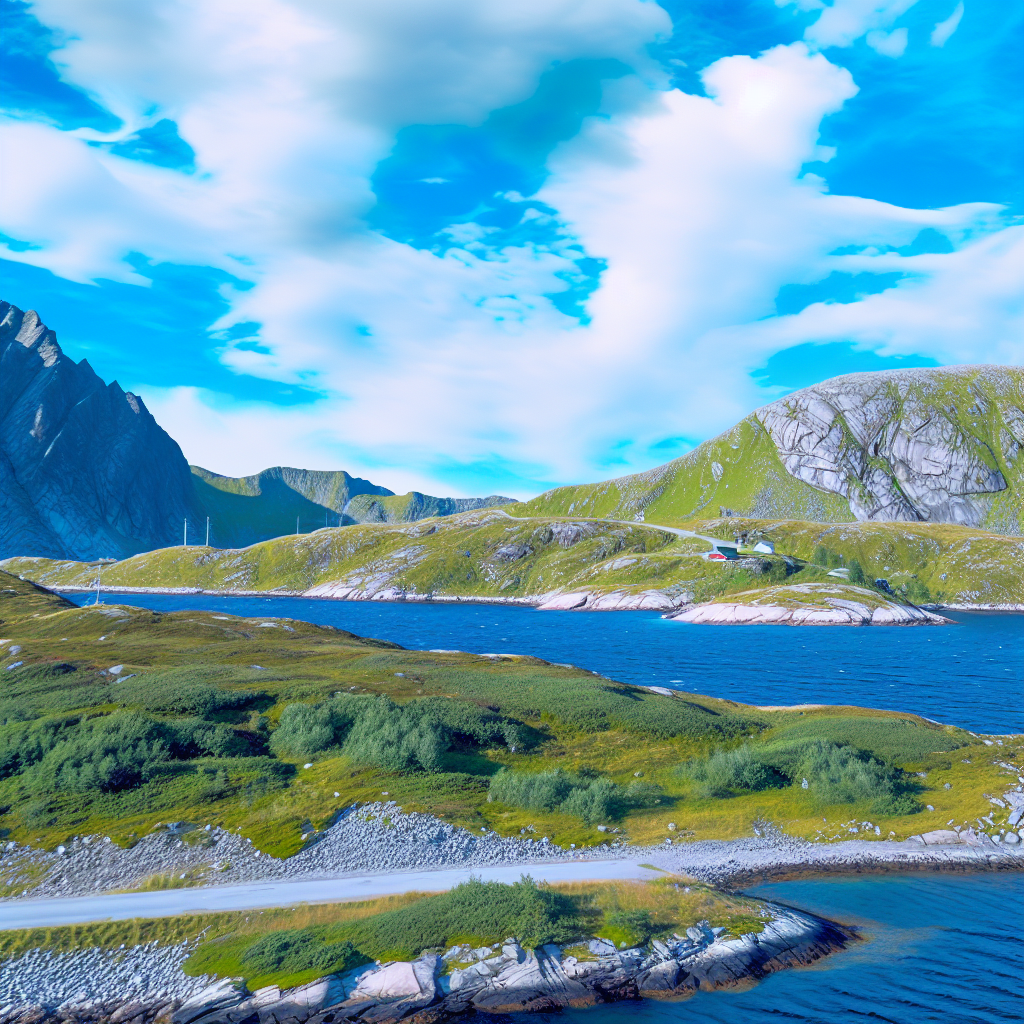
This is the wild end of the islands. Jagged granite peaks rise almost vertically from the sea. Beaches appear suddenly between cliffs. Fishing villages cling to the shoreline. Trails thread across exposed ridgelines where wind and weather feel close and immediate.
The area also contains traces of human settlement stretching back thousands of years, including cave art at Kollhellaren and Bukkhammerhola. It is, in short, exactly the kind of place Norway tends to protect.
Why Was It Controversial?
When the park was formally established, it did not enjoy overwhelming local support.
In a local referendum two years earlier, a majority of residents voted against the proposal. Although local politicians in Moskenes and Flakstad ultimately supported national park status, many residents were skeptical.
The concerns were not abstract.
Fishing remains the backbone of these communities. Many locals feared that formal national park status would tilt the balance further towards tourism at the expense of traditional industries. Others worried about new restrictions on land use, infrastructure development, or transport.
There was also a broader scepticism rooted in experience. In other parts of Norway, some communities have argued that national park status can complicate new business development or land management decisions.
The government insisted at the time that no new significant restrictions would be imposed on residents, and that funding for administration and maintenance would follow.
Then-Minister for Climate and the Environment Ola Elvestuen told NRK that Lofoten has obvious national and international conservation value. He described the area as having “landscapes and natural habitats that are not found in other Norwegian protected areas.”
Has National Park Status Changed Lofoten?
This is where the story becomes more nuanced.
Lofoten’s explosive growth in visitor numbers over the past decade has not been driven by national park designation alone. Social media exposure, improved transport links, international marketing, and Norway’s global reputation for dramatic landscapes have all played a role.
But Lofotodden National Park now sits at the heart of that debate.
The park has provided a clearer framework for conservation. It strengthens protection against major development and formalises long-term environmental oversight. In practical terms, however, daily life in the region looks much the same as before.
Fishing continues. Small communities continue. Hikers roam the peaks. Surfboards still line up at Unstad. Campervans still queue for sunset views.
If anything, the bigger challenge has become managing visitor pressure rather than restricting local livelihoods.
National Parks and Overtourism
Lofoten has in recent years become a case study in overtourism in Norway.
Summer brings heavy traffic on narrow roads. Informal parking spreads into fragile areas. Popular hikes suffer from erosion. Tensions occasionally flare between residents and visitors unfamiliar with local customs and infrastructure limits.
National park status alone does not solve these issues. It is a conservation tool, not a visitor management system.
However, it does make it harder for large-scale commercial development to reshape the most sensitive landscapes. In that sense, Lofotodden acts as a long-term insurance policy. The mountains and coastlines within its borders are far less likely to see major construction, resort development, or industrial activity in the future.
That matters in a region where the scenery itself is the primary attraction.
How Many National Parks Does Norway Have?
Lofotodden is one of 48 national parks in Norway today. The majority are located on the mainland, with several more on Svalbard.
Altogether, around 10 percent of mainland Norway is protected as national park land. These areas are preserved for future generations, but they are not wilderness museums. Hiking, fishing, hunting, and traditional outdoor activities are permitted as long as they do not damage the environment.
This reflects Norway’s broader philosophy of ‘outdoor living’: access and protection existing side by side.
Visiting Lofotodden National Park
Lofotodden National Park is free to visit and open year-round, but conditions vary dramatically by season.
There are no entrance gates or visitor centers marking a clear boundary. Instead, the park blends into the surrounding landscape. Most people access it via trailheads near Reine, Sørvågen, Fredvang and other small communities in Moskenes and Flakstad.
Some of the most popular hikes in and around the park include routes to Bunes Beach and Kvalvika Beach, along with dramatic ridge walks offering views over the Norwegian Sea. Trails can be steep, rocky and exposed. Even in summer, the weather can change quickly.
Winter visits are possible but require experience. Ice, snow and limited daylight hours make many routes challenging. Outside peak summer, however, you may find long stretches of trail entirely to yourself.
There are no large-scale facilities within the park, but there is a visitor center in Reine.
Bring everything you need, including water, and take all rubbish with you. Wild camping is permitted under Norway’s right to roam rules, but campers must respect distance requirements from houses and farmland.
Parking can be limited at popular trailheads during summer. If you are traveling by campervan, use designated parking areas and avoid blocking narrow village roads.
Above all, remember that this is a working landscape as well as a protected one. Fishing boats still operate from nearby harbours, and small communities function year-round. A little consideration goes a long way.
So, Was It the Right Decision?
That depends on who you ask.
For conservationists, the answer is almost certainly yes. The outer Lofoten landscape is unique in Norway, both geologically and visually. Formal protection ensures that uniqueness cannot be easily compromised.
For some locals, the skepticism never fully disappeared. Tourism has grown regardless of park status, and the pressures that come with it remain very real.
Yet nearly a decade on, Lofotodden National Park no longer feels like a political flashpoint. It feels established. Normal. Part of the administrative landscape.
And perhaps that is the clearest sign of all. National parks in Norway tend to fade into the background once created. They quietly shape long-term decisions without dominating everyday life.
In Lofoten, where the mountains rise sharply from the sea and the weather shifts without warning, that quiet protection may prove more important with each passing year.