

It’s a rain-soaked afternoon in north Iceland when we crest a hill and see the green-grey waters of Mývatn slide into view. Misty and indistinct through the drizzle and the fast-moving wipers, the lake is hypnotic as we roll down a slick stretch of Route One and pull over by the shore.
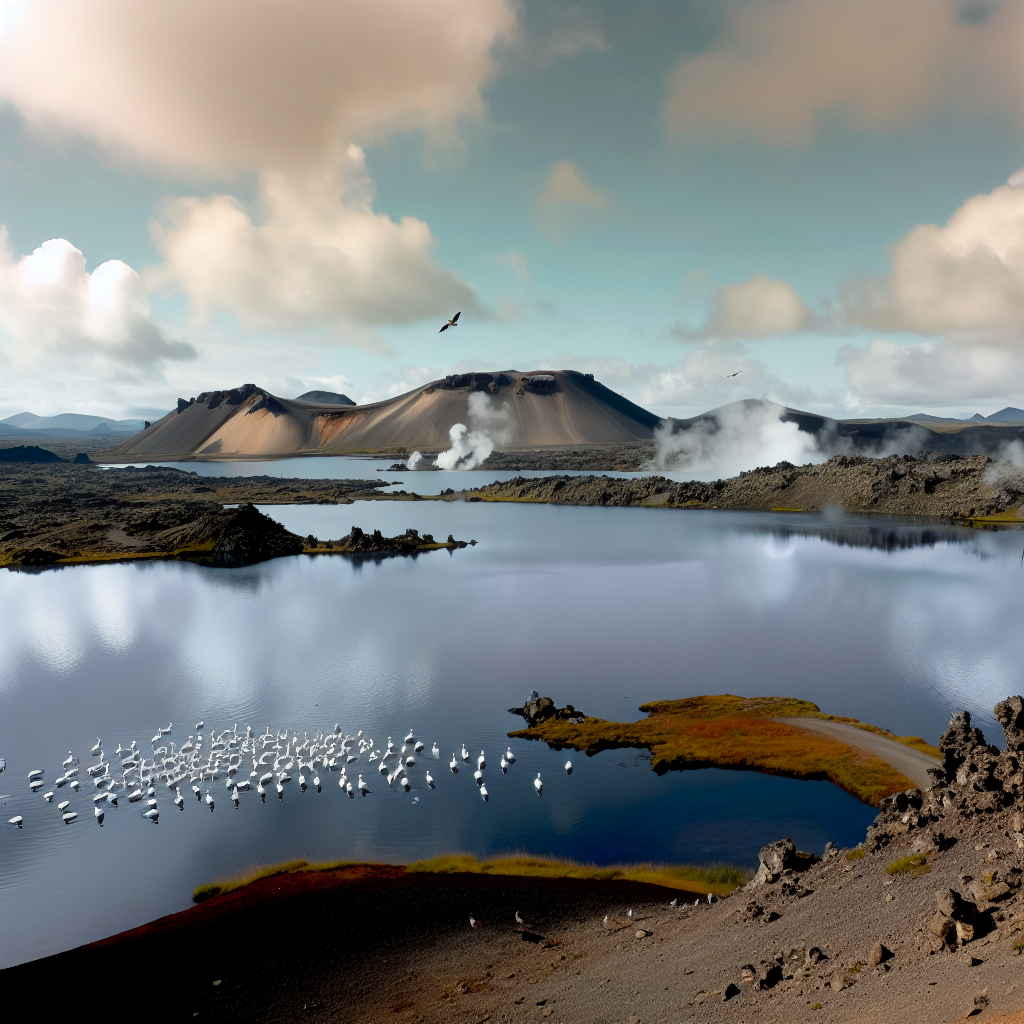
Mývatn isn’t the biggest lake in Iceland, nor the deepest. But it sits in a stunning, wild-feeling mass of terrain. Crumbling pseudocraters sprout from the land in several directions, glowing over the mossy lava fields they produced. Scores of birds wheel in the air, or rustle and twitter through the undergrowth, drawn to the swarms of midges and the easy feeding grounds of the shallow water. Rocky stacks protrude from the busy lakewater, choppy in the stiff breeze.
My breath catches in my throat as I take it all in, listening to the sound of raindrops pattering onto the grateful plants and the naked dirt. Like most of Iceland, this spot is breathtaking in any weather — and in the middle of this summer storm, Mývatn is a vibe.
Tough breaks
The north and south lakeshores have distinctly different personalities. First, we drive the northern coast, following the gleaming Ring Road through rolling farmland where sodden sheep hide among the hillocks, and lambs play in the rain. There are few places to pull over, so we take it slow, leaning in close to the steamed-up windows. Anywhere you look, there’s something fascinating to see — tall, red, conical mountains of tephra, tuff, and ash, plumes of geothermal steam pouring from breaks in the rough earth, and then, the lake itself. The road reaches water level and for a second, it feels like we’re speeding over the silty waves with the skimming, screeching gulls.
“The road reaches water level and for a second, it feels like we’re speeding over the silty waves with the skimming, screeching gulls.”
On the east side of the lake, the road coasts through an old and broken lava field before arriving in Reykjahlíð, the peaceful village that also acts as a hub for the area. It sits near the Hverir geothermal area, where the landscape changes again, muted grays and greens giving way to wide stretches of vivid umber and blood red soil. Busloads of people are trudging around Hverir, which has had some wooden walkways installed since the last time I came around, five years ago. It remains beautiful despite the crowds and the tourist-centric infrastructure, with sulphuric, mould-coloured fumaroles gushing hot steam into the damp air.
We get a break in the weather at the Mývatn Nature Baths. There are only a handful of other people in the water — a couple of clusters of chattering tourists, taking selfies and picking up drinks from the swim-up bar. With most of the pool to myself, I swim through the shallow water, following the warmer eddies to the hottest part. It’s a good half hour before the sky goes dark again, and the raindrops begin to spatter the milky water. We towel off, refreshed, and get back on the road.
Very metal
The road winds south past Dimmuborgir (“dark cities”), a hiking area known for its maze of sharp black rocks. Formed thousands of years ago, the site is the result of hot lava flowing over the wetlands and lake shallows, causing violent steam explosions that resulted in a series of rare, dramatic lava formations. As we glance around in the drizzle, the jagged pillars look like disembodied fingers grasping towards the sky. Dimmuborgir might just be the most metal place in Iceland.
The next stop is Höfði, a surprisingly verdant wooden peninsula that juts out into the lake. There are a couple of trails that wind around the area, leading to various viewpoints. We have the place to ourselves, and meander around the leafy pathways. Under the leafy tree canopy the light gets greener and the birdsong sounds louder. At the tip of the peninsula, the wilderness stretches out in every direction, and it feels like Mývatn’s strange, intense energy is seeping into my bones. It’s like being breathed in by nature itself.
Wild-eyed and weathered
Night time doesn’t usually mean much in the Icelandic summer, but the onset of evening feels dim and heavy under the darkening clouds. We head back to the car and turn on the heater, checking our phones for dinner options. There’s the curious campsite pizza place back up near Reykjahlið, or a tempting fish and chip joint — both of which will be closed by the time we get there. Instead, we buckle up and hotfoot it towards the relative luxury of Bistro Sel.
It’s a relief to find it open, and we get a warm welcome, suddenly feeling wild-eyed and weathered among the neat waiters and groups of cozy hotel guests settling in for the night. Suddenly ravenous, we order steaming hot kjötsúpa and Mývatn Öl beer, brewed using geothermal bread in a nanobrewery just a few feet away. It’s a welcome respite from the weather, and gives us the energy for one last stop before turning in for the night.
Shivering water
The final viewpoint is Skútustaðagígar, just across the road. It’s a series of small, hikeable craters, and as we crunch up the pathway, the buffeting wind and soaking rain picks up into the worst storm of the day. We reach the viewpoint, and I draw my dripping raincoat in close. A chill passes over the shivering water almost visibly. The birds, for once, fall silent.
It’s been a long day of driving, hiking, bathing, and exploring, and we still haven’t seen everything Mývatn has to offer. The area has the feeling of a strange little snow globe that you enter unknowingly, where time slows down, and nature comes at you thick and fast. It may not be the biggest lake, or the deepest, but Mývatn remains the great lake of Iceland.
This day was part of the Summer Ring Road cover story trip. Lux 4×4 Camper provided by Go Campers — book one at gocampers.is.