

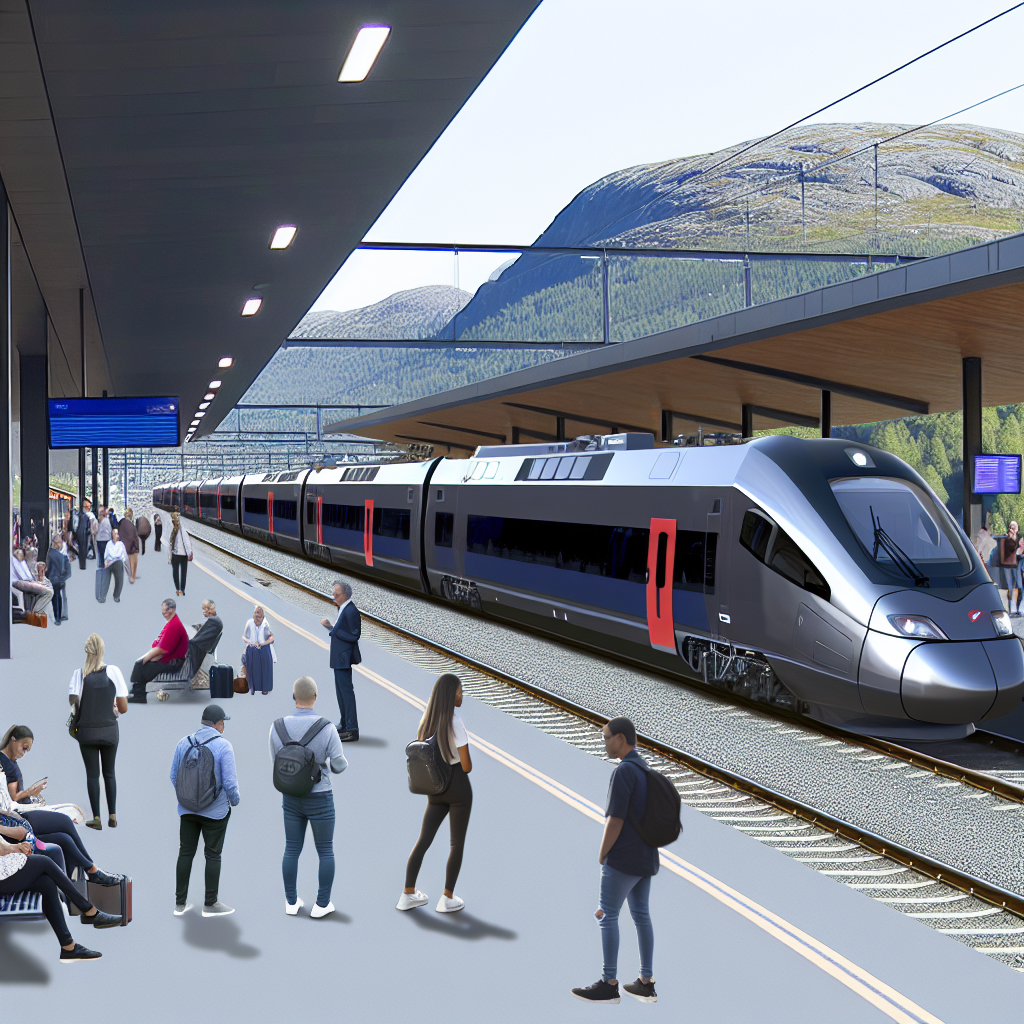
Oslo’s Airport Express will disappear as a separate service in 2027, replaced by a unified network promising more departures and less crowding.
If you’ve ever landed at Oslo Airport and stared at the departure boards in mild confusion, you’re not alone.
For years, travelers arriving at Oslo Airport have faced a choice that feels more complicated than it should be.
Do you board the sleek silver Flytoget airport express, or the regular regional train operated by Vy? Both go to and from the airport. One costs significantly more.
I’ve lost count of how many times I’ve advised Life in Norway readers not to automatically choose the Airport Express.
In my recent YouTube video on public transport in Oslo, I again make the case that most visitors simply don’t need it. The regular trains are cheaper, only marginally slower, and perfectly comfortable for the vast majority of travelers.
Now, that long-standing dilemma is about to disappear.
From December 2027, Flytoget will cease operating as a separate service. Instead, its routes will be integrated into the wider Vy network as part of the biggest overhaul to the Norwegian train service in Eastern Norway in more than a decade.
The result promises more departures, less crowding, and a simplified ticket system. But will it truly make things better? Only time will tell.
One Unified Train System On The Busiest Corridor
The change forms part of a new timetable model for Eastern Norway, announced by the Norwegian Railway Directorate and the Ministry of Transport.
The reform will merge the airport express and regional services into one coordinated offer under Vy’s operation.
The stretch between Drammen and Oslo Airport is Norway’s busiest rail corridor, with around 26 million journeys annually. Yet until now, capacity has been divided.
Premium airport trains have often run with spare seats, while commuter trains passing through the same Oslo tunnel have been crowded during peak hours.
By opening former Flytoget services to all passengers, authorities hope to use scarce track capacity more efficiently. The Oslo Tunnel between Oslo S and Skøyen is already operating at full capacity, meaning simply adding more trains is not an option.
Instead, the solution is integration.
Acting Railway Director Marit Rønning said the move would give “many more departures, better space on board and a more reliable train service” for the nearly 30 million annual rail passengers in Eastern Norway.
What changes for airport travelers?
For international visitors, the biggest difference will be simplicity.
There will no longer be a separate Flytoget ticket. One unified fare system will apply across all trains serving Oslo Airport. That means no more weighing up price versus speed at the platform.
From Drammen to Oslo Airport, trains will run every ten minutes in both directions.
The new R15 line will operate five times per hour between Drammen, the airport and Eidsvoll. In addition, the regional express services RE10 (Drammen–Lillehammer) and RE11 (Skien–Eidsvoll) will also serve the airport corridor.
In practical terms, travelers will be able to turn up and board the first departing train without worrying about which operator runs it.
However, there is a small trade-off. To improve overall reliability in the congested central network, there will be one fewer train per hour through the central tunnel.
That means slightly fewer direct departures between Oslo S and the airport than today, although overall capacity is expected to increase due to better distribution of passengers.
Big Boost For Commuters
While airport travelers may welcome simpler ticketing, the real winners appear to be daily commuters.
In Lillestrøm, departures will increase from six to eleven per hour. Asker and Sandvika will see departures rise from six to ten per hour, in addition to local services.
Drammen becomes a central hub in the new ten-minute system, with at least eight departures per hour towards Oslo and the airport. A new line, R15, will connect Drammen directly with Oslo Airport and Eidsvoll five times per hour.
Authorities say the new model should reduce crowding, particularly during rush hour, by spreading passengers more evenly across departures.
It is also designed to be less vulnerable to knock-on delays, a frequent frustration for Oslo-area commuters.
Mixed News For Vestfold And Telemark
Further south, changes are more nuanced.
Thanks to the new double track infrastructure, departures from Tønsberg will increase from one to four per hour. Southern Vestfold and Telemark are promised reduced travel times and less congestion.
However, not every change will be welcomed. Passengers from northern Vestfold will lose their direct connection to Oslo Airport. Instead, they will need to transfer at major hubs such as the Nationaltheatret.
Officials say waiting times will be capped at ten minutes, and in some cases transfers can be made from the same platform under cover. Still, for travelers with luggage, any transfer adds complexity and frustration.
The direct connection between northern and southern Vestfold will also disappear, as express services will make fewer stops to improve overall speed and reliability.
A Complex Transition Ahead
Although the new system promises long-term improvements, officials are already warning that the transition period may be challenging.
The timetable overhaul coincides with the introduction of new local and regional trains, which have already experienced delivery delays.
At the same time, Vy and Flytoget will be merged into one company, requiring extensive staff retraining and operational integration.
Railway authorities say contingency plans are in place to keep older trains running until the new fleet is fully delivered. Still, major rail reforms rarely pass without teething problems.
What It Means For Visitors To Norway
For tourists planning a trip to Oslo in 2026 or 2027, nothing changes just yet. The new model will not take effect until December 2027.
But looking ahead, the reform could make Norway’s rail offer easier to understand, especially for first-time visitors. One ticket. One operator. Trains every ten minutes to the airport from Drammen.
For years, Norway’s airport rail service has been efficient but oddly divided. The silver and orange Flytoget became iconic, but it also created confusion and duplicated capacity in a system already stretched thin.
The coming merger is a bold attempt to simplify and modernize Eastern Norway’s rail network without laying a single new track through central Oslo.
Whether it delivers the promised reliability and breathing space for commuters remains to be seen.
For now, at least, travelers can look forward to one small but meaningful change: no more standing on the platform at Oslo S wondering if they’re boarding the “right” train.