It might feel difficult to find daycare options in Norway for parents of young children between the ages of 1 and 5, especially if you live in a big city with full kindergartens. But there are a few various childcare options, so let’s take a closer look at the different childcare options available in Norway.
Most young children in Norway attend kindergarten (kindergarten), a type of play-focused preschool. Other options are to stay at home with the child, hire a daycare nanny or a babysitter, attend open kindergarten or a child park.
I want to stress that 95% of Norwegian children attend kindergarten, so this is by far the most common option, and probably the best option for most of you who are reading this.
However, we’re going to take a closer look at the other options as well in this article, so keep on reading to learn all about the different childcare options in Norway!
PS. all the names in the brackets below are the Norwegian words for the type of service.
Kindergarten (Kindergarten): Norway’s type of preschool
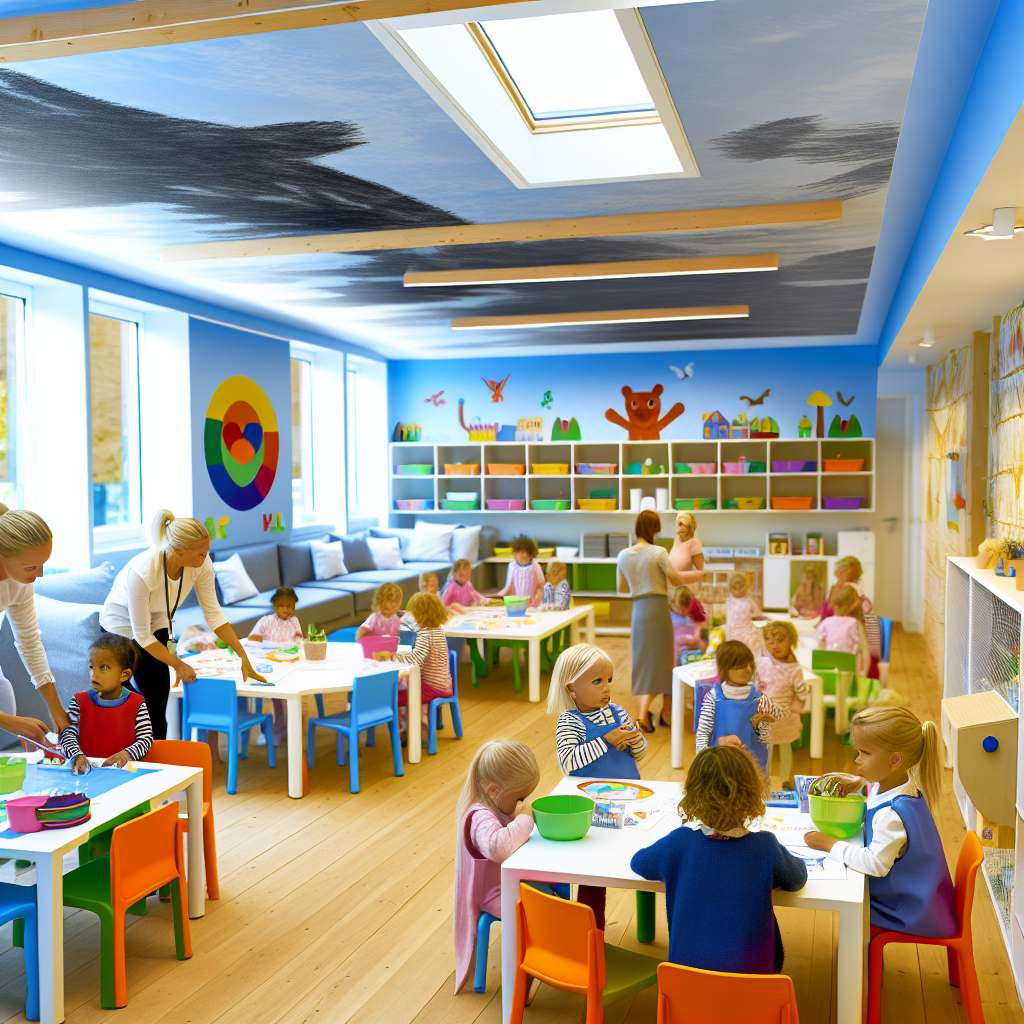
Norway’s version of preschool for young children is the Kindergarten variant, where you can drop off your children and leave for the day.
Most parents chose this option, which allows you to leave your child in kindergarten before you head off to work, then get them when you are done.
A typical kindergarten in Norway is open from 07:00 to either 17:00 or 17:30 from Monday to Friday. You can apply for a full-time kindergarten spot (5 days per week), or a part-time spot where your child can attend 1 – 4 days per week.
Norway’s kindergartens are heavily subsidized by the Norwegian government, with a price cap of NOK 3,150 per month (roughly $300). This price cap is even further reduced to NOK 2,000 ($200) per month beginning in 2024.
All municipalities are legally required to have enough spots in their kindergartens to house all the children of that municipality. Everyone living legally in Norway has the right to a spot in kindergarten after your child turns 1, although you might not get a spot in your preferred one.
But there’s a spot for all children, so anyone who wants a spot in kindergarten eventually gets one.
I also want to mention that you need to apply for a spot in kindergarten well in advance to actually starting there (usually before March 1 if starting in August), so don’t forget to get this done early!
If you somehow forgot to apply, you might not get a spot before next autumn, so you might have to look closer into the other options for childcare explained below.
Types of Norwegian kindergarten
All Norwegian kindergartens follow a set way of rules and regulations, and focuses of positive social interactions, playing and learning by exploring, but there are also different types of kindergartens that have different approaches to this.
Some of the most common types of different Norwegian kindergartens are:
Public kindergarten (Municipal kindergarten): Public kindergartens are owned by the municipality, and are the most common type of kindergartens. So this is just the standard kindergarten.
Private kindergartens (Private kindergarten): Private kindergartens are kindergartens owned by co-ops or private businesses, and can either run for profit or not. Most private kindergartens operate just like any other public kindergarten, while some have a special field of focus. You would often not really notice that big of a difference between a public and a private kindergarten as a parent.
Nature kindergarten (Nature kindergarten): Nature kindergartens are either private or public kindergartens that aim at spending as much time as possible outside in nature. They still have regular facilities, but spend most of their day outside. As you can expect, these are often located a bit away from the city centers, and often have lots of nature close by.
Farm kindergarten (Farm kindergarten): Farm kindergartens are kindergartens that are co-located with a farm, allowing the children to spend most of their time outside with farm animals and crops. Some of these farms are mainly made for serving as part of the kindergarten, while others operate as real farms that also house a kindergarten.
Family kindergarten (Family kindergarten): A family kindergarten is a type of kindergarten where the kindergarten facilities are part of one or more private, family homes. They still need to fit the requirements for education and staff training, so the main difference is the actual facilities. These are pretty rare in most of Norway.
Child Park (Children’s park): When you need a few hours to work once in a while
A child park is a type of alternative childcare option in Norway, where you can get someone to watch your child for 3 hours in winter, or up to 4 hours in summer.
This allows you to do some chores or get some work done while someone else watches your child. A children’s park is mainly outsideand some have monthly payments, while others are open to use with a one-time payment for the day.
It’s worth mentioning that child parks are beginning increasingly more rare these daysso they are far less common than they used to be 15 years ago.
The adults who are hired to supervise the children are not required to have any educationand will usually just allow the children to play with each other in the way they want to.
Daycare nanny (Daycare): Possible, but expensive
A nanny can be a nice alternative to kindergarten, and a rather popular childcare option. Nannies can look after your children either in your own home, or at their home, and each nanny can legally look after up to 6 children at a time.
Nannies are not subsidized, so they are free to choose their own prices. Expect to pay between NOK 7,000 to 25,000 per month for a full-time spot!
It’s obviously on the more expensive side if you want to hire a full-time nanny for only your own child or children, and cheaper if you just want a spot at a nanny that also looks after up to five other children.
There are no formal requirements to get a job as a nanny, and many operate as independent contractors. So do your own due diligence if you want to hire a nanny, especially if you hire one outside of an organization.
Open kindergarten (Open kindergarten): Attend kindergarten with your child
An open kindergarten is a type of kindergarten where you can spend some hours in a kindergarten setting along with your child.
This is a great option if you want your child to socialize with other children of the same age, but you cannot leave your child behind at an open kindergarten. You must look after your own child for the entire time.
You usually end up drinking coffee or tea while talking with the other parents while the children are playing, so it’s a nice and social event.
There are usually activities organized by the person running the open kindergarten, and activities can include things like dancing, free play, singing, role playing etc.
You usually pay a small fee to use an open kindergarten, and it typically costs around NOK 50 per day. You can just show up, and don’t need to book the day or sign a contract or anything like that.
Many open kindergartens are organized by midwives or pediatricians working at the municipality’s community health center (health centre).
Babysitter (Babysitter): Short-term babysitting
A babysitter is essentially the same thing as a nanny, but without a set schedule. So use a babysitter if you need to spend a few hours to get some chores donego to the doctor’s office, or whatever you need to.
Babysitters are usually paid by the hour, and you can expect to pay anything from NOK 100 to 300 per hour. You can often make a block deal to make it a bit cheaper, especially if you need a babysitter for a full day.
There are both professional and non-professional (teenagers etc.) babysitters in Norwaywhich will have a big impact on the hourly rates.
There are some services that offer to find babysitters for youespecially in the bigger cities, but many people also use social media to find babysitters.
And as with nannies, there are no formal education requirements or any official requirements to work as a nanny, so use due diligence when hiring a babysitter.
Staying at home with your child
A final option is of course to stay at home with your child. This is perfectly legal, but might obviously provide you with some financial issues.
If you have children under the age of 1 and 2, and are a member of Norway’s national insurance scheme, you can get cash-for-care benefits, known as cash support. This is a monthly payment of NOK 7,500 for up to 11 months.
Many people chose to stay at home with a child unless they reach 2 or 3 years old, but that’s entirely up to you. It’s also possible to combine staying at home with the child with a part-time spot in kindergarten, or any of the other childcare options presented above.