

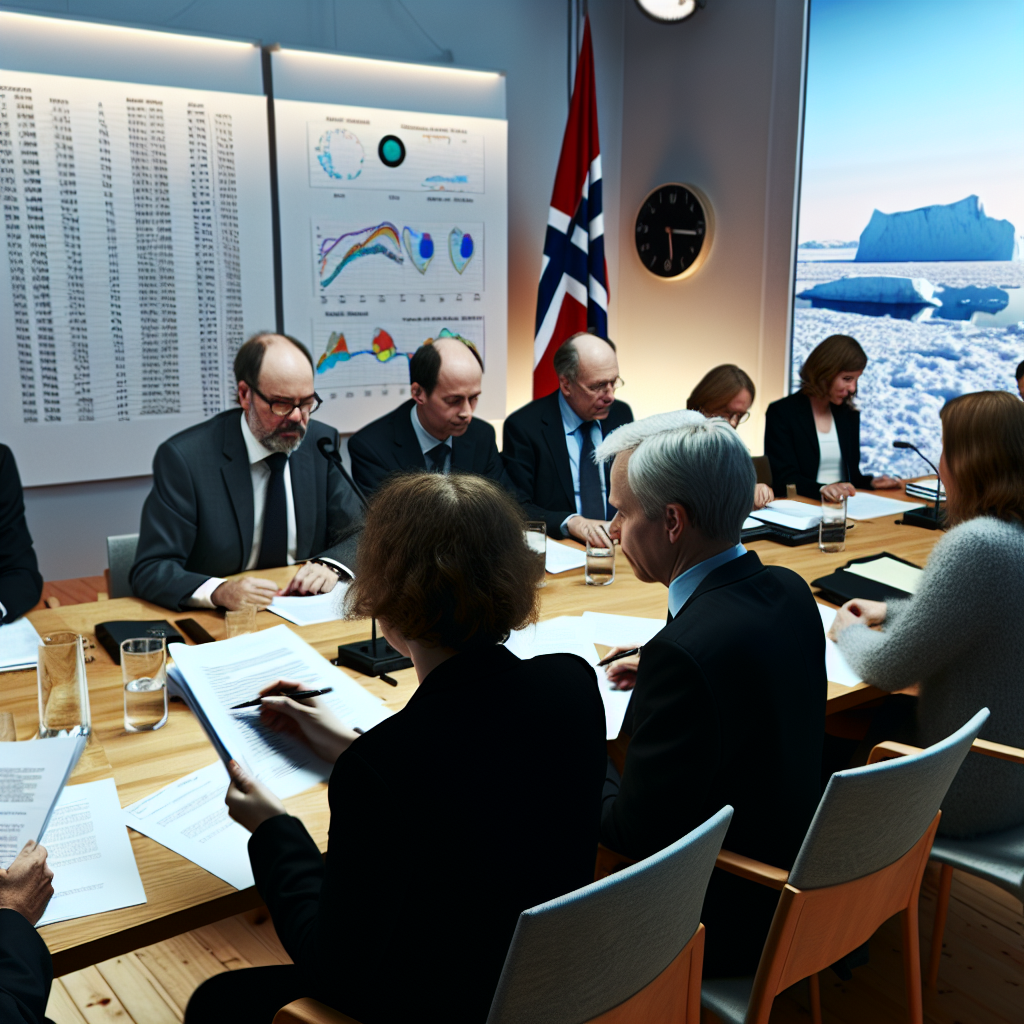
Reflecting on Recent Debates: A Call for Clarity in Policy Discussions
In light of the recent discussions in the Storting and the evolving situation in Northern Norway, it is imperative to examine how both domestic and international leaders articulate their stances on crucial issues such as oil and gas extraction, climate change, and the delicate matters of peace and conflict. The cacophony of rhetoric we observe from the sidelines demands our scrutiny.
Consider, for a moment, the intersection of climate concerns and oil operations in the Arctic. There is a nearly universal consensus that the extraction and combustion of fossil fuels—oil, coal, and gas—have significantly contributed to the global climate crisis. The repercussions of climate change are particularly pronounced in the Arctic, where melting ice caps and disrupted food chains illustrate a dire reality.
Yet, despite this acknowledgment, there are calls for Norway to double down on oil and gas extraction in the north, while simultaneously pushing the EU to revise its policies. Currently, the EU is rightly focused on climate preservation, advocating for a reduction in new oil projects in the Arctic.
This notion—that further fossil fuel extraction will somehow mitigate the very climate dangers we face—could prompt an engaging debate among students of logic, but it often feels more suitable for a children’s classroom. Even a five-year-old could see through the flawed reasoning that burning more fossil fuels is the solution to damage wrought by burning those same fuels.
Now, shifting to the nuances of war and peace: a widespread belief persists that maintaining diplomatic channels with potential adversaries can avert misunderstandings and conflict. Leaders generally agree that fostering trust over time is essential for a more peaceful global landscape.
In Norway’s case, the relationship with its neighbor Russia—a nation currently perceived as an aggressor in its actions toward Ukraine—has become fraught with tension, uncertainty, and the disturbing potential for conflict.
Therefore, the prevailing stance has been to sever all ties—both economic and cultural—with Russia. Those advocating for alternatives, as our defense minister recently stated, risk being labeled as security threats.
Many citizens today grapple with the troubling disconnect witnessed in governmental logic. The assertion that increasing fossil fuel consumption can combat climate change is perplexing at best. Similarly, the belief that entirely cutting off communication with Russia will foster a harmonious neighborhood seems misguided.
As our leaders often lament the complexities of our times, it’s crucial to recognize that many of these difficulties have been exacerbated by their own communication strategies. Arne Næss, perhaps the most prominent philosopher of our time, authored “Some Elementary Logical Topics” in the 1960s. Perhaps revisiting such foundational principles could illuminate a clearer path forward.