Norway’s shipping and maritime industries have shaped the nation for centuries and are now central to its post-oil future. From Viking longships to battery-powered ferries and zero-emission fjords, Norway remains an influential maritime nation.
When you sail along Norway’s coastline, it’s easy to be distracted by the obvious.
The epic fjords. The waterfalls tumbling from impossible heights. The neat rows of wooden houses in Bergen and Ålesund. The Arctic light shifting by the hour.
But spend enough time at sea here, as I have, and you begin to notice something else.
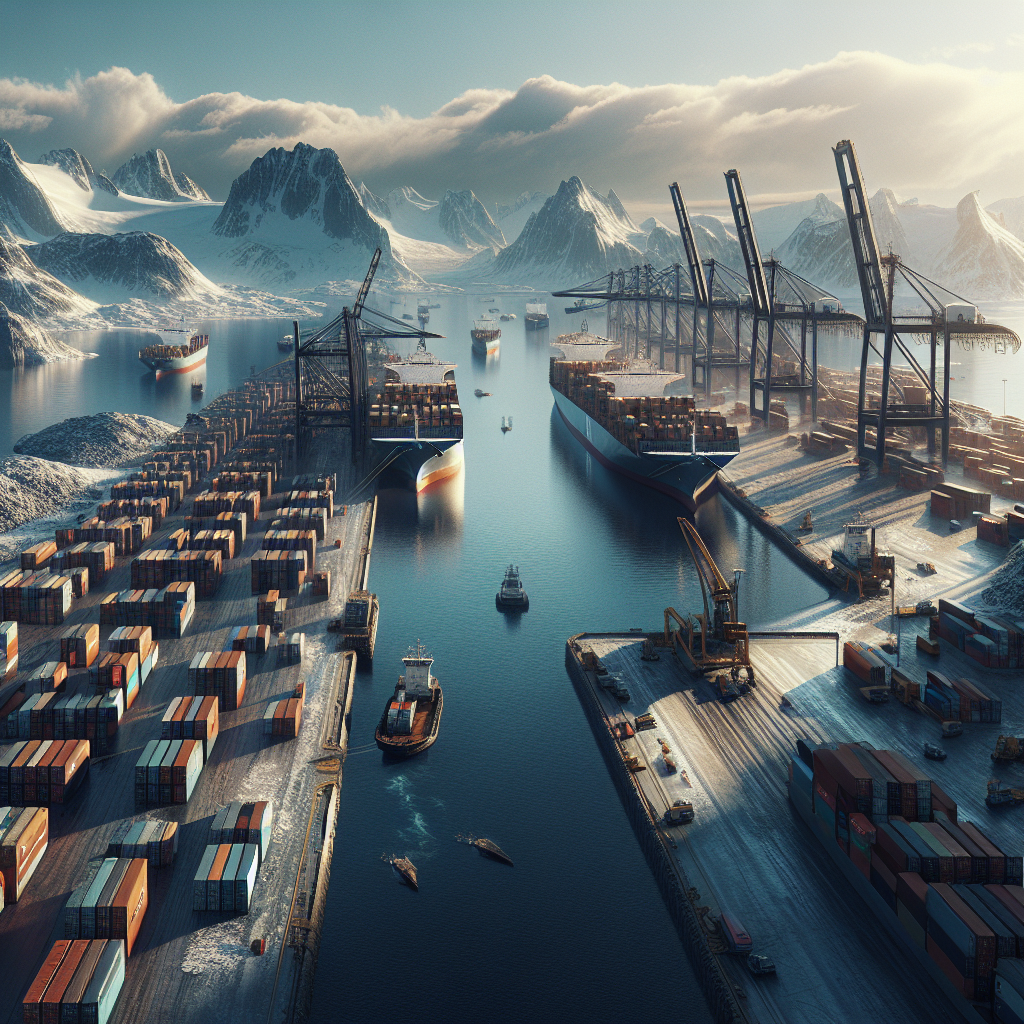
Tugs guiding vast car carriers into port. Offshore vessels bristling with cranes and subsea equipment. Fish farm support ships weaving between islands. Ferries docking with quiet electric precision. Shipyards tucked deep into fjords. Containers stacked beside sleek research vessels.
There is a lot of industry along Norway’s coast. A surprising amount of it is shipping and maritime activity. Over the years, sailing into ports large and small, I found myself increasingly curious about what lies behind that constant movement.
Who owns these ships? Why are so many of them Norwegian? How did this relatively small country become such a heavyweight in global shipping? And how serious is Norway about making the industry greener?
The result of that curiosity is this article. Consider it a deep dive into one of Norway’s most important industries: its shipping and maritime sector.
Norway’s Maritime Industry in Numbers
To understand the scale of Norway’s shipping sector, it helps to look at the data.
In 2024, Norway’s maritime industry employed close to 90,000 people and generated approximately NOK 219 billion in total value creation, according to the Norwegian Shipowners’ Association’s Maritime Outlook 2025.
That makes it one of the country’s most important export-oriented industries outside of oil and gas.
The sector is also Norway’s largest service exporter. Recent estimates from Menon Economics show maritime services accounting for around NOK 190 billion in export value in 2023 alone, highlighting the global reach of Norwegian shipping companies, technology firms and offshore operators.
Fleet size depends on how it is measured. As of 2025, there were roughly 1,500 vessels registered in Norway’s two ship registers: the Norwegian Ordinary Ship Register (NOR) and the Norwegian International Ship Register (NIS).
When including Norwegian-controlled vessels sailing under foreign flags, the total foreign-going fleet exceeds 1,600 ships.
Measured by fleet value rather than just number of vessels, Norway consistently ranks among the world’s leading maritime nations.
For a country of just over five million people, that is an extraordinary footprint at sea.
A Maritime Nation Built by Geography
Norway’s maritime strength begins with geography. With more than 100,000 kilometres of coastline when fjords and islands are included, Norway is one of the most indented countries on Earth.
Mountains rise steeply from the sea. Inland travel was historically slow and difficult. For centuries, the ocean was the only practical highway.
Fishing sustained coastal communities. Trade routes connected small settlements to Europe. Stockfish from Northern Norway travelled south. Grain and wine returned north.
During the Viking Age, Norse longships crossed the North Atlantic to Iceland, Greenland and North America. These voyages were not simply exploration. They were economic lifelines. Navigation skills, shipbuilding knowledge and maritime courage became embedded in Norwegian culture.
By the late 19th and early 20th centuries, Norway had developed one of the world’s largest merchant fleets. Norwegian ships carried cargo across the globe.
During the Second World War, the Norwegian merchant fleet played a crucial logistical role for the Allies, suffering heavy losses but reinforcing Norway’s maritime standing.
When oil was discovered in the North Sea in the late 1960s, Norway did not suddenly become maritime. It already was. Offshore petroleum development simply added another layer, demanding specialised vessels capable of operating in harsh North Sea conditions.
Today, even as oil production gradually declines, maritime competence remains one of Norway’s most important assets.
Norway’s Position in Global Shipping Today
Norway consistently ranks among the world’s leading shipping nations.
Measured by fleet value, the Norwegian-controlled fleet remains one of the largest globally, competing with traditional maritime powers such as Greece, China and Japan. In several specialised segments, Norway is even more dominant.
The Norwegian fleet includes:
- Deep-sea cargo vessels
- Oil, chemical and product tankers
- LNG carriers
- Roll-on roll-off (RoRo) car carriers
- Offshore service vessels
- Expedition cruise ships
- Ferries and coastal ships
- Fishing and aquaculture vessels
Norway is particularly strong in advanced, high-value sectors. Companies such as Wallenius Wilhelmsen are global leaders in RoRo shipping, transporting cars, trucks and heavy machinery across continents.
Norwegian shipowners are also prominent in chemical tankers, gas carriers and offshore supply vessels. Rather than dominating sheer volume, Norway excels in technical complexity.
Another strength is fleet modernity. The Norwegian-controlled fleet is relatively young compared with many global fleets. A younger fleet makes adaptation easier, particularly when transitioning to new fuels and propulsion systems.
The Norwegian Maritime Cluster
One of Norway’s greatest competitive advantages is its complete maritime cluster.
A maritime cluster includes everything required to design, finance, build, operate, insure and regulate ships. In Norway, these elements exist side by side, often within a few hours of each other along the coast.
The cluster includes:
- Shipowners and operators
- Shipyards and equipment suppliers
- Maritime technology companies
- Finance and insurance institutions
- Maritime legal specialists
- Classification societies
- Research institutions and universities
- Training academies
Few countries possess such a complete and integrated maritime ecosystem.
Technology firms such as Kongsberg Maritime supply advanced navigation, automation and dynamic positioning systems used on vessels worldwide. Their systems are standard equipment on offshore vessels, cruise ships and naval craft across the globe.
Data-driven firms such as Xeneta provide global freight rate benchmarking and market intelligence, increasing transparency in what was once a notoriously opaque shipping market.
Specialist companies such as Maritime Robotics develop unmanned surface vehicles and surveillance systems for harsh marine environments, including offshore wind and subsea inspection.
Oslo has also become a significant hub for maritime finance and insurance, with strong links between shipowners, investors and legal experts.
Notable Norwegian Shipping Companies
At the centre of the cluster sit the shipowners themselves. Several Norwegian-controlled companies are global leaders in their segments.
Wallenius Wilhelmsen is one of the world’s largest operators of roll-on roll-off (RoRo) vessels. The company specialises in transporting cars, heavy machinery and breakbulk cargo across global trade routes. If electric vehicles are crossing the Atlantic, there is a strong chance a Norwegian-controlled RoRo vessel is involved.
Knutsen OAS Shipping is a major player in shuttle tankers and LNG carriers. The company operates advanced vessels serving offshore oil fields and global gas markets, with a reputation for technical sophistication.
Odfjell SE is one of the world’s leading operators of chemical tankers, transporting specialised liquid cargoes globally. Its fleet is known for modern design and high environmental standards.
Frontline remains one of the most prominent crude oil tanker operators in the world, with a fleet trading internationally. Though technically headquartered abroad, it is historically rooted in Norway’s shipping tradition.
Solstad Offshore operates a large fleet of offshore service vessels, supporting subsea construction, renewable energy and oil and gas installations worldwide.
Meanwhile, in the passenger and cruise segment, operators such as Hurtigruten and Havila Voyages are reshaping expectations around sustainable coastal shipping, as discussed earlier.
Together, these companies illustrate the breadth of Norway’s maritime reach: from tankers crossing oceans to ferries crossing fjords, from offshore wind support vessels to car carriers linking continents.
The cluster works because these companies do not operate in isolation. They are supported by technology firms, research institutions, banks, insurers and regulators all operating within the same ecosystem.
That concentration of expertise helps Norway remain influential in global shipping, even though its population is small by international standards.
And when you next see a Norwegian-controlled vessel entering port—whether in Rotterdam, Singapore or New York—it is worth remembering that behind it stands not just a shipowner, but an entire maritime nation.
The Norwegian Flag and Global Reach
The Norwegian fleet operates under multiple flags. Ships may be registered in the Norwegian Ordinary Ship Register (NOR) or the Norwegian International Ship Register (NIS). In addition, many Norwegian-controlled vessels fly foreign flags for commercial or regulatory reasons.
The flag state determines regulatory oversight, taxation and labour rules. A Norwegian company operating a vessel between Asia and South America may register under another flag if it makes operational sense.
What matters economically is control and ownership. Norway’s influence in global shipping extends far beyond vessels physically flying the Norwegian flag.
Electrification: Norway’s Ferry Revolution
Perhaps the most visible maritime transformation in Norway has been electrification.
Norway operates one of the world’s largest ferry networks. Hundreds of crossings connect communities separated by fjords. These ferries are not tourist novelties. They are infrastructure.
In 2015, the fully electric ferry Ampere entered service, proving that battery propulsion was commercially viable on short routes. The results were striking: dramatic reductions in fuel consumption, emissions and operating costs.
Since then, electrification has accelerated. Norway now operates dozens of electric and hybrid ferries, with more under construction.
Fast-charging infrastructure has been installed at ferry terminals nationwide. Ferries recharge while loading and unloading vehicles.
Because Norway’s electricity grid is almost entirely renewable, mainly hydropower, electrification delivers immediate climate benefits. Norway is now widely seen as a global leader in short-sea electrification, with other countries studying its model.
Zero-Emission Requirements in the World Heritage Fjords
One of the most significant regulatory developments concerns Norway’s UNESCO World Heritage fjords, including Geirangerfjord and Nærøyfjord.
Earlier proposals suggested a full zero-emission requirement for all passenger ships by 2026. However, the final adopted regulations introduced a phased approach.
From 1 January 2026, passenger ships under 10,000 gross tonnes must operate with zero emissions when sailing in the World Heritage fjords. For larger vessels of 10,000 gross tonnes and above, including most mainstream cruise ships, the zero-emission requirement will apply from 2032.
This extension recognises that technology for fully zero-emission operation of large cruise ships is not yet commercially mature. The six-year delay gives shipowners time to develop practical solutions while still committing to long-term environmental protection.
The regulations are technology-neutral. Operators may use batteries, hydrogen, ammonia or other zero-emission solutions. Shore power must be used where available.
For cruise passengers, this means fjord cruising will increasingly involve hybrid propulsion, battery operation during scenic sailing and greater reliance on shore power in port.
Cruise and Expedition Innovation
Norway has become a testbed for greener cruise operations, where regulation, innovation and commercial tourism converge to push maritime sustainability forward.
Along the classic Bergen–Kirkenes coastal route, operators such as Havila Voyages and Hurtigruten are pioneering new technologies and operational approaches that reduce emissions, improve energy efficiency and influence vessel design worldwide.
Hybrid Technology and Battery Power at Sea
Havila’s new coastal cruise vessels are equipped with some of the largest battery packs ever installed on passenger ships. These battery systems can provide up to four hours of zero-emission, silent cruising under ideal conditions.
Unlike many traditional cruise ships that rely primarily on fossil fuels, Havila’s ships combine LNG (liquefied natural gas) propulsion with battery power. The hybrid system significantly reduces CO₂ emissions.
Havila reports roughly 35 % lower emissions compared with conventional diesel operations along the coastal route. It also cuts NOₓ and SOₓ emissions dramatically.
The large batteries are typically charged using shore-supplied renewable energy where available.
However, a key constraint remains: shore power infrastructure along the Norwegian coast is still patchy, limiting how often and how long ships can recharge aboard. This infrastructure gap is a continuing challenge for operators aiming for fully emission-free voyages.
Toward Carbon Neutrality
While Havila’s ships have already operated emission-free segments in fjords and coastal waters, the company’s broader goal is not simply minimizing emissions, it is carbon neutrality across the full coastal voyage.
Havila has publicly stated aspirations to achieve climate-neutral fleet operations by about 2028, with zero-emission sailing by around 2030 once alternative fuels (including hydrogen) and supporting infrastructure are further developed.
These targets align with technology development timelines. Biogas and renewable fuel blends are already being trialled along parts of the coastal route, demonstrating how ships might reduce their lifecycle greenhouse gas footprint without waiting for next-generation zero-emission propulsion systems.
Hurtigruten’s Retrofitting and Biofuel Sailings
Hurtigruten has taken a complementary approach, focusing on upgrading existing vessels with hybrid systems and filters that reduce emissions while maintaining core operations.
In late 2025, Hurtigruten scheduled an entire coastal voyage powered on 100% biofuel aboard MS Richard With. The vessel, which was refitted with hybrid capabilities and connects to shore power wherever available, is part of Hurtigruten’s push to explore alternative fuels as a pathway to near-term carbon reduction.
These biofuel and hybrid systems do not yet make Hurtigruten’s coastal ships fully zero-emission, but they represent practical steps toward reducing the environmental footprint while larger zero-emission technologies continue to mature.
Research Partnerships and the SeaZero Initiative
Beyond individual ship operations, Norwegian cruise companies are active participants in broader research and innovation collaborations.
Hurtigruten is involved in projects like SeaZero, a research initiative aimed at designing and demonstrating a fully zero-emission cruise vessel concept suitable for Norway’s coastal conditions by around 2030.
SeaZero explores advanced energy storage, shore power integration, alternative fuels and digital energy optimisation to make sustainable cruising feasible at scale — not just for short passages but for full itineraries.
These research partnerships illustrate how commercial operators and technology developers are working together, recognizing that no single company can solve decarbonisation alone.
Shore Power Expansion and Port Infrastructure
Infrastructure remains one of the major bottlenecks for greener cruising.
Ports such as Bergen and Oslo have invested in high-capacity shore power connections, allowing ships to switch off auxiliary engines and rely on clean electricity while docked. This reduces local emissions and noise, improving air quality for communities.
However, many smaller ports along Norway’s long coastline still lack sufficient grid capacity or shore connections. Cruise operators must adapt their schedules and charging strategies accordingly, and national and local authorities continue to invest in expanding this infrastructure.
A Broader Shift in Cruise Tourism
These innovations are not happening in isolation. Norway’s phased zero-emission fjord regulations are encouraging operators to accelerate investments in hybrid systems, alternative fuels and energy efficiency.
Environmental performance is no longer an optional marketing advantage for cruise companies operating in Norway. It is becoming a regulatory and commercial necessity. Passengers increasingly expect sustainable experiences, and destinations with strict environmental standards require it.
Together, retrofit projects, hybrid innovations, research partnerships and evolving infrastructure paint a picture of an industry in transformation.
It’s one where Norway’s coast is not only a stunning natural backdrop but a proving ground for sustainable cruising technologies that could shape global maritime practice.
Autonomous and Smart Shipping
Norway is also at the forefront of autonomous maritime technology.
The Yara Birkeland, developed in partnership with Kongsberg, became one of the world’s first fully electric and autonomous-capable container vessels. Although autonomy has been introduced gradually, the project demonstrated Norway’s willingness to push technological boundaries.
Autonomy does not necessarily mean crewless ships. It means:
- Enhanced digital navigation
- Remote monitoring
- Collision avoidance systems
- Optimised routing for fuel efficiency
Norway’s coastal waters serve as testing grounds for smart shipping solutions that are later exported globally.
Environmental Leadership and International Policy
Norway has long played an active role at the International Maritime Organization, which in recent years strengthened its climate strategy toward net-zero greenhouse gas emissions from international shipping around mid-century.
Domestically, the Norwegian Maritime Authority oversees safety and environmental regulation.
Norway has also aligned with European regulations such as FuelEU Maritime, though implementation timelines have been adjusted domestically to ensure alignment with national legislation.
The overarching trend is clear: regulatory pressure on shipping emissions is increasing, and Norway aims to remain ahead rather than behind.
Offshore Energy and the Shift Beyond Oil
Norway’s offshore fleet was built around oil and gas. Platform supply vessels, anchor handlers and subsea construction ships became hallmarks of Norwegian maritime expertise.
As offshore wind expands, particularly floating wind, many of these skills are transferable. Installation vessels, cable-laying ships and maintenance vessels are in demand.
The transition from oil to renewables will not happen overnight. But Norway’s maritime industry is adapting its offshore competence to serve new energy sectors.
Safety and Regulation in Norwegian Shipping
Shipping remains inherently risky. The Norwegian Maritime Authority works closely with shipowners to enhance safety culture, reporting systems and fatigue management.
Digitalisation has improved monitoring and situational awareness on the bridge. Training standards remain high, reflecting Norway’s long maritime tradition.
Safety is not just ethical. It is economic. Accidents disrupt trade, damage infrastructure and undermine confidence.
Ship Recycling and End-of-Life Responsibility
When ships reach the end of their service life, disposal becomes a major environmental concern. Norway aligns with European ship recycling regulations requiring dismantling at approved facilities.
The Government Pension Fund Global monitors environmental performance among companies in which it invests. Shipping companies with poor recycling practices risk exclusion. Sustainability increasingly influences capital flows in the maritime sector.
Seafarers, Education and Workforce Challenges
Ships and technology often dominate discussions about Norway’s maritime industry. But behind every vessel is a highly trained workforce.
Norway maintains a strong maritime education system aligned with international STCW standards. Maritime high schools, technical colleges and universities offer pathways into nautical science, marine engineering, offshore operations and maritime management.
Institutions such as the University of South-Eastern Norway and other specialist maritime faculties work closely with industry to ensure graduates are prepared for increasingly digital and automated vessels.
Lifelong learning is becoming just as important as initial qualification. As ships adopt hybrid propulsion, alternative fuels and advanced navigation systems, companies report a growing need for continuous upskilling — both at sea and in shore-based roles.
At the same time, the industry faces recruitment challenges. Like much of global shipping, Norway must compete for young talent in a labour market where long rotations at sea are not always attractive. Increasing diversity remains a priority, with industry groups working to attract more women and broaden participation in maritime careers.
The future of Norwegian shipping depends not only on batteries, hydrogen and automation, but on whether the sector can continue to attract skilled people willing to build careers at sea.
Challenges Ahead in Norwegian Shipping
Despite its strengths, Norway’s shipping industry faces significant challenges.
Global freight markets are volatile. Geopolitical tensions disrupt supply chains. Deep-sea decarbonisation remains technologically complex and expensive.
Battery propulsion works well for short routes. It is not yet viable for long-haul container ships. Alternative fuels such as ammonia and hydrogen require new infrastructure and safety frameworks.
There is also the challenge of workforce renewal. Attracting young professionals into maritime careers is essential for long-term competitiveness.
A Post-Oil Maritime Future
Oil transformed Norway’s economy. But long before oil, there was shipping. As petroleum revenues gradually decline, maritime expertise may once again form the backbone of Norway’s export economy.
Shipping and maritime services employ tens of thousands directly and support many more indirectly. Maritime equipment and services are significant export earners.
When I sail along Norway’s coast now, I see more than scenery. I see a country still deeply connected to the sea. A country experimenting with electric ferries, hybrid cruise ships and autonomous vessels while maintaining a powerful global fleet.
Norway may be small in population. It is not small at sea. And as global shipping undergoes one of the most dramatic transformations in its history, Norway appears determined to remain near the front of the fleet.