
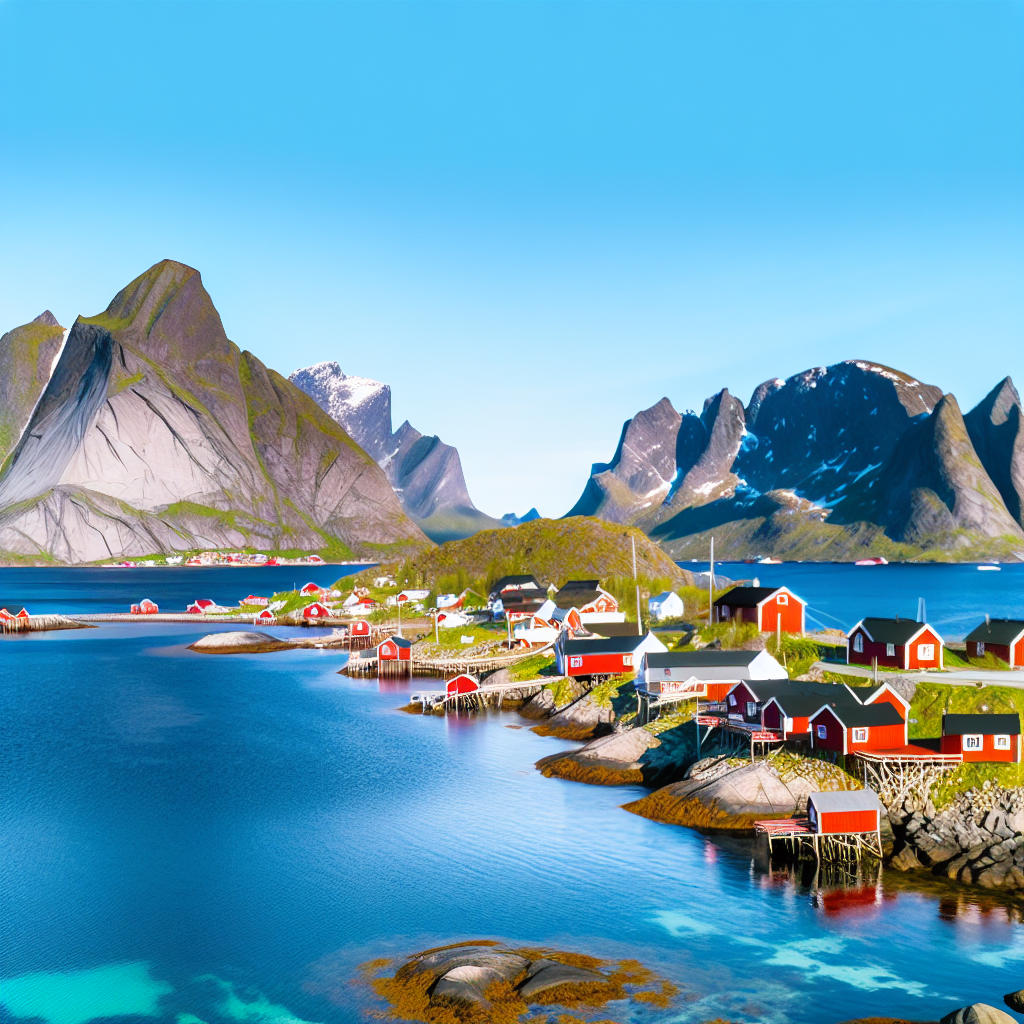
A small fishing village with one of Norway’s most famous views, Reine rewards those who arrive prepared and take the time to understand the place beyond the photograph.
Reine is one of Norway’s most photographed places, a small fishing village framed by jagged peaks and still water at the very end of the Lofoten archipelago. Its beauty is undeniable, but visiting it well requires more than chasing a famous view.
If you have ever seen an image of Lofoten used to represent Norway as a whole, there is a good chance it was taken in or around Reine.
Red rorbuer perched above the water, steep mountains rising almost vertically behind them, and light that seems to shift by the minute have turned this tiny village into an international symbol of Arctic Norway.
Yet Reine is not a museum set or a scenic overlook. It is a living community, shaped by fishing, weather, and geography, now navigating the pressures of global tourism. Understanding that context makes the difference between a rushed photo stop and a meaningful visit.
Where Reine Is and Why It’s So Famous
Reine lies in Lofoten, on the island of Moskenesøya, close to the western end of the archipelago. With fewer than 300 residents, it is small even by Norwegian standards, yet its setting gives it an outsized presence.
The village sits on a narrow strip of land between the Reinefjord and towering granite peaks. This dramatic compression of sea, settlement, and mountains is what makes Reine so visually striking.
Unlike larger towns in Northern Norway, there is no sprawl here. Everything feels tightly framed, almost theatrical, which is precisely why photographers are drawn to it.
Reine has been a fishing settlement since the 18th century, and fishing remains part of daily life. During the winter cod season, stockfish racks fill the air with a distinctive smell that reminds visitors this is not just a backdrop, but a working place.
First Impressions of Reine
Approaching Reine from the east, the road curves around the bay before looping back toward the village. Your first clear view comes as you cross the bridge from Sakrisøya, where yellow cabins and fishing boats sit just metres from the road.
This is where many of Reine’s most recognisable photographs are taken, often without the viewer realising they were shot before reaching the village itself.
Parking is limited and tightly managed. Narrow roads leave little room for informal stopping, and paid parking is common during peak season. It is best to park once and explore on foot rather than attempting to drive short distances within the village.
Getting to Reine
Reine feels remote, but it is more accessible than many visitors expect. How you arrive depends largely on time, budget, and tolerance for long journeys.
Flying to Lofoten
The nearest airports are Leknes Airport and Svolvær Airport. Both are small regional airports with limited direct flights, mostly via Bodø. Rental cars must be booked well in advance during summer.
From Leknes, the drive to Reine takes around an hour. From Svolvær, allow at least two hours. While the roads are good, distances in Lofoten always take longer than expected due to scenery, weather, and frequent stops.
Another option is Evenes Airport, which offers more frequent flights but requires a long drive south through Lofoten, typically four hours or more.
Ferry from Bodø
For many travellers, the ferry from Bodø to Moskenes is the most relaxed and scenic way to reach Reine. Rather than driving the full length of Lofoten, this route delivers you directly to the western end of the islands, just minutes from Reine itself.
The crossing takes around three to four hours, depending on the sailing, and is operated year-round by Torghatten Nord. In summer, sailings are frequent, but demand is extremely high, especially for vehicles.
Bodø is far easier to reach than most Lofoten airports. It has frequent flights from Oslo and Trondheim and is the northern terminus of the NordlandLine, making it possible to travel from southern Norway by train.
Arriving by ferry also avoids a long drive across the entire archipelago, which can take many hours once traffic, weather, and photo stops are factored in. For travellers short on time, or those planning to focus on western Lofoten, the ferry is often the most efficient option.
This is an open-sea crossing, not a sheltered fjord ferry. Conditions can be calm and glassy, or rough and wind-affected, particularly outside summer. On board, facilities are basic but adequate: seating areas, toilets, and usually a small café selling hot drinks and simple food.
In clear conditions, the approach to Moskenes is dramatic. Sharp peaks rise almost vertically from the sea, offering a preview of the landscapes that make Lofoten famous.
Moskenes ferry terminal is small and functional rather than picturesque. From here, Reine is only a few kilometres away along the E10. The transition is immediate: within minutes, you are surrounded by mountains, water, and the dense scenery that defines western Lofoten.
Driving the E10
The E10 is the main road through Lofoten. The final stretch into Reine is among the most scenic drives in Norway, with open ocean, still lakes, and sharp peaks visible in every direction.
This is not a road to rush. There are numerous pull-outs and informal stopping points, and traffic slows naturally as drivers absorb the scenery.
Reine Centre for Arts and Culture
Housed in a former school building, Reine Centre for Arts and Culture functions as both a community space and a cultural venue. It provides a welcome counterpoint to the outdoors-focused experience most visitors associate with Reine.
The centre hosts exhibitions by northern Norwegian artists, including a permanent exhibition of works by Eva Harr, whose paintings explore light, colour, and Arctic landscapes.
Temporary exhibitions often feature photography and local nature themes. In summer, the centre also hosts cultural events and literary gatherings. A small café makes this a good place to pause, especially on busy days when outdoor seating elsewhere may be limited.
Reinebringen Hike
Reine’s popularity among hikers is largely due to one trail, but there are other ways to experience the surrounding landscape.
The hike to Reinebringen has become one of the most recognisable outdoor experiences in Norway. At just under 450 metres high, it is not the tallest peak in Lofoten, but the view from the top has come to define the region in the public imagination.
From the summit, Reinefjord, the village itself, and the surrounding islands are revealed in a dramatic, tightly framed panorama.
It is a perspective that feels almost unreal, and one that has spread rapidly through social media, guidebooks, and travel marketing over the past decade. That visibility has consequences.
From Local Path to Global Attraction
For many years, Reinebringen was a relatively quiet local trail, used occasionally by residents and experienced hikers. As images of the view circulated more widely online, visitor numbers grew quickly.
At its peak, thousands of people a day were attempting the climb during summer, far exceeding what the original trail could safely handle.
The steep terrain, loose rock, and exposed sections led to frequent injuries and serious erosion. Rescue services were regularly called out, often to visitors who had underestimated the difficulty or attempted the hike in poor conditions.
In response, a large-scale stone stairway project was completed in 2019. Built using traditional Sherpa techniques, the steps stabilised the route, reduced erosion, and significantly improved safety. The work also made the trail more accessible to a broader range of hikers.
However, accessibility has only increased demand.
What the Hike Is Really Like
Despite the steps, Reinebringen remains a steep and physically demanding climb. The ascent gains elevation quickly, with little opportunity for flat recovery. The stairs are uneven, sometimes high, and can be slippery in rain or early morning dew.
Weather changes rapidly in Lofoten, and wind at the top can be strong even on otherwise calm days. Outside the peak summer season, snow and ice can linger well into spring and return early in autumn, making the hike unsafe without proper equipment.
This is not a casual stroll, and it is not suitable for everyone, regardless of how approachable it may look in photographs.
Crowds, Timing, and Experience
Reinebringen’s popularity has transformed the experience itself. In high summer, the trail can feel busy from early morning until late evening. It is not uncommon to queue on narrow sections or reach the summit to find dozens of people already there.
For some visitors, this shared moment enhances the experience. For others, it undermines the sense of solitude they associate with mountain landscapes in Norway.
Timing matters enormously. Early mornings and late evenings offer the best chance of quieter conditions, especially outside the busiest weeks of July. Shoulder seasons can be rewarding, but only for those prepared for rapidly changing conditions.
Respecting the Place
Reinebringen sits directly above a small village. Noise carries, drones disturb both residents and wildlife, and careless behaviour quickly becomes visible in such a compact landscape.
Staying on the marked route is essential, both for safety and to protect the surrounding vegetation. Shortcuts and off-trail walking accelerate erosion and undo much of the work invested in making the hike sustainable.
The view from the top is extraordinary, but it is not owed to anyone. Treating the hike as a privilege rather than a checklist item makes a noticeable difference, both to the experience and to the place itself.
Is Reinebringen Worth It?
For many visitors, the answer is still yes. The view is genuinely exceptional, and the sense of scale it provides helps explain why Reine has become so famous.
But it is also worth asking what you want from your time in Lofoten. Reinebringen is one way to experience the landscape, not the only one. Kayaking, shoreline walks, quieter hikes nearby, and simply spending time in the village can be just as rewarding, often with far less pressure.
Other Outdoor Experiences in Reine
Beyond Reinebringen, many visitors explore the area by water. Kayaking offers a low-impact way to experience the fjords and see the village from sea level, where the scale of the mountains becomes even more apparent.
Guided fishing trips operate from nearby harbours, reflecting the region’s deep connection to the sea. For beginners, these trips provide both instruction and insight into local fishing traditions.
Reine Adventure should be your first port of call. The local company has been established more than 20 years and offers everything from kayak rental to bicycle tours.
Where to Stay in Reine
Accommodation in Reine is limited, and booking early is essential, particularly from June to August.
Rorbuer in Reine
Reine Rorbuer offers traditional fishermen’s cabins updated with modern comforts. Each cabin includes a kitchenette, making self-catering easy. The on-site restaurant, Gammelbua, focuses on local produce and seafood, with menus that change seasonally.
Nearby Alternatives
Just outside Reine, Eliassen Rorbuer provides one of Lofoten’s most iconic places to stay. The cabins sit directly over the water on stilts, with uninterrupted views of sharp mountain ridges. While Hamnøy is quieter than Reine during the day, evenings are notably calm once traffic subsides.
Things to Do Near Reine
A few kilometres south of Reine lies Å, the literal end of the E10 and one of Norway’s shortest place names.
Despite its small size, Å plays an outsized role in understanding Lofoten’s fishing heritage. The village still feels purposeful rather than preserved, with traditional buildings clustered tightly around the harbour and daily life unfolding alongside visiting travellers.
Much of the village forms part of the Norwegian Fishing Village Museum, which aims to preserve the character of the settlement rather than modernise it.
Paying the entrance fee allows access to several historic buildings, exhibitions on cod fishing and stockfish production, and a 19th-century stone oven bakery that continues to produce bread and fragrant cinnamon buns using traditional methods.
While it’s possible to wander through Å for free, the museum ticket adds depth and context that turns a brief stop into a meaningful visit.
Å is also a practical place to stay. With a wider range of accommodation than Reine itself and immediate access to the Moskenes ferry terminal, it works well for travellers beginning or ending a Lofoten journey.
In the evenings, once day-trippers have left, the village becomes notably quiet, offering a calmer atmosphere than Reine during peak season.
When to Visit Reine
Summer brings long daylight hours, open hiking trails, and the highest number of visitors. The midnight sun creates exceptional light conditions but also intense pressure on infrastructure.
Spring and autumn offer quieter conditions, shifting light, and fewer crowds, though weather becomes more unpredictable. Winter transforms Reine into a calmer, more introspective place, with opportunities for northern lights photography and winter fishing, but limited services and short daylight hours.
There is no single “best” time to visit. Each season reveals a different side of the village.
Visiting Reine Responsibly
Reine’s popularity has brought challenges. Parking, waste management, and respect for private property are ongoing concerns. Visitors are asked to stay off stockfish racks, avoid trespassing near homes, and use designated facilities.
Reine remains a place where people live and work year-round. Approaching it with patience and awareness ensures the village remains welcoming, rather than overwhelmed.
Reine’s fame is well earned, but its real value lies beyond the photograph. It offers a rare chance to see how a small Arctic community exists within an extreme landscape, balancing tradition, tourism, and daily life.
For those who take the time to slow down, look beyond the viewpoint, and understand the place on its own terms, Reine remains one of Norway’s most compelling destinations.
Have you been to Reine? How did you spend your time? I’d love to hear your thoughts and experiences down in the comments.