

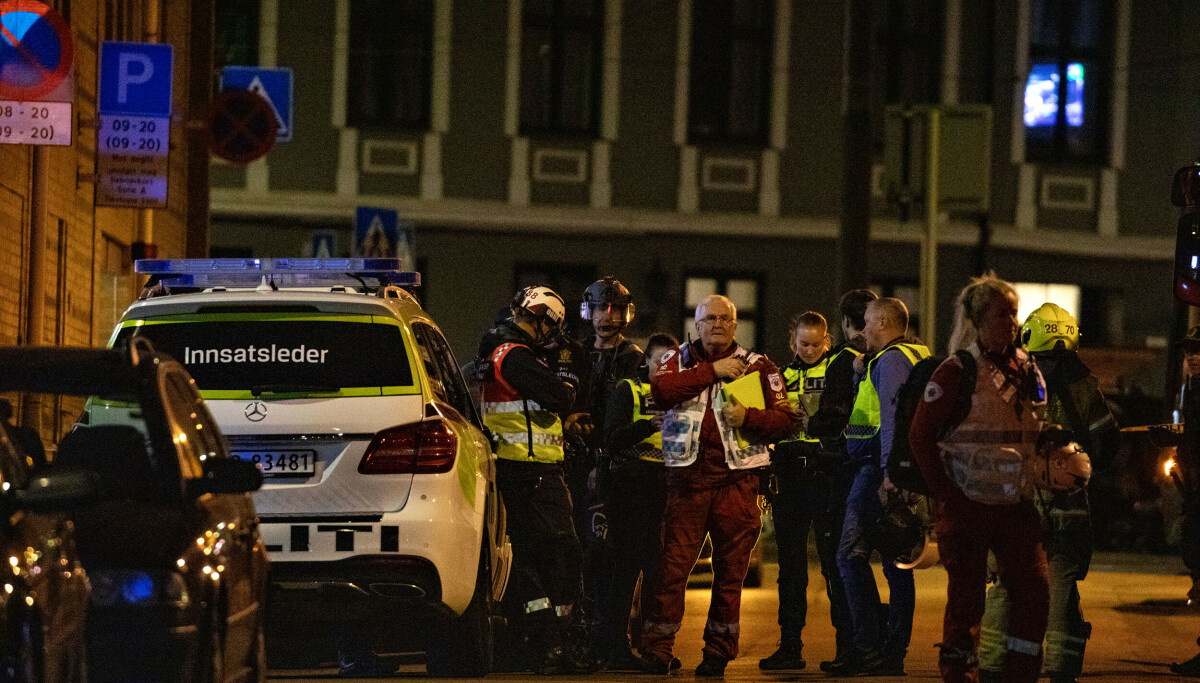
Law enforcement agencies are delving into alarming cases where organized crime rings are compelling children to engage in serious criminal activities—a disturbing trend referred to as “violence as a service.”
Since its establishment in April, Europol’s Operational Taskforce UGLY has apprehended 193 individuals linked to such criminal networks.
Meanwhile, in The Hague, Norwegian police and prosecution officials are collaborating closely with their counterparts at Europol and Eurojust to address this troubling situation.
– This aligns with what all countries observe: crime is intensifying. Young people, drawn from outside these organizations, are being recruited as disposable assets. They are lured by promises of cash that often never materialize, highlights Rune Utne Reitan, the head of Norway’s Europol office, in a conversation with Dagbladet.
Utne Reitan leads a team of eight officers from agencies including Kripos, Økokrim, PST, and Tolletaten, working together to tackle these challenges.
– The gaps are widening
At Europol, efforts are being made to identify emerging patterns and disseminate critical information among nations. This exchange of concrete data—about incidents, individuals, and intelligence—is vital for a united front against crime.
Dagbladet has previously reported that 821 criminal networks pose significant threats across Europe, with 75 percent of these operating in multiple countries and dabbling in various illegal enterprises such as money laundering, drug trafficking, and fraud.
– The necessity of information sharing cannot be overstated; the actors and their methods can easily cross borders. Links are abundant, and roles may be scattered across different nations, Reitan points out.
This urgency compels Norwegian authorities to travel to The Hague several times each week.
Meanwhile, those gathering evidence abroad—under the banner of Eurojust—note that Norway lacks essential tools for conducting effective investigations, a concern echoed by Europol itself.
– Our collaboration is fruitful, but we see a growing disparity. The EU member states enjoy cooperative frameworks that we don’t automatically access, Reitan explains.
– A growing risk
Since 2022, Kripos has intensified its efforts to bolster cooperation.
– It is imperative that we operate seamlessly. A vulnerability in Norway could spell trouble for the EU and the rest of the Schengen Area. There are no borders; travel is unrestricted. Therefore, if Norway grapples with a threat it cannot effectively mitigate, it poses a risk to other countries as well, Reitan emphasizes.
He elaborates:
– Heightened security measures are being implemented at major ports throughout the EU. However, this creates a vulnerability for Norwegian ports, which could turn into transit points for illicit goods, as Kripos has cautioned. With over 600 international ports, Norway has much to protect.
According to a Europol report, 70 percent of drug seizures in Europe occur within its ports.
Smaller ports across Europe, including those in the Nordics and Norway, are increasingly appearing as attractive smuggling points for organized crime groups aiming to transport cocaine in shipping containers from South America, as highlighted by Kripos’ threat assessments.
– Standing in the middle of the storm
Launching campaigns
In 2023, Norway witnessed an unprecedented surge in cocaine seizures, with quantities soaring to levels that far surpass previous records. This spike occurred chiefly within ports and during inspections of container shipments.
In the Netherlands and Belgium, campaigns have been initiated in response to reports of port employees being coerced or manipulated into becoming insiders within criminal operations.
Much of this organized crime flourishes in the context of drug trafficking, which, in turn, breeds market conflicts and escalated violence.
– We are witnessing drug-related offenses giving rise to a myriad of secondary crimes—violence, threats, brazen shootings, and corruption. The threats are all too real, Reitan notes.
According to Europol, “hotspots” of violence frequently align with key territories of organized crime, particularly where drug trafficking is prevalent.
“Geography and borders bear little consequence for the violent activities orchestrated by these networks. Fueled by online platforms, social media, and encrypted communications, these violent criminal organizations extend their reach globally, allowing them to execute violent deeds anywhere in the world,” the report warns.
A clear message to Norway
Ranking high on Norway’s agenda
The EU has pinpointed its most pressing threats, including:
Organized criminal networks, cyber threats, human trafficking and smuggling, child exploitation, drug offenses, fraud, property crime, environmental crimes, and arms trafficking.
The head of Norway’s Eurojust desk, Rudolf Christoffersen, alongside attorney Knut Jostein Sætnan, primarily manages cases linked to money laundering and fraud but notes that the Norwegian desk leads in investigations centered on drug trafficking and violent crime.
– Among the types of cases we assist Norway with, drug trafficking stands out as the number one priority, declares Federal Attorney General Rudolf Christoffersen.
– What do you believe is the reason for this?
– First and foremost, tackling drug-related crime remains a top priority in Norway. It is the driving force behind all organized crime within the country.
While fraud and online deception are high on the EU’s agenda, they haven’t attained the same level of urgency in Norway, Christoffersen elaborates.
In 2024, Eurojust processed nearly 13,000 cases, out of which 2,258 were related to organized crime. For the Norwegian desk, each year sets a new record.
Christoffersen portrays this as a welcomed trend, reflecting an increased commitment to international collaboration, particularly with nations in Latin America.
Yet, he underscores the challenges surrounding human rights, rule of law, and corruption. This complicates the landscape, necessitating clear guidelines for how cooperation should be structured with these countries. As crime evolves in scope and severity, the need for measured and thoughtful responses becomes imperative.