

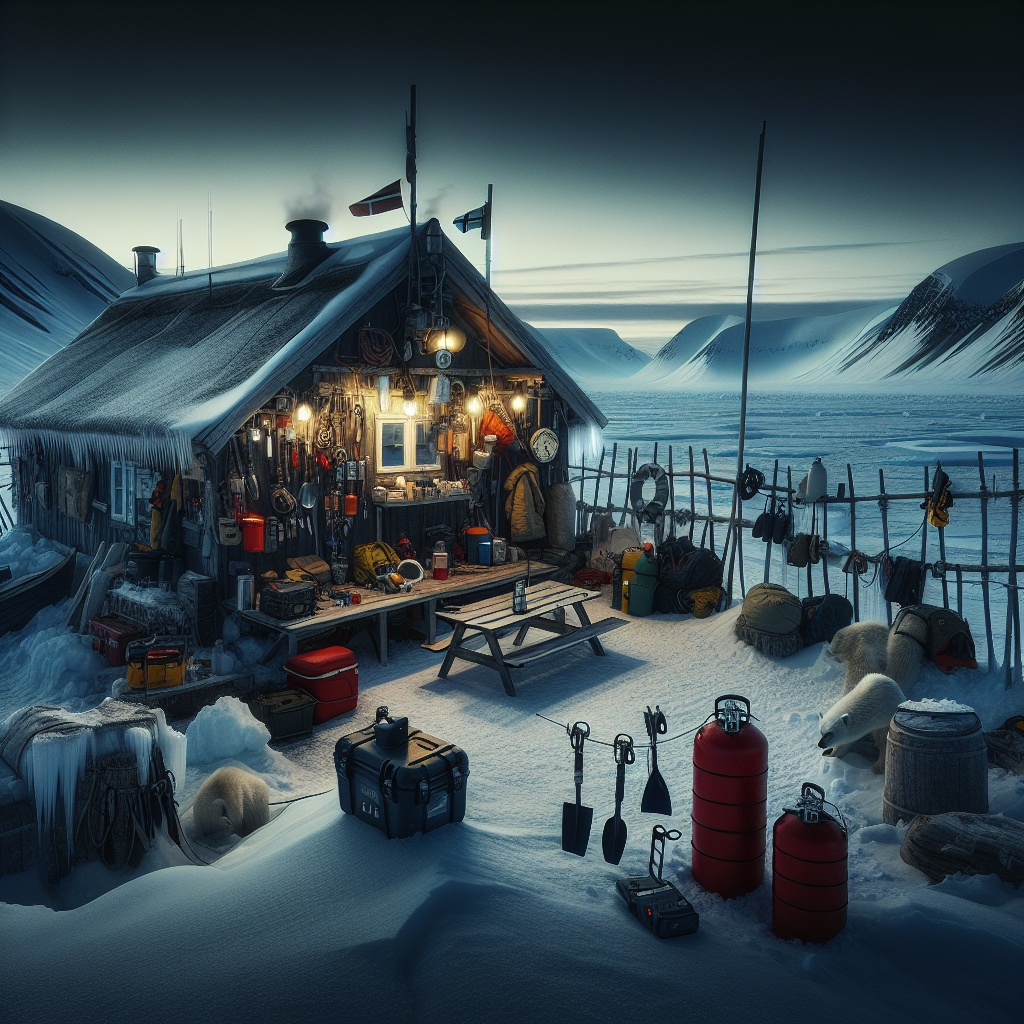
Svalbard is one of the most extraordinary places you can visit in Europe. It is wild, stark, beautiful, and genuinely unlike mainland Norway.
For many travellers, that is exactly the appeal. It is also a place where nature sets the terms.
That matters because Svalbard can feel deceptively accessible. You fly into Longyearbyen on a scheduled flight, sleep in a comfortable hotel, eat in good restaurants, and join well-run excursions.
Yet just beyond the edge of town lies one of the harshest and least forgiving environments in the Arctic. Polar bears roam far outside the settlements. Weather can shift quickly. Snow, sea ice, glaciers, and avalanche terrain all create risks that many visitors will never have dealt with before.
Official guidance for travellers is blunt on this point. Good preparation is not optional.
The good news is that Svalbard is very possible to visit safely. In fact, thousands of people do exactly that every year. The key is understanding what kind of place this is, where the real boundaries are, and when to leave the hard stuff to local professionals.
Why Svalbard Safety is Different
The first thing to understand is that Svalbard is not just “cold Norway.” The archipelago has its own environmental rules, its own travel culture, and its own set of hazards.
Official safety guidance highlights polar bears, extreme weather, avalanche risk, unstable sea ice, glacier crevasses, drifting ice, poor communications coverage, and scarce infrastructure as major challenges for anyone travelling in the field.
That last point is especially important. On the mainland, a wrong turn on a hike is often inconvenient. On Svalbard, a wrong turn can become an emergency.
Mobile coverage is limited. Distances are big. Help may take time to reach you. Even experienced researchers and fieldworkers are urged to plan carefully, carry backup communication equipment, and prepare for self-reliance.
For ordinary visitors, the practical takeaway is simple. You do not need to be frightened of Svalbard, but you do need to respect it.
Is Longyearbyen Safe?
Longyearbyen is the safest and easiest place on Svalbard for independent travellers. You can walk around within the town limits on your own without carrying polar bear protection, as long as you do not go beyond the warning signs placed on roads leading out of town.
Visit Svalbard specifically points travellers to those warning signs near the port, by Svalbard Villmarkssenter, in Nybyen, and by Huset to the south.
That does not mean Longyearbyen is risk-free. Winter streets can be icy, and local advice recommends spikes for your boots.
During the dark season, a headlamp and reflective or high-visibility clothing are strongly recommended because there is little daylight for long stretches and, during the Polar Night, it can feel dark around the clock.
Avalanche risk also has to be taken seriously. The Governor continues to issue avalanche warnings for parts of Svalbard, including Nordenskiöld Land, and urges people in nature to avoid avalanche terrain and keep a good distance from steep slopes and runout zones.
That is a reminder that snow conditions on Svalbard are not just a concern for backcountry skiers and snowmobilers. They are part of the wider safety picture for everyone spending time outdoors in winter and spring.
So yes, Longyearbyen is safe for visitors in the everyday sense. But it is safe because it has clear limits. Once you leave those limits, the rules change quickly.
The Most Important Rule for Visitors
If you are new to Svalbard, do not head into the wilderness alone. That is the single most useful piece of advice in this entire article.
Official tourism guidance is consistent on this. Visitors are strongly encouraged to join organised tours with local, professional guides when heading beyond town.
Those guides are trained to assess weather, avalanche danger, ice conditions, and polar bear risk. They also carry the safety gear and long-range communication equipment needed outside areas with phone reception.
This is not about taking the fun out of adventure. It is about recognising that Svalbard is one of those rare places where local knowledge is not a luxury. It is a safety system.
For most visitors, the smartest version of an adventurous trip to Svalbard is not independent exploration. It is joining a guided snowmobile tour, dog sled trip, boat excursion, glacier hike, or wilderness experience run by operators who know the landscape and the current conditions.
Polar Bears are a Real Risk, Not Marketing
No safety article about Svalbard can avoid the subject of polar bears. Nor should it. Polar bears can be encountered anywhere in the archipelago at any time of year, even close to settlements.
Visit Svalbard describes them as an iconic but unpredictable part of the environment, and stresses that they can move silently and attack quickly.
The Governor’s guidance states that anyone travelling outside the settlements must be equipped with suitable means of scaring off polar bears, and official visitor guidance is even blunter: do not leave the settlements without a suitable gun and experience in using it.
That alone should tell most holidaymakers everything they need to know.
In practice, if you are asking whether you personally should rent a rifle and walk out into the Arctic, the answer is probably no. Local guides train regularly in polar bear safety, firearms safety, rescue work, glacier travel, and avalanche terrain. That is one of the main reasons organised tours are such a sensible choice.
It is also worth noting that Svalbard’s polar bear rules have tightened. Since 1 January 2025, people must keep at least 300 metres away from a polar bear, rising to 500 metres from 1 March to 30 June.
If you encounter a bear closer than the legal distance, you are obliged to retreat. Those distance rules were introduced both to protect the bears and to reduce dangerous human encounters.
That is why there are no legal “polar bear safaris” on Svalbard. You do not seek out polar bears here. You avoid creating situations in which either people or bears are put at risk.
What About Walking Outside Town?
This is where many first-time visitors can get confused. You can walk freely within Longyearbyen’s town limits. The town circuit is a popular example, and there are a few short local walks that are considered fine without polar bear protection, as long as you stay inside the marked limits.
But once you go past the warning signs, you are no longer just “going for a walk.” You are entering polar bear territory.
That distinction may feel dramatic, but on Svalbard it is a practical one. A hillside that looks close to town can still be outside the safe area. A route that seems short on a map can cross into terrain where wildlife, weather, and rescue conditions become much more serious.
The safest habit is to ask locally before setting off. Hotel staff and the tourist information office can give up-to-date guidance on where independent walking is appropriate and where it is not.
Cold, Wind and Frostbite Catch People Out
Polar bears dominate most conversations about Svalbard safety, but cold injuries are probably more likely to affect the average visitor.
Even in summer, average temperatures are only around 3 to 7C, and windproof outerwear is recommended. In winter, temperatures can drop as low as -30C. Official visitor advice recommends windproof outer layers, multiple wool or fleece layers, warm boots, mittens, gloves, scarf, and face protection such as a balaclava.
The reason this matters is that Svalbard cold is not just about the thermometer. Wind changes everything. A day that looks manageable outside your hotel window can feel brutal once you are out on an open snowmobile route or standing still on a boat deck.
Hands, feet, cheeks, nose, and chin are especially vulnerable. So are travellers who dress for the air temperature but forget about inactivity, dampness, or wind chill.
For visitors, the best rule is to dress as if conditions will worsen. Bring more layers than you think you need. Pack spare gloves or mittens. Carry extra warm clothing even on excursions that seem straightforward. And do not be embarrassed to over-prepare.
On Svalbard, looking slightly over-equipped is usually a sign that you understand where you are.
Avalanche Danger is Not Theoretical
Svalbard’s mountains are beautiful, but they create real avalanche exposure in winter and spring.
The Governor regularly publishes avalanche warnings, and the 2026 notices show that danger levels can rise significantly in different regions depending on wind and snow conditions. Official advice is to avoid avalanche terrain and keep clear of steep slopes and runout zones.
For most visitors, the practical meaning is this: do not improvise winter routes. Do not assume that because there are snowmobile tracks, a valley is safe. Do not treat a slope near town as harmless just because it looks accessible.
If you are joining a guided winter tour, your operator will assess the conditions. If you are making your own plans outdoors in winter, you need to think seriously about whether you actually have the knowledge to read avalanche terrain in the Arctic.
Many visitors do not, and that is exactly why guided trips are so strongly recommended.
Glaciers, Sea Ice and Water are Major Hazards Too
Svalbard’s landscape creates other dangers that are easy to underestimate because they look so spectacular in photos.
Glaciers can hide crevasses, and conditions can change quickly. The Research Council of Norway’s field guidance warns specifically about glacier crevasses, while noting that some glaciers can suddenly become much more broken up as they surge.
It also warns that calving glaciers are dangerous and that boats should maintain a safe distance from tidewater glacier fronts.
Sea ice is another major risk. Official guidance for field planning highlights unstable sea ice as a core hazard, and older UNIS field safety material goes further, noting that many fatal accidents on Svalbard have been related to sea ice travel.
Even where frozen fjords look solid, local conditions can change because of currents, cracks, weather, and temperature shifts.
For ordinary visitors, this is not an invitation to become an amateur ice expert. It is a warning not to trust appearances. Never walk onto sea ice, attempt glacier travel, or boat close to glacier fronts unless you are with people who know the current conditions and the rescue procedures.
Remoteness is Part of the Danger
One of the defining safety challenges on Svalbard is not any single hazard. It is the fact that hazards happen in a place with limited backup.
Official field guidance notes poor communications coverage and scarce infrastructure as part of the basic risk picture. Mobile phones work in Longyearbyen and some other settlements, but not across the wilderness.
Satellite phones and emergency beacons are standard safety tools for longer field travel, and if you need emergency help from a satellite phone you must call the Governor’s duty officer on +47 79 02 12 22 because satellite phones do not support 112.
That matters even if you never plan a big expedition. It explains why local operators carry long-range communication systems. It explains why self-reliance is taken so seriously. And it explains why Svalbard is not the place for casual, under-planned adventuring just because something looks close on a map.
New Rules for Independent Travel
This is one of the biggest updates since many older Svalbard articles were written. The Governor’s current travel guidance is based on field safety regulations that came into force on 1 January 2026. These rules replaced older terminology and procedures.
If you are part of an organised tour, the operator is responsible for making sure the relevant safety requirements are met, and you do not file the application yourself.
But if you are travelling as a private visitor outside the travel area, insurance covering rescue costs may be mandatory, and there may also be application or registration requirements depending on where and how you are travelling.
In other words, old advice that simply says “notify the Governor if you leave Area 10” is no longer precise enough.
If you are planning anything more ambitious than guided day trips from Longyearbyen, check the Governor’s current travel pages directly before you go. On Svalbard, legal and practical safety advice overlap much more than in most tourist destinations.
Medical and Insurance Considerations Visitors Often Miss
There is another practical detail many visitors do not realise until it is too late. The European Health Insurance Card does not apply on Svalbard.
Visit Svalbard notes that Longyearbyen Hospital is a public hospital, but treatment costs must generally be covered by the patient, with some exceptions for Nordic citizens and people covered by the Norwegian National Insurance Scheme.
That means proper travel insurance matters, even if you are not planning anything especially adventurous. And if you are considering independent travel outside the usual visitor framework, the separate rescue-cost insurance requirements under the 2026 field safety regulations become even more important.
How to Prepare Sensibly as a Visitor
Most Svalbard safety problems are not caused by recklessness in the dramatic movie sense. They are caused by ordinary underestimation. People think a route is shorter than it is. They assume the weather will hold. They dress for town, not for exposure. They mistake “bookable destination” for “easy destination.”
A better approach is to think in layers. Start with the simplest choice. For anything outside Longyearbyen’s clearly marked safe area, book an organised tour or hire a local private guide. That one decision removes a huge amount of risk.
Then sort your clothing properly. Windproof outerwear, warm layers, insulated boots, hand protection, and face coverage are not specialist extras on Svalbard. They are basic kit. In winter, spikes for icy streets and high-visibility gear for the dark season are also sensible additions.
Finally, listen to local advice once you arrive. Conditions change quickly. A tour that ran yesterday may not run tomorrow. A route that looks harmless in the morning may not be a good idea by afternoon.
The visitors who usually have the best Svalbard experience are not the ones trying hardest to prove themselves. They are the ones paying attention.
So Should You Be Worried?
Not exactly. But you should be alert. Svalbard is not dangerous in the sense that a careful visitor is likely to get into trouble just by showing up.
Longyearbyen is a functioning settlement, guided tourism is well established, and local operators are very used to helping newcomers experience the Arctic safely.
What makes Svalbard different is that the margin for error becomes much smaller once you move beyond the settlement. That is why so much official advice comes back to the same themes: prepare properly, respect the conditions, understand the rules, and do not confuse independence with competence.
Do that, and Svalbard becomes what it should be for most travellers: not a place to fear, but a place to experience with humility.