

Rising political risks could stifle business development in Norway, ultimately harming both the economy and the country itself.
-
Kjetil Hove
Executive Vice President, Exploration and Production Norway, Equinor
-
Frank Indreland Gundersen
Manager, Strength Equinor
-
Hans Einar Haldorsen
Manager, Tekna Equinor
-
Stig Lægreid
Manager, NITO Equinor
-
Bjørn Asle Teige
Manager, YS/SAFE Equinor
-
Jon Halstein Tether
Manager, Managers Equinor
This is a chronicle
The chronicle expresses the writer’s attitude.
A significant majority within the Storting is poised to retract a power access concession previously granted to the Snøhvit Future project. This decision comes despite the partnership’s adherence to all relevant laws, regulations, and approval processes, with the Energy Minister asserting that any reversal would be illegal. Equinor strongly urges the Storting to reconsider its stance promptly.
Also read
Potential Power Struggles: The Melkøya Debate
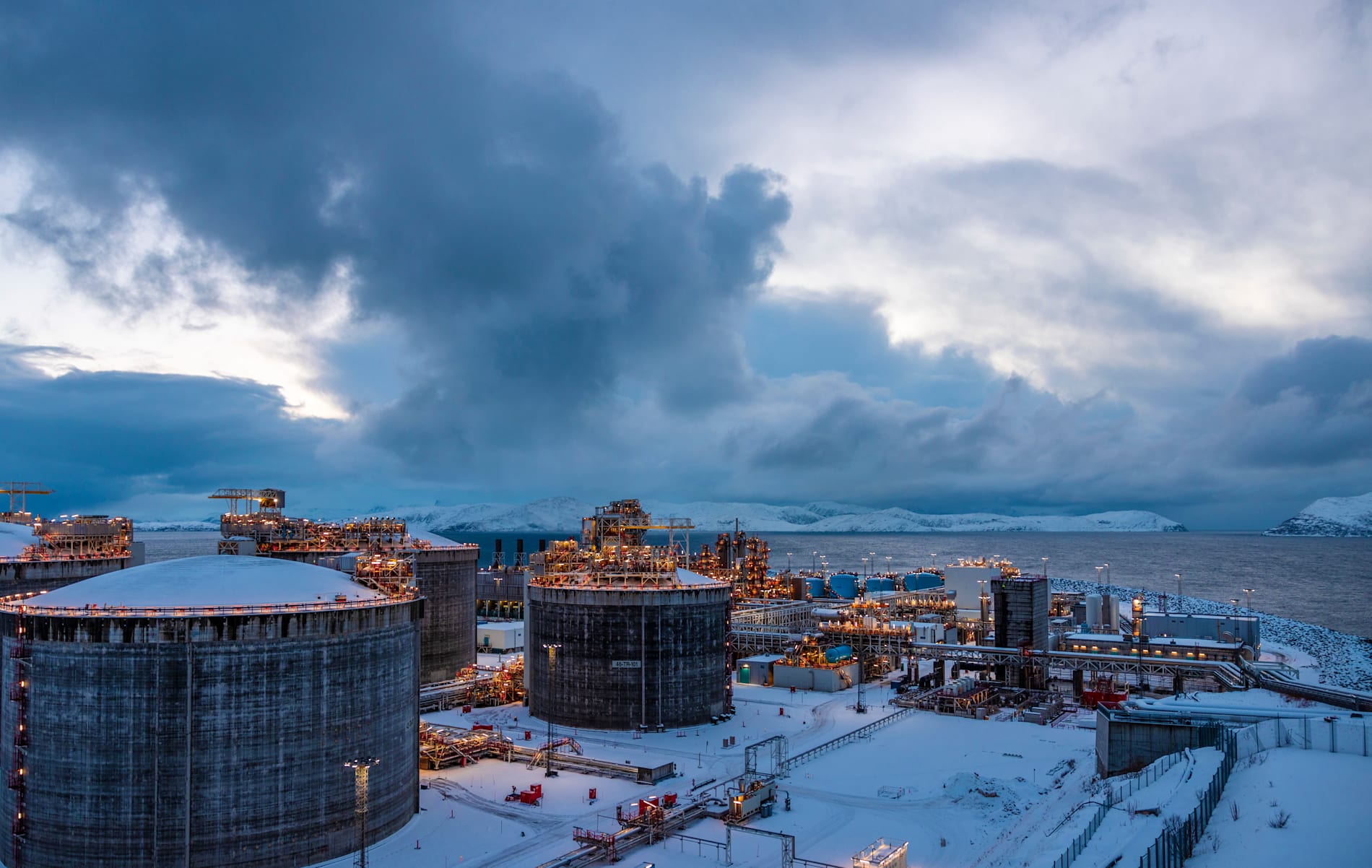
The discourse surrounding Snøhvit Future stems from two distinct debates. First, there is the question of whether the Storting genuinely wishes to endorse the project. Recent decisions, including those linked to the state budget for 2022 and 2023, granted the government authority over such matters, culminating in approval for development back in August 2023. Notably, many of the parties currently advocating for a reversal were associated with that initial authorization.
In line with established procedures, the partnership applied for and received approval for a network connection. We have invested over NOK 10 billion in Snøhvit Future, a project heralded as the largest industrial endeavor in Northern Norway. It involves contributions from companies across the nation, generating considerable value up and down the coast. Once operational, this electrification is expected to yield around NOK 50 billion for the state, primarily by mitigating costly EU emission quotas.
In a recent statement to the Storting, Energy Minister Aasland clarified that any attempt to reverse decisions regarding Snøhvit Future would lack legal standing and thus qualify as an illegal action. He further emphasized that there are “no grounds in laws or regulations” for depriving the Melkøya facility of its previously granted reservation, a view we wholeheartedly endorse.
The development of projects is an intricate process that often spans years before reaching approval. Snøhvit Future was sanctioned last year and is set to be connected in 2030. The prospect of a parliamentary majority attempting to retroactively alter this framework poses a severe threat to our operations.
This leads to our second critical discussion point: how often should the Storting revisit the foundational framework governing the oil and gas sector on a case-by-case basis?
Recent trends indicate an unsettling pattern of challenges to, and alterations in, the industry’s framework conditions. Thus, we welcomed responses from several parties during the 2025 election campaign advocating for the necessity of reliable, stable, and competitive conditions for the sector.
Should the Storting persist in enacting frequent revisions to the rules governing business, it risks undermining sound business policy. This not only exacerbates political risk, which we must factor into our assessments of new projects, but renders it increasingly difficult to foster business development within Norway. The implications are dire for both enterprises and the nation, and it baffles us that the Storting would favor such a path.
Gas from Melkøya meets the energy requirements of approximately 6.5 million European households, fueling industry across the continent. As is the case with all gas fields, pressure inevitably diminishes, complicating extraction efforts over time.
The Melkøya project is essential for sustaining pressure in the Snøhvit field, thereby allowing production to continue beyond 2030. We find ourselves without a viable plan B. While there may be no legal justification for halting the project, the mere contemplation of such a decision sends ripples of uncertainty through job security and future output at Melkøya. This could severely compromise Norway’s credibility as a reliable investment destination and tarnish its standing as a long-term energy supplier, particularly in these turbulent geopolitical times.
We earnestly hope the Storting fully comprehends the ramifications of its potential actions. It is vital that those parties traditionally advocating for business predictability, as well as stability within the oil and gas sector, recognize that their upcoming decision could represent a profound contradiction of their own principles. The Storting is scheduled to discuss this matter on Thursday; there remains an opportunity for a change of heart.