

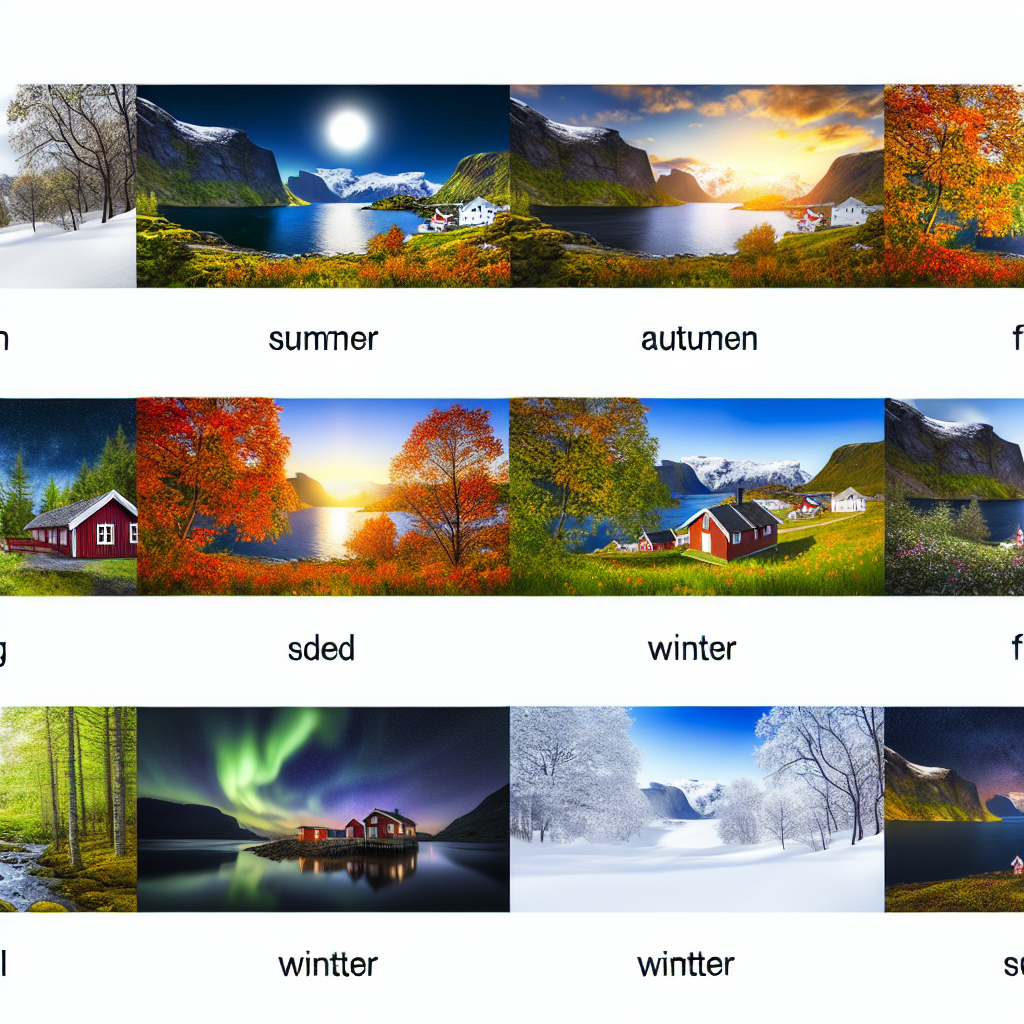
There’s no single best time to visit Norway. Whether you’re chasing the northern lights, hiking beneath endless summer skies or hoping for snow-covered fjords, here’s what to expect month by month.
Wondering when to visit Norway? You’re not alone. It’s one of the questions I’m asked most often, whether by readers of Life in Norway, cruise passengers heading for the fjords, or YouTube viewers planning a once-in-a-lifetime trip.
Many people assume summer is the only real option. After all, who wouldn’t want long days, green landscapes and (hopefully) warm sunshine?
But here’s the truth: Norway is a fantastic travel destination all year round. The “best” time to visit depends far more on what you want to experience than on any specific month.
Are you dreaming of hiking under the midnight sun? Watching the northern lights dance across a winter sky? Skiing through silent forests? Photographing waterfalls at full power?
There’s a different “best” time for all of these. And as with all things Norway, the weather can have an impact at any time of year. So, with that in mind, let’s break it all down.
🎥 Watch: The Best Time to Visit Norway
Sometimes, seeing helps! In this video, I explain how Norway’s seasons really work and what each month feels like on the ground.
I hope you enjoyed the video! Now, if you need more detail and practical planning advice, just keep reading.
Understanding Norway’s Travel Seasons
Before diving into each month individually, it helps to understand how the Norwegian year actually behaves. The seasons here don’t always line up neatly with what visitors expect.
Summer (Early June to Mid-August)
Summer is high season, especially in July when most Norwegians take their annual holiday. The weather is generally at its warmest, the days are extraordinarily long, and in the north the midnight sun shines right through the night.
It’s also the busiest time of year.
Popular destinations such as the fjords and the Lofoten Islands can feel crowded. Accommodation fills up months in advance. Cruise ports see multiple ships per day. Prices peak.
But everything is open. Hiking trails are accessible. Mountain roads are cleared. Ferries run frequently. Festivals fill city calendars.
If you want classic, green, lively Norway, summer delivers.
Shoulder Season (May and Mid-August to September)
If you prefer fewer crowds but still want decent weather, these transitional months are often ideal.
May is especially underrated. Snowmelt feeds waterfalls. Fjord cruises resume in earnest. Daylight stretches late into the evening. There’s a sense of energy in the air as the country emerges from winter.
Late August and September bring softer light and a calmer mood. Prices begin to drop. Accommodation becomes easier to find. You trade guaranteed sunshine for breathing space.
For many experienced travellers, this is the sweet spot.
Winter (Late October to March)
After a brief autumn, much of Norway shifts into what feels like one long winter. But winter is not one uniform block.
Late October through December tends to be wetter, cloudier and darker. From January onward, particularly in February and March, snow cover becomes more reliable and skies often clearer.
If you’re coming for the northern lights or snow-based activities, that difference matters.
Norway Month by Month
Now let’s zoom in and look at what each month really feels like.
January
January is deep winter. The days are short. In northern Norway, they are extremely short. Tourism numbers are relatively low outside ski resorts and aurora hotspots.
But for snow lovers, this is paradise. Ski season is in full swing. Cross-country trails are freshly groomed. Mountain resorts feel properly wintery rather than patchy or transitional. If the clouds cooperate, the northern lights are absolutely possible.
This is not the month for casual sightseeing. It’s for travellers who want a full Arctic atmosphere. Expect cold temperatures, icy pavements and limited daylight. In return, you’ll get stillness, silence and landscapes that feel almost unreal.
February
February feels like a turning point. The light begins to return. It’s subtle at first, but noticeable. There’s still deep snow across much of the country, yet the days stretch longer than in January.
It’s one of the best months for skiing, both downhill and cross-country. Photographers love February for the combination of reliable snow and clearer skies.
For aurora hunters, it’s often superior to the darkest months. You still get long nights, but typically with improved weather stability.
For me personally, February is one of the most satisfying winter months. It has the drama of winter without quite so much of the oppressive darkness.
March
March offers something close to balance. Snow is still on the ground in many regions, especially inland and in the mountains. Meanwhile, daylight hours increase rapidly. Days and nights approach equal length.
It’s peak season for winter tourism. Dog sledding, snowshoeing, snowmobiling and northern lights tours are all operating at full pace.
The longer daylight hours make outdoor adventures more comfortable. You can spend a full day outside without feeling as though darkness is constantly racing you.
For many winter travellers, March hits the sweet spot.
April
April is transitional and slightly unpredictable. In the mountains, winter holds firm. Ski resorts remain open, often until Easter. Down at sea level, especially in southern Norway, spring begins to push through.
Landscapes can look bare rather than lush. Snow retreats unevenly. Cities feel more alive as outdoor cafés cautiously reappear.
It’s a decent time to visit cities such as Oslo or Bergen if you are less focused on snow-based experiences.
Bear in mind that Easter, which falls in March or April, is a major holiday in Norway. Many cabins are booked months in advance. Opening hours for attractions can be restricted. Public transport runs on holiday schedules.
May
May is one of Norway’s most underrated months. This is peak waterfall season. Snowmelt from the mountains crashes into rivers and fjords, transforming waterfalls into roaring spectacles.
Hiking trails at lower elevations reopen. Fjord cruises resume in earnest. Days are long and often dry.
May 17, Norway’s Constitution Day, fills towns and cities with parades, flags and traditional clothing. Norwegians are unusually outgoing. It’s a fantastic cultural experience.
The combination of manageable visitor numbers, powerful natural scenery and extended daylight makes May a favourite for many repeat visitors.
June
June marks the true start of summer. In northern Norway, the midnight sun appears. In the south, evenings stretch late into golden twilight.
Scenic mountain roads finally reopen after winter closures. Road trips become especially popular. Hiking trails are accessible. Kayaking, cycling and outdoor festivals fill the calendar.
The first half of June is often quieter than July, making it a clever choice for travellers who want summer conditions without peak-season intensity.
July
July is peak season. The weather can be excellent. Campsites are full. Attractions are open at full capacity. Fjords are busy.
You will not be alone at popular locations such as Geirangerfjord or the Lofoten Islands.
Interestingly, while tourist attractions operate fully, some local services scale back because so many Norwegians are on holiday. Municipal offices close. Local bus services may run reduced schedules.
If you travel in July, plan ahead and book key accommodation well in advance.
August
August begins with summer in full flow, then gradually softens. After the first week, domestic tourism begins to ease. The weather often remains pleasant, particularly in southern Norway.
It’s a strong month for city visits and fjord exploration. Cultural festivals fill city calendars. Bergen, Ålesund and Trondheim often feel lively but not overwhelming.
Late August begins to hint at autumn. Evenings grow darker. The pace slows slightly.
September
September is about colour. Autumn sets in, especially in the north and at higher elevations. Hillsides turn gold and red. Air becomes crisp.
Prices drop compared to peak summer. Accommodation is easier to find. While rainfall becomes more likely, many days are clear and sharp.
For photography, September can be spectacular.
It’s also a smart time to consider the Norwegian coastal voyage, when fares are often lower and itineraries may include scenic fjords not visited in high summer.
October
October is moody, in the best way. Golden trees, misty mornings and darkening evenings create a distinctly Nordic atmosphere.
The northern lights season returns, provided skies are clear. Rain is common, particularly along the west coast.
It’s a quieter month overall. Rural areas feel peaceful. Cities such as Trondheim or Ålesund can be atmospheric and rewarding without the crowds.
Pack waterproofs. You will likely need them.
November
November is arguably the toughest month for visitors. There is usually no real snow outside mountain areas, yet daylight is already limited. It can feel grey, damp and heavy.
From a local perspective, this is often the month when many of us consider escaping south for a short dose of sunshine.
However, for northern lights travellers heading far north, November can still work. Prices are low. Visitor numbers are minimal. If you’re prepared to chase clear skies, rewards are possible.
It’s not glamorous, but it can be peaceful.
December
December brings back the magic. Cities decorate streets with lights. Christmas markets open. Snowfall becomes more likely, particularly in northern and inland regions.
It’s dark, yes. But it’s cosy.
One important caveat: visiting during Christmas itself, or in the days between Christmas and New Year, can be tricky. Norway largely shuts down for family time. Shops, attractions and many restaurants close. Public transport runs on limited schedules.
Unless you are staying with friends or renting a cabin, it requires careful planning.
Best Time to Visit Norway for Specific Experiences
If you have something specific in mind, there may be a better time to visit. Let’s take a look at some examples.
Best Time for Snow in Norway
Snowfall is never guaranteed, but your chances increase significantly between January and March.
In major cities, snow can fall as early as September, though most see their first proper snowfall in November or December.
Away from the coastline and at higher altitudes, snowfall can occur anytime from September through May. However, January to March is when snow cover is most reliable.
Ski resorts typically open as soon as conditions allow. February and March are the most popular months due to lighter days and stable snow.
Most large resorts operate until Easter, which is widely considered the unofficial end of the ski season.
Best Time to See the Northern Lights in Norway
The northern lights occur year-round, but darkness is essential to see them. That makes summer unsuitable across large parts of Norway.
Although November to January offers the longest nights, cloud cover is more frequent.
For many travellers, September to October and February to March offer the best balance of darkness and clearer skies.
Personally, I favour February and March. Snow cover brightens the landscape by day and creates stunning reflections at night. It also allows for winter activities such as skiing, snowshoeing and dog sledding during daylight hours.
Best Time to Visit the Norwegian Fjords
The Norwegian fjords are strongly seasonal. Between late autumn and early spring, many hotels, campsites, attractions and mountain roads close. Ferry schedules are reduced.
Winter visits can be incredibly special, with snow-dusted peaks and quiet villages, but flexibility is essential. Roads can be closed and attractions will have variable hours. And of course, a winter storm could ruin everything.
For most travellers, May to August is ideal. Everything is open and accessible. If waterfalls are a priority, aim for May or June when snowmelt makes them especially powerful. July is the busiest month, so advance bookings are required.
Best Time for a Norway Road Trip
Many travellers rent a car specifically to explore fjords and mountain regions.
Late spring through early autumn offers the most flexibility. Scenic routes are open. Mountain passes are accessible. Weather disruptions are less frequent.
Several mountain roads close during winter and may not reopen until May depending on snow conditions.
If dramatic viewpoints and high-altitude drives are on your wish list, check road status carefully before booking.
Best Time for Scenic Train Travel
Norway’s railways are spectacular all year round. Summer brings green valleys and bright skies. Winter transforms mountain plateaus into vast white landscapes.
Rail travel works in every season, but the experience changes dramatically.
If travelling by night train in summer, pack an eye mask and earplugs. Light lingers late into the evening and the provided sleep accessories are fairly basic.
Fares are often cheaper outside peak summer, though limited daylight in December may obscure some of the scenery.
So, When Is the Best Time to Visit Norway?
There isn’t one perfect answer. Every month offers something different. The best time depends entirely on what you want to experience.
Norwegian weather is famously unpredictable. You can have clear skies in February and heavy rain in July. Pack layers. Stay flexible. Embrace the contrasts.
After more than a decade living here, I still find myself drawn north in winter. There’s something about the quiet, the snow and the possibility of the aurora that keeps pulling me back.
Whatever month you choose, Norway rewards those who arrive prepared, curious and open to the unexpected.
If you want help planning your dream trip, check out my travel consulting calls.