

Published on
July 10, 2026
By: Ankita Neogi Khan
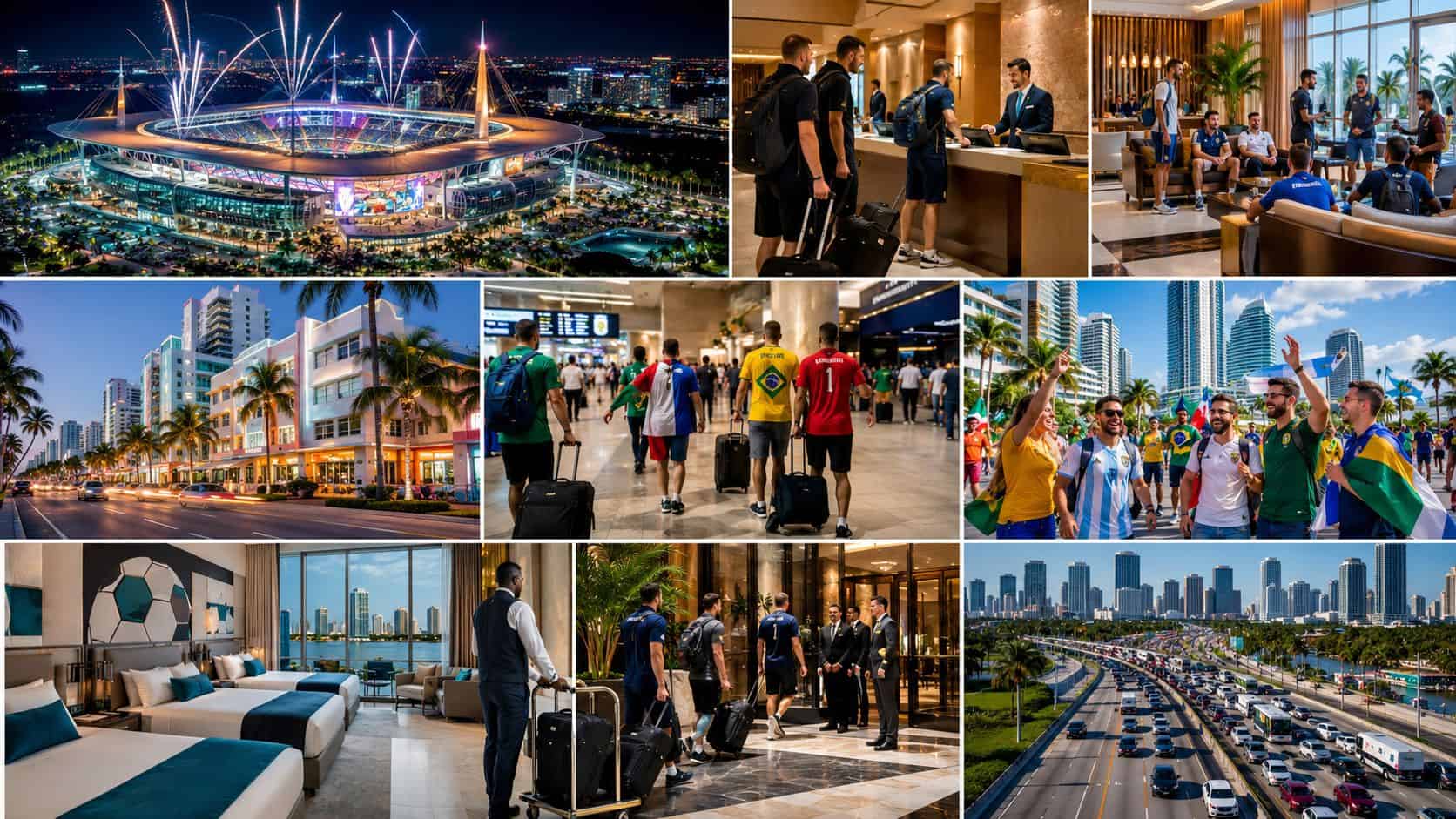
Image generated with Ai
As the FIFA World Cup 2026 enters its decisive knockout stage, the spotlight has shifted beyond tactics and team selection to an equally important aspect of tournament preparation—where teams stay and how accommodation influences performance. Norway’s decision to relocate its squad from an initial hotel in the Fort Lauderdale area to another property closer to Miami’s Hard Rock Stadium has underlined a reality that extends well beyond football. The move illustrates how noise levels, transport congestion, recovery facilities and proximity to match venues have become essential considerations for national teams competing on the world’s biggest sporting stage. For the travel and hospitality industry, the episode also demonstrates the extraordinary operational pressures created when a global sporting spectacle converges with one of Florida’s busiest tourism regions.
The relocation has drawn attention because it reflects the meticulous planning required during a tournament spread across multiple cities and countries. Elite athletes increasingly require environments designed to maximise sleep quality, minimise travel time and support physical recovery, while organisers, hotels and destination managers must adapt quickly when unexpected operational challenges arise. For travel professionals, accommodation providers and visitors heading to South Florida during the tournament, the development offers valuable insight into how major sporting events can reshape hotel demand, influence transport planning and redefine guest expectations. Although the adjustment involved a national football team, its implications extend to thousands of supporters, corporate travellers and tourism businesses navigating one of the busiest periods in Miami’s recent travel history.
A Hotel Change That Reflects the Demands of Modern Tournament Logistics
International football tournaments have evolved into complex logistical operations involving far more than training sessions and match-day preparations. Every aspect of a team’s environment—from nutrition and transportation to room layouts and recovery spaces—is carefully evaluated months before players arrive.
Against this backdrop, Norway’s decision to relocate its squad represents an operational adjustment rather than an extraordinary event. High-performance teams frequently reassess accommodation if circumstances threaten their carefully structured preparation schedules.
Advertisement
Advertisement
For elite footballers, uninterrupted sleep has become a measurable performance indicator. Sports science research consistently associates quality sleep with improved reaction times, enhanced cognitive function and faster muscle recovery. Consequently, hotels selected for international teams are expected to provide quiet surroundings, secure facilities and controlled environments that minimise unnecessary distractions.
The South Florida metropolitan area presents particular logistical challenges. Miami, Fort Lauderdale and neighbouring cities experience heavy road traffic throughout much of the day, particularly during major events that attract tens of thousands of visitors. Construction activity across rapidly developing districts can add another layer of operational complexity, making what appears to be a short journey significantly longer during peak hours.
Advertisement
Advertisement
Moving closer to Hard Rock Stadium, where the quarter-final will be played, potentially reduces daily travel time while allowing players to maintain more predictable schedules before one of the tournament’s most significant fixtures.
For destination managers, the situation illustrates the importance of contingency planning. Hotels hosting elite sports delegations are increasingly expected to accommodate late operational changes, while tournament organisers must maintain sufficient flexibility to support participating teams without disrupting wider accommodation availability.
Advertisement
Advertisement
Why Recovery-Friendly Hotels Have Become Competitive Assets
The hospitality sector has experienced a noticeable shift in recent years as sports tourism has become one of the fastest-growing segments of global travel. Hotels are no longer competing solely on luxury amenities or location; they are increasingly investing in facilities designed to support wellness and athletic recovery.
Many premium properties now offer specialised services including recovery lounges, physiotherapy rooms, nutrition-focused dining, blackout curtains, soundproofed guestrooms and dedicated fitness spaces. These investments appeal not only to professional sports teams but also to business travellers and leisure visitors seeking healthier travel experiences.
The growing emphasis on recovery reflects wider trends across hospitality. Hotels located near major sporting venues frequently collaborate with event organisers to provide tailored services for athletes, officials and media personnel. Such partnerships enhance occupancy while positioning properties within the lucrative sports travel market.
The Norway accommodation adjustment therefore highlights a broader evolution rather than an isolated incident. Modern travellers increasingly value environmental quality alongside traditional hospitality features. Quiet guestrooms, efficient transport access, reliable internet connectivity and wellness facilities have become significant booking considerations across multiple traveller segments.
Advertisement
Advertisement
For Miami’s hotel industry, the FIFA World Cup offers an opportunity to demonstrate operational resilience under exceptional demand. Properties capable of balancing security requirements, guest comfort and logistical flexibility are likely to strengthen their reputation well beyond the tournament itself.
Miami’s Hospitality Industry Faces One of Its Biggest Operational Tests
Hosting FIFA World Cup fixtures places extraordinary pressure on local accommodation providers. Hotels must simultaneously serve football supporters, corporate sponsors, broadcasters, tournament officials, airline crews and traditional leisure visitors.
According to tourism authorities, the Greater Miami area welcomes millions of domestic and international visitors annually, with sporting events representing an increasingly important contributor to visitor spending. During major international tournaments, occupancy rates typically rise sharply, particularly for hotels located within convenient reach of stadiums and transport corridors.
The challenge extends beyond simply filling rooms. Hotels must coordinate enhanced security measures, flexible check-in arrangements, specialised catering requirements and transportation logistics while maintaining service standards for every guest.
The Norway relocation underscores how even carefully prepared accommodation strategies can require adjustment once teams experience real-world operating conditions.
| Operational Priority | Importance During FIFA 2026 | Benefit for Teams and Travellers |
|---|---|---|
| Proximity to stadiums | Reduces transfer times | Lower travel stress |
| Quiet surroundings | Improves sleep quality | Better recovery and comfort |
| Wellness facilities | Supports athlete recovery | Higher guest satisfaction |
| Traffic accessibility | Predictable journey planning | Fewer transport delays |
| Security arrangements | Essential for international delegations | Enhanced guest safety |
| Flexible hotel operations | Supports changing schedules | Better event management |
Rather than viewing accommodation solely as a place to sleep, international sporting events increasingly position hotels as integral components of performance planning, visitor experience and destination reputation.
Advertisement
Advertisement
What The Relocation Means for Travellers Visiting Miami During the Tournament
Although Norway’s accommodation adjustment concerns a professional football squad, it also reflects the realities facing thousands of visitors travelling to South Florida throughout the FIFA World Cup. International sporting events transform the rhythm of a destination, affecting hotel availability, transport networks, restaurant demand and visitor movement across entire metropolitan regions.
For football supporters, booking accommodation close to a stadium may appear to be the obvious choice. However, convenience often comes at a premium. Hotels within easy reach of Hard Rock Stadium are likely to experience the strongest demand on match days, particularly during the knockout rounds when supporters from multiple nations converge on the same city.
Visitors should therefore consider balancing proximity with accessibility. Properties located near major public transport corridors or within convenient driving distance can offer comparable convenience while avoiding some of the highest accommodation costs.
Traffic is another important consideration. South Florida’s road network already accommodates millions of residents and visitors throughout the year. During international sporting events, additional security measures, road management plans and event-day congestion can significantly increase journey times.
Travellers attending matches are therefore advised to allow generous travel time between hotels, attractions and stadiums. Planning arrivals well in advance of kick-off not only reduces stress but also provides opportunities to enjoy fan zones, local entertainment districts and hospitality experiences surrounding the tournament.
The broader lesson extends beyond football supporters. Business travellers visiting Miami during major sporting events should also anticipate longer transfer times, higher accommodation rates and increased competition for airport transfers and rental vehicles.
Advertisement
Advertisement
South Florida’s Hotel Market Is Entering a New Era of Sports Tourism
The FIFA World Cup reinforces an important trend already shaping the global hospitality industry: sports tourism is no longer a niche segment. It has evolved into a major economic driver capable of generating substantial visitor spending across accommodation, aviation, food services, entertainment and local transportation.
According to industry research from organisations such as the UN Tourism and the World Travel & Tourism Council (WTTC), sports tourism has consistently outpaced many traditional leisure travel segments, supported by growing international mobility and rising demand for live sporting experiences.
For destinations such as Miami, hosting high-profile matches provides benefits extending well beyond ticket sales. International visitors frequently extend their trips before or after fixtures, exploring beaches, shopping districts, museums, national parks and neighbouring cities across Florida.
Hotels, meanwhile, increasingly market themselves as wellness-oriented properties capable of serving athletes, families, conference delegates and leisure travellers alike.
Several emerging hospitality trends are becoming particularly visible during major sporting events:
| Hospitality Trend | Growing Importance | Value for Guests |
|---|---|---|
| Wellness-focused accommodation | Increasing | Better recovery, relaxation and sleep quality |
| Contactless guest services | High | Faster check-in and improved convenience |
| Flexible room configurations | Growing | Suitable for teams, families and groups |
| Sustainable hotel operations | Increasing | Lower environmental impact |
| Personalised dining options | High | Supports varied dietary requirements |
| Enhanced security protocols | Essential | Greater confidence during major events |
These developments illustrate how expectations have changed across the hospitality sector. Guests increasingly evaluate hotels not only on luxury or price but also on operational efficiency, environmental quality and overall wellbeing.
Advertisement
Advertisement
Recovery Has Become a Strategic Element of Elite Sport
Modern football places extraordinary physical demands on players. Tournament schedules often involve international travel, compressed recovery periods and intense competition within a matter of days. Consequently, recovery has become an essential component of performance management rather than an afterthought.
Leading national teams now work with multidisciplinary support staff that may include sports scientists, nutritionists, physiotherapists, psychologists and performance analysts. Their recommendations influence decisions ranging from training intensity to meal timings and accommodation layouts.
Hotels hosting elite teams increasingly respond by offering facilities such as recovery pools, dedicated meeting spaces, private dining rooms and secure fitness areas. Soundproofed rooms, blackout curtains and climate-controlled environments are also becoming valuable competitive advantages.
While these features are designed primarily for athletes, they are equally appreciated by business travellers coping with jet lag, families travelling with children and long-haul visitors seeking restful accommodation.
This convergence demonstrates how innovations originally introduced for professional sport frequently become mainstream hospitality standards over time.
Planning Ahead Can Improve the World Cup Experience
For travellers inspired by the tournament, careful preparation remains the most effective way to avoid unnecessary disruption.
Advertisement
Advertisement
Booking accommodation well ahead of match schedules generally provides greater choice and more competitive pricing. Equally important is verifying cancellation policies, particularly during periods when fixture schedules may influence travel demand.
Visitors should also evaluate transport options before selecting a hotel. A property located slightly farther from the stadium but offering reliable access to major highways or public transport may prove more practical than one situated closer but surrounded by heavy event-day congestion.
Monitoring official tournament announcements, local traffic advisories and airport updates can further improve journey planning, especially for international visitors arriving on tight schedules.
The experience surrounding Norway’s accommodation adjustment ultimately reinforces a broader lesson for both the travel industry and visitors. During events on the scale of the FIFA World Cup, the quality of the accommodation environment can influence the overall travel experience just as much as the destination itself. Hotels are no longer simply places to stay—they have become integral components of operational planning, visitor wellbeing and destination competitiveness. As Miami welcomes teams and supporters from around the world, the city’s ability to provide flexible, efficient and recovery-focused hospitality will play an important role in shaping its reputation as a premier host of global sporting events.
Analysis: What Travel Professionals Can Learn
| Stakeholder | Key Takeaway | Potential Long-Term Impact |
|---|---|---|
| Hotels | Invest in quieter rooms, wellness facilities and operational flexibility | Higher guest satisfaction and stronger event business |
| Destination Marketing Organisations | Coordinate accommodation, transport and visitor information | Improved destination reputation |
| Tour Operators | Encourage early bookings and flexible itineraries | Better customer experience during major events |
| Corporate Travellers | Monitor citywide events before booking | Reduced travel disruption |
| Leisure Travellers | Choose hotels based on accessibility rather than distance alone | More efficient and comfortable trips |
| Event Organisers | Maintain contingency accommodation plans | Faster operational response during tournaments |
Practical Information for World Cup Visitors
| Travel Consideration | Recommendation |
|---|---|
| Hotel Booking | Reserve accommodation several months before major matches where possible. |
| Match-Day Transport | Allow additional travel time because of road congestion and security checks. |
| Airport Arrival | Monitor flight schedules and airport advisories before departure. |
| Accommodation Choice | Consider noise levels, transport connectivity and neighbourhood amenities in addition to price. |
| Travel Insurance | Ensure coverage includes trip delays and accommodation changes where applicable. |
| Local Mobility | Review public transport, ride-sharing and parking options before travelling to the stadium. |
Comparison With Previous Major Sporting Events
| Tournament | Hospitality Trend | Key Lesson for Travellers |
|---|---|---|
| FIFA World Cup Qatar 2022 | High demand for integrated accommodation and transport | Book early and use official transport guidance |
| UEFA Euro 2024 | Strong demand in host cities led to premium room rates | Stay in neighbouring cities if practical |
| Paris Olympic Games 2024 | Flexible accommodation and public transport planning became essential | Balance location with accessibility |
| FIFA World Cup 2026 | Greater emphasis on recovery-focused hotels and operational flexibility | Prioritise comfort, connectivity and reliable transport |
Advertisement
Advertisement