

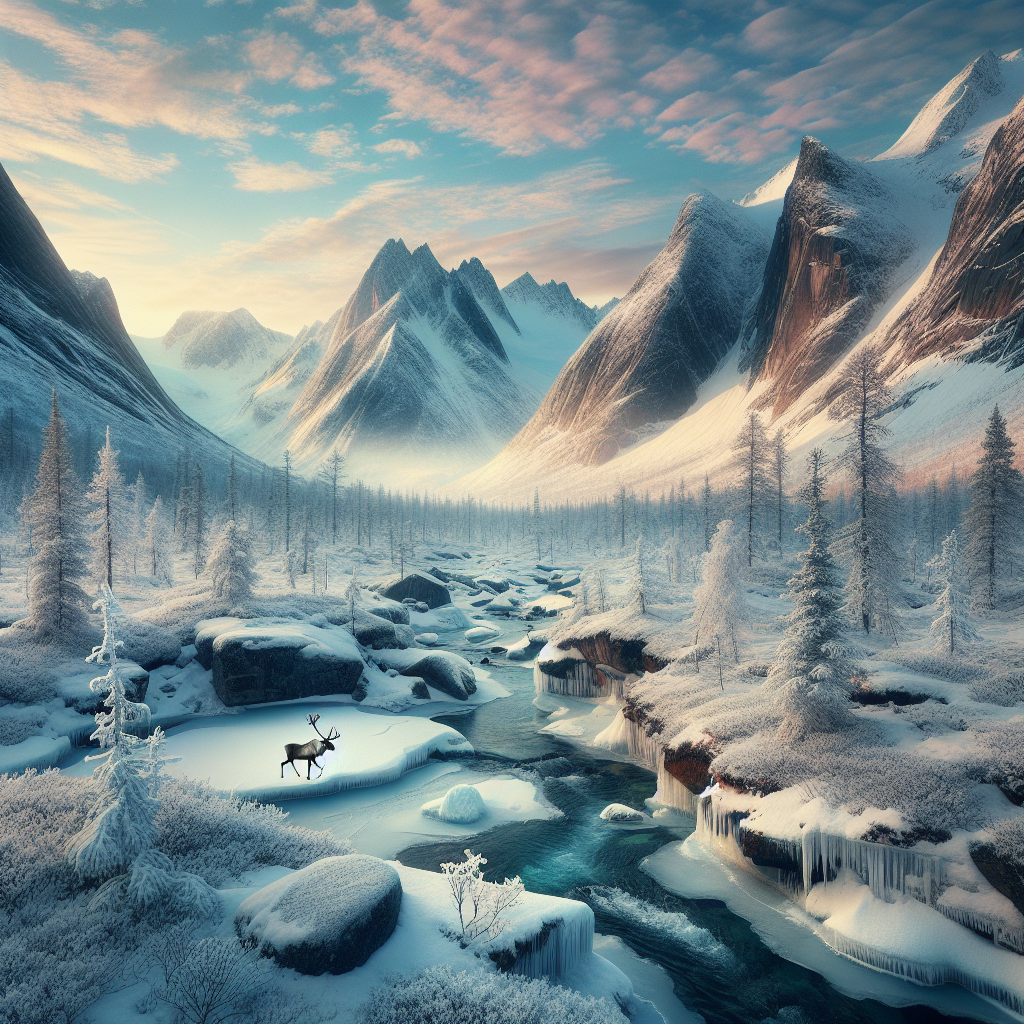
Glaciers, high mountain plateaus, and one of Europe’s most important climatic boundaries define Saltfjellet–Svartisen National Park.
This is a vast, uncompromising landscape that most travelers pass straight through without ever stopping.
Stretching across Nordland county, Saltfjellet–Svartisen National Park is one of Norway’s largest protected areas and one of its least understood. It is not a park of postcard viewpoints or famous hikes.
Instead, it is a place of transition, where southern Norway gives way to the Arctic, where infrastructure cuts through wilderness, and where nature still dictates the terms of travel.
For those willing to slow down and look beyond the road, Saltfjellet–Svartisen offers a powerful sense of scale and solitude.
Introducing Saltfjellet–Svartisen National Park
Established in 1989, Saltfjellet–Svartisen National Park covers more than 2,100 square kilometers of mountains, glaciers, plateaus, valleys, and lakes. It protects two distinct but connected landscapes: the high mountain plateau of Saltfjellet and the dramatic glacial region around Svartisen.
Saltfjellet itself is a broad, windswept plateau rather than a jagged mountain range. Much of it sits above the tree line, creating an open, exposed landscape shaped by weather and distance.
Svartisen, by contrast, is dominated by ice. Together, the two form one of Norway’s most geologically and visually varied national parks.
This is also a park defined by borders. The Arctic Circle cuts directly through it, marking a symbolic and environmental threshold between southern and northern Norway.
Crossing the Arctic Circle
For many travellers, Saltfjellet is little more than a sign by the roadside.
Both the E6 highway and the Nordland Line railway cross the plateau, carrying drivers and train passengers north and south through what appears, at speed, to be an empty landscape.
A stone marker near the road indicates the crossing of the Arctic Circle, often accompanied by a brief stop for photos. Yet this moment marks a real shift. North of the Arctic Circle, seasons behave differently.
Summer light stretches deep into the night, while winter brings prolonged darkness. Climate, vegetation, and wildlife patterns change, and the landscape begins to feel more exposed and elemental.
Saltfjellet is not just a place you pass through. It is the gateway to the Arctic.
Svartisen: Ice at the Edge of the Sea
The park’s most dramatic feature is The black iceNorway’s second-largest glacier system. Svartisen is actually composed of two main ice caps, the western and eastern Svartisen, separated by valleys and mountains.
Unlike many of Norway’s glaciers, Svartisen descends close to sea level, creating a striking contrast between ice, rock, and coastal landscapes. The most visited outlet is Engabreen, where the glacier tongue spills dramatically down towards the valley floor.
The black ice is also of scientific importance. Meltwater from the glacier feeds hydropower production, while long-term monitoring provides insight into climate change.
The retreat of the ice is visible over time, making Svartisen both awe-inspiring and quietly sobering.
Access to the glacier usually involves a combination of boat transport and walking, reinforcing the sense that this is a place reached deliberately rather than casually.
A Landscape Shaped by Sámi Culture
Long before roads and railways crossed Saltfjellet, this was Sámi land.
The park lies within traditional Sámi reindeer herding areas, and seasonal migration routes still cross the plateau. Reindeer remain central to the cultural and ecological identity of the region, and their needs influence how the park is managed.
Conservation here prioritizes wildlife over convenience. Certain areas may be restricted at times of the year, and infrastructure is deliberately limited. This approach preserves Saltfjellet’s character as a working cultural landscape rather than a curated tourist attraction.
For visitors, this means encountering a park that feels less interpreted and more lived-in, where signs of human presence are subtle but meaningful.
Hiking and Outdoor Life in Saltfjellet–Svartisen
Hiking in Saltfjellet–Svartisen is less about iconic summits and more about movement through space. Distances are long, terrain is often gentle rather than dramatic, and routes tend to follow valleys, plateaus, and historic lines of travel.
This is a landscape that rewards preparation, navigation skills, and an appreciation for context. Marked trails do exist, but they are fewer and more widely spaced than in Norway’s most popular mountain parks.
Weather can change quickly, even in summer, and facilities are sparse. For experienced hikers, ski tourers, and those drawn to big, open wilderness, this creates a powerful sense of freedom and self-reliance.
The Old Telegraph Route
One of the most distinctive hiking routes in the park is the old telegraph route between Rana and Saltdal. Established in the 1860s, this route once carried a vital telegraph line linking northern and southern Norway, cutting directly across the Saltfjellet plateau.
Today, the route forms a roughly 61-kilometre long-distance hike that allows walkers to cross both Saltfjellet and the Arctic Circle on foot.
It typically begins near the E6 close to the historic Bredek area and follows the line of more than a thousand stone foundations where telegraph poles once stood. Along the way, hikers pass the remains of simple stone huts that housed workers during the construction of the line.
Walking the telegraph route adds a rare historical layer to the experience of Saltfjellet. It is not just a journey through wilderness, but a reminder of how challenging communication and travel once were in this exposed landscape.
Towards the Svartisen Glaciers
While Saltfjellet itself is defined by openness and distance, hiking towards Svartisen brings a very different character.
Trails here lead into steeper terrain shaped by ice, water, and dramatic elevation changes.
On the eastern side of the glacier, north of Mo i Rana, an old trail leads to Austerdal glacierone of the many outlet glaciers flowing from Svartisen.
The usual approach involves driving to Svartisvatnet, taking a short boat crossing, and then hiking up the valley towards the glacier. As the ice comes into view, the scale of Svartisen becomes unmistakable, rising abruptly from the surrounding terrain.
On the western side, closer to the coast, another well-marked route leads to Engabreenthe lowest point of the Svartisen glacier system.
This hike begins with a ferry crossing of Holandsfjorden before climbing inland towards the ice. The proximity of glacier, fjord, and sea makes this one of the most striking glacier approaches in Norway.
A Park for Experience, Not Shortcuts
Across Saltfjellet–Svartisen, hiking is shaped by restraint. Routes are designed to minimize disturbance, seasonal restrictions protect reindeer migration and calving, and infrastructure is deliberately limited.
This is not a park built for casual wandering or spontaneous detours. For those willing to plan carefully, however, the rewards are substantial.
When to Visit Saltfjellet–Svartisen
Saltfjellet’s seasons are more extreme than those further south.
Summer is brief but intense. From late June through August, snow retreats from the plateau, rivers swell with meltwater, and daylight lingers well into the night. This is the safest and most accessible time for hiking, although the weather remains unpredictable.
Autumn arrives quickly. By September, temperatures drop, colors fade, and the first snow may already dust the high ground. Facilities close, and the park becomes quieter still.
Winter dominates much of the year. Snow covers the plateau, daylight is limited, and travel becomes demanding. Cross-country skiing replaces hiking, and only well-prepared visitors venture into the interior. The reward is an immense, silent landscape shaped by wind and light.
Spring is a transition period, often marked by unstable conditions and restricted access due to reindeer calving and snowmelt.
Practical Information and Access
Despite its remote feel, Saltfjellet–Svartisen is surprisingly well connected. Both road and rail pass directly through the park, making it one of Norway’s most dramatic transit landscapes.
For orientation, maps, and up-to-date advice, local tourist offices provide essential information, particularly regarding seasonal conditions and access to Svartisen.
Visitors should plan carefully, carry appropriate equipment, and be realistic about distances and weather. This is not a park designed for convenience, and that is part of its appeal.
Why Saltfjellet–Svartisen Matters
Saltfjellet–Svartisen is easy to overlook because it does not demand attention. There is no single viewpoint, no iconic hike, no tidy narrative.
Yet it is one of Norway’s most important landscapes. It marks the transition into the Arctic, preserves vast tracts of mountain wilderness, supports Sámi culture, and places glaciers at the heart of everyday geography rather than behind museum glass.
For many travellers, Saltfjellet is a place they pass through once and remember only vaguely. For those who stop, step off the road, and take the time to understand it, the park reveals itself as something rarer: a landscape that still feels governed by nature rather than tourism.